Recalibration, resilience and regional power: Texas’ industrial markets are evolving in 2025

While cities like Dallas and Austin are settling into a steadier rhythm,
Houston’s industrial real estate sector leads the way with a recalibrated yet
confident market outlook that reflects the region’s diversified economy,
port-driven logistics power and investor interest in strategic flexibility.
Houston moves toward ‘more sustainable pace’
After years of explosive growth driven by e-commerce surges and pandemicera supply chain reshuffling, Houston’s industrial market is entering a new
chapter.
“We’re not in a downturn; we’re in a recalibration,” said Mary Doetterl,
research manager at Lee & Associates. “Houston’s industrial market is
adjusting to a more sustainable pace, but demand fundamentals remain rock solid, especially in port-adjacent and infill locations.”

Doetterl noted that while vacancy has increased slightly, it reflects market normalization rather than distress, especially given the 130 million square feet of inventory added over the past five years. Leasing velocity has slowed from its peak, but absorption remains positive and rent growth continues in strong submarkets like the Northwest and Southeast. 

“I believe the current industrial market is healthy and balanced from a supply and demand standpoint,” echoed Travis Land, partner at Partners. “Unless there is a major reduction in interest rates or a significant negative long-term policy enacted on trade, I think this balance will remain throughout 2025 and 2026.” 

A diverse tenant mix continues to drive absorption across the Houston metro. Key sectors include energy services, construction materials, food logistics and especially third-party logistics operations. For manufacturers, oil and gas remains the dominant force. 

“Oil & Gas is driving most of the demand as always for the manufacturing buildings,” Land said. “This product type has seen tremendous rent growth in the last year.” 

At the same time, tenants seeking distribution space are showing a clear preference for mid-sized footprints. 

“The activity in the last six months has been the slowest on distribution spaces above 500,000 SF,” Land said. “The most active is on spaces 150,000 SF and under.” 

Developers are responding to this demand shift by investing in speculative projects that prioritize flexibility, infill access and quality. With timelines for build-to-suit facilities extending beyond tenant preferences, spec development has become the faster, more attractive option for many. 

“Tenants today are moving fast and making smarter decisions,” said Doetterl. “They want flexibility, efficiency and speed-to-market, and that’s exactly what modern spec buildings in Houston are offering.” 

Land added that spec buildings are increasingly accommodating a wide range of needs. 

“The time frame to complete a build-to-suit has increased, so if a company does not need an overly specialized facility, making retrofits to existing spec facilities is often more economical,” Land said. “The variety of speculative building size options has also expanded so the demand from historical build-to-suit candidates is more easily met with broader size availability.” 

Despite higher vacancy in some segments, Houston’s speculative market remains stable and selectively strong. Infill projects, especially those under 300,000 square feet or located near Beltway 8, are attracting tenants quickly. Meanwhile, big-box facilities in more remote areas are taking longer to lease and offering concessions to stay competitive. 

Port Houston remains one of the region’s most consistent and strategic demand drivers, influencing everything from site selection to lease structure. 

“Our port is a tremendous asset and differentiator for the Houston industrial market now and in the future,” Land said. “The port continuing to implement projects that increase capacity is great for Houston.” 

“Port Houston is one of the strongest industrial demand drivers in the country right now. As the channel expansion progresses, we expect even more activity in the Southeast submarket and beyond,” added Justin Tunnell, principal at Lee & Associates. 

The port’s growth is especially significant as global trade patterns evolve. As shippers diversify away from West Coast congestion and nearshoring to Mexico accelerates, Houston’s proximity to those supply routes and its deepwater port access offer a long-term competitive edge. 

As expansion at the Houston Ship Channel moves forward and highway and rail upgrades take shape, industrial stakeholders expect even greater efficiencies and leasing momentum in 2025 and beyond. 

‘A solid year’ in Dallas 

Dallas-Fort Worth’s industrial market remains one of the most powerful logistics hubs in the country. Even as vacancy rates remain elevated compared to historical norms, experts say this is not a red flag, but a result of timing. 

“While absorption pulled back from its recent highs, 2024 was a solid year, with 2025 getting a fast start as this key demand indicator remains well above its pre-boom 14.4 msf average,” according to Avison Young’s Q1 2025 report. 

The region’s strategic location, affordability and access to multimodal infrastructure continue to attract distribution tenants and investors alike. 

“DFW continues as a premier U.S. logistics hub due to its affordability, central U.S. location and access to roads, rail and air that easily serves a large part of the U.S., as well as its proximity to Mexico for international trade,” Avison Young reported. 

With 22.7 million square feet under construction and pre-leasing in motion for many of those properties, the market is expected to regain balance gradually through 2025 and into 2026. 

Austin boasts ‘healthy occupier demand’ 

Austin’s industrial market remains on firm footing, supported by steady population growth, active housing construction and a vibrant retail base. But unlike prior years, developers are taking a more measured approach to new deliveries. 

“Construction activity has slowed as the market works through existing supply, reducing the risk of oversaturation. Absorption remains positive and continues to outperform pre-pandemic averages, signaling healthy occupier demand,” according to Avison Young’s Q1 2025 market snapshot. 

Leasing volume held steady at 1.5 million square feet in the first quarter, with net absorption of 1.9 million square feet. Most tenant demand is concentrated in the mid-size range, between 20,000 and 49,000 square feet. 

“Leasing activity remained strong throughout Q1, signaling continued tenant engagement,” Avison Young reported. 

With vacancy holding steady, developers are closely monitoring pipeline risk. With 5.2 million square feet under construction, much of it concentrated in Georgetown and the East submarket, developers are watching tenant demand closely before greenlighting further expansion. 

From Houston’s spec-driven shift to Dallas’ lease-up lag and Austin’s balanced recovery, Texas’ industrial sector is proving once again that regional context matters. As 2025 unfolds, flexibility, location and logistics efficiency remain the currency of success. 

Cravey Real Estate Services facilitates major industrial sale in Victoria

Cravey Real Estate Services, Inc.‘s John Foret represented the seller, Ken Garner Manufacturing, in the sale of a major industrial facility at 203 Wayne Watkins Drive in Victoria, Texas.

This high-profile transaction marks a significant milestone for the region’s industrial and economic development landscape.

The 41,829-square-foot facility, located within a 16-acre industrial park, was listed for $7.5 million. Purpose-built for heavy manufacturing, the property’s construction is designed to accommodate demanding industrial operations.

Notable features include a soaring 30 foot clear height, 90 tons of HVAC capacity serving the main warehouse and the engineered 8 inch concrete slab reinforced with double mat rebar. This heavy-duty foundation significantly increases the floor’s load-bearing capacity, making it ideal for supporting the weight and vibration of large industrial machinery and equipment. Additional highlights include five overhead cranes (four 25-ton and one 7.5-ton), dual high-capacity electrical service panels and full access to municipal utilities.

The facility’s resiliently engineered construction and integrated systems make it ideal for high-volume fabrication, assembly or specialized industrial use. Designed to meet stringent manufacturing demands, the property also features windstorm engineering, climate-controlled warehousing and over $2,500,000 in crane and handling infrastructure.

The transaction was managed by Cravey’s John Foret, whose industrial market expertise and diligence throughout the process earned praise from the seller. Ken Garner, Chairman of Ken Garner Manufacturing, remarked, “You were diligent and professional throughout the process and a valuable resource for advice. You showed a deep knowledge of industrial property that I think is uncommon for real estate representatives.” Garner added that the company was confident it “could not have made a better choice” in selecting Foret and Cravey Real Estate Services to lead the transaction.

Marcus & Millichap brokers sale of 76-room hotel in Pearland

Marcus & Millichap closed the sale of Candlewood Suites Pearland, an IHG Hotel in Pearland, Texas. 

Skyler Cooper, senior vice president in Marcus & Millichap’s Dallas office, exclusively marketed the property on behalf of the seller with support from Chris Gomes and Allan Miller of the Miller-Gomes Hotel Group of Marcus & Millichap. The buyer was procured by Cooper, Gomes and Miller.  

The Candlewood Suites Pearland is a three-story, 76-room hotel at 9015 Broadway St., near major thoroughfares including State Highway 288, State Highway 35 and Interstate 45. Amenities include a fitness center, business center and 24-hour market. Nearby demand drivers include NRG Park, which draws 5.5 million visitors annually, and the Texas Medical Center, the world’s largest medical complex. 

Arden Logistics Parks reinvests in North Houston’s North Park 34 industrial park

Arden Logistics Parks (ALP), the national logistics real estate operating platform of Arden Group, has reaffirmed its long-term commitment to North Park 34 in North Houston, Texas, with a significant capital reinvestment following a successful refinance.

The $8 million allocation is funding a comprehensive improvement initiative across the 865,000-square-foot, 34-building industrial park to enhance tenant experience and drive continued leasing success.

Stream Realty Partners, a national commercial real estate firm offering an integrated platform of services, serves as the exclusive leasing team for North Park 34. Vice President Abraham Richardson, Senior Associate Meg Zschappel, and Associate Zach Young lead the leasing efforts on behalf of ALP.

Since acquiring the park in late 2021, ALP has transformed North Park 34 into a modern industrial campus designed to meet the evolving needs of today’s users. Extensive upgrades have been completed across the park, including full exterior repainting of all buildings, energy-efficient LED lighting enhancements, and the installation of drought-tolerant landscaping to reduce environmental impact.

Additionally, 30 vacant suites have undergone full interior renovations, and ongoing make-ready work has ensured that available spaces are delivered in turnkey condition for immediate occupancy. So far in 2025, ALP has completed 24,442 square feet of delivered make-ready projects, with an additional 71,319 square feet of pending projects scheduled for completion this year.

As a result of the improvements, North Park 34 has executed 48 leases totaling nearly 252,000 square feet over the past 12 months. The repositioning efforts have translated into a 90% tenant retention rate, demonstrating the value of ALP’s investment in the park’s physical condition and tenant experience.

North Park 34, located near the intersection of Beltway 8 and the Hardy Toll Road, offers immediate access to Interstate 45, Interstate 69, and George Bush Intercontinental Airport. The park provides a wide variety of suite sizes, ranging from 1,500 to 40,000 square feet, and features grade-level, semi-dock, and dock-high loading options. With ample surface parking, on-site property management, and a refreshed visual identity, the property continues to attract high-quality industrial users seeking move-in-ready space in a core infill location.

ALP intends to continue investing in the park with further suite upgrades, building systems enhancements, and tenant-focused offerings that support long-term occupancy and growth.

Howard Hughes Holding acquires eight-story building in The Woodlands

Howard Hughes Holdings Inc. acquired 10101 Woodloch Forest Drive in the community of The Woodlands in Texas.

The Class-A office building, which will be renamed 7 Waterway, adds over 200,000 square feet of available office space to the company’s growing portfolio in the highly desirable Waterway District. The eight-story building, purchased for $16.3 million, sits on a 1.6-acre site, with 700 parking spaces in an adjacent garage owned by the company under a perpetual parking agreement. The unoccupied building provides Howard Hughes with the immediate ability to offer in-demand Class A office space in the region’s highest-performing office submarket.

Originally built in 2009, 7 Waterway boasts close proximity to I-45 and convenient access to world-class amenities within walking distance, including 645 hotel rooms; more than two million square feet of shopping and dining at Waterway Square, Market Street, and The Woodlands Mall; as well as 1,157 luxury multifamily units.

Closing the resident services gap to stand out in a renter’s market

Today’s rental market is pushing property managers to shift their priorities significantly to remain competitive. Multifamily vacancies have risen to 6.3%, the highest levels we’ve seen since 2011—even including the early days of the COVID-19 pandemic. It’s no surprise, then, that maintaining occupancy rates is now the top threat property managers say they face. 

In a competitive market, resident experience is more important than ever to attract new residents and drive retention. Modern consumer technology has evolved renter expectations, and property managers need to think differently to satisfy new and current residents. 

New data from AppFolio’s 2025 Renter Preferences Report sheds light on an overlooked way to stand out and delight renters: closing the resident services gap. According to the report, the demand for residential services, such as onboarding services and digital experiences, far exceeds the current availability. Let’s explore this gap in available resident services and how property managers can elevate their resident experience to close it.

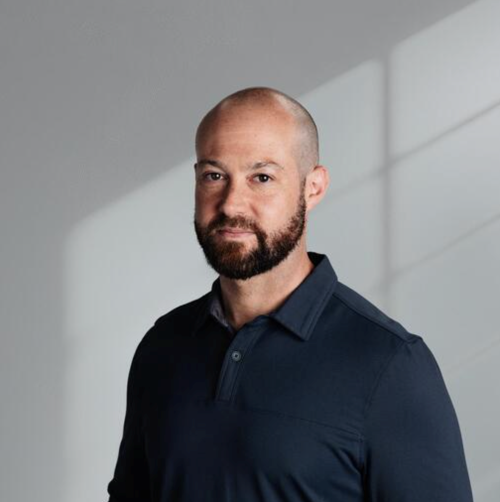
Adam Feinstein
(Photo courtesy of AppFolio.)

The Modern Rental Landscape

During the pandemic, the demand for renting was significant. With rental interest so high, property managers were able to focus on top-of-funnel efforts, like promoting listings and engaging through social media, to bring in new residents.

Now, move-in trends have changed, with rental vacancies approaching a 15-year high. Meanwhile, the number of new units available for leasing has continued to climb, expected to cap out at more than 600,000 units in 2025, which is slightly more than in 2024.

Top-of-funnel tactics are no longer enough to offset this dramatic shift. Property managers’ top concern is maintaining occupancy rates, and when it comes to occupancy, current renter satisfaction creates a massive ripple effect.

According to the 2025 Renter Preferences Report, satisfied renters are 71% more likely to renew their lease and over five times more likely to recommend their property manager. To focus their efforts on occupancy, property managers need to shift from a demand mindset to an experience mindset—to deliver a first-class experience to the residents they have while differentiating themselves to prospective renters.

But what do renters want their ideal rental experience to look like?

The Resident Services Gap

The demand for several resident services that renters prioritize far exceeds their current availability: 

  • Over three-quarters of renters find it important to have an online resident portal or mobile app, but only 57% said they have one
  • 71% place importance on benefit packages or bundled add-on services, while only 42% have these
  • 61% find smart home technology important, while only 45% have it in their units
  • 60% of those who have received digital move-in services found them important, but only 38% had them available

Beyond the significant delta between high-importance services and their availability, it’s worth noting that Gen Z places the greatest importance on these services, emphasizing the changing expectations of a new generation of renters. Gen Z is the only generational group of renters that is actively growing and will be the single largest group of renters by 2030.

Not only are these services important to residents, but 79% of residents are willing to pay for at least one resident service through their property manager, including Internet, renters insurance, a renter rewards program and pest control. 

Closing the Resident Services Gap

In this renter’s market, differentiation is key. And the smartest way to stand apart is by offering a high-quality experience that delivers what residents are looking for—but aren’t getting.

One of the greatest pain points for renters is the move-in process, making it a prime opportunity for property managers to set themselves apart. Seventy-five percent of residents experience challenges with moving in, and modern services can make it much smoother.

Only 38% of residents have digital move-in services available, while 81% who’ve used them found them helpful. With such a large portion of residents struggling with moving in and such a low number of residents with digital move-in services currently available, making these services accessible should be a top priority for property managers.

The other prominent opportunity for property managers to improve the experience of their current residents and attract new ones is digitization. Aside from move-in services, the most important resident needs with large deficits in availability are having a resident portal or mobile app, and smart home technology.

Especially as younger generations continue to take over the rental market, expectations for a progressively digitized resident experience are increasing. Offering digital services like a resident portal, mobile app, and smart home technology in units creates more renter-friendly experiences and empowers residents to manage their rental needs with the touch of a button.

Adam Feinstein, is vice president of product for AppFolio.