Constellation Real Estate Partners sells 424,011-square-foot industrial property in Houston

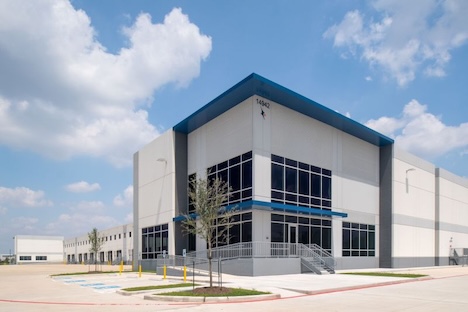
Constellation Real Estate Partners has sold Constellation Post Oak, a newly developed, two-building 424,011-square-foot industrial property at 14942-15012 S Post Oak Road in Houston to LBA Realty. 

Constellation Real Estate Partners acquired the land in partnership with a real estate fund advised by Crow Holdings Capital in March 2022 and completed development of Constellation Post Oak in 2023.  Designed by Powers Brown Architecture and Langan Engineering, the project includes two state-of-the-art buildings totaling 424,011 square feet. 

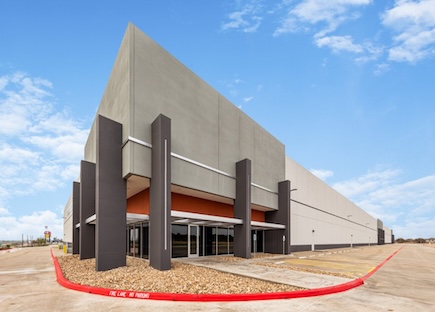
Building 1 is 302,825 square feet and offers a cross-dock configuration with 36-foot clear height, and Building 2 is 121,186 square feet with a front-load configuration and 32-foot clear height.  The project features multiple points of ingress/egress with full circulation, trailer parking, ESFR sprinkler systems, and LED lighting. Constellation Post Oak is 82 percent leased to D&R Signs and US Elogistics Services.

Nathan Wynne of CBRE represented Constellation Real Estate Partners in the sale. LBA Realty represented itself.

Constellation Post Oak is ideally located proximate to Beltway 8, the preferred route for distribution throughout the Houston MSA. It is also located only nine miles from the Texas Medical Center, the largest medical complex in the world, adjacent to Fort Bend County, the second-fastest growing county in the U.S. from 2015-2020, and in close proximity to Houston’s inner-loop neighborhoods.

Total spending in global facilities management industry? It’s expected to soar past $3 trillion by 2026

The global facilities management industry continues its rapid growth, with total spending projected to surpass $3 trillion by 2026, according to the latest research from JLL.

To put this massive figure in perspective, it equals the entire annual GDP of France, currently the world’s seventh-largest economy. However, this massive sector faces mounting pressure. According to JLL’s Global State of Facilities Management Report 2025, 84% of FM leaders cite budget constraints and escalating operational costs as their primary concern, driving a critical need to balance cost efficiency with occupant experience and operational excellence.

“Facilities management should no longer be viewed as a mere cost center, but a strategic business enabler that fortifies resilience, fuels productivity and ultimately creates a competitive advantage,” said Paul Morgan, Global Chief Operating Officer of Real Estate Management Services at JLL. “In an environment marked by volatility, uncertainty and ambiguity, the need for more intelligent, AI powered by data-driven facilities management has never been more essential.”

Economic uncertainty and geopolitical tensions have intensified focus on FM cost optimization, and leaders are addressing these cost pressure through sophisticated outsourcing and supply chain strategies rather than simple cost-cutting measures. Fifty-eight percent of organizations are consolidating contracts and suppliers to leverage volume buying power, while 52% prioritize providers with greater self-delivery capabilities and 37% actively partner with service providers to identify joint cost-saving opportunities.

Operational resilience and human-centric experience drive strategic value

Beyond cost management, operational reliability and resilience ties with occupant wellbeing and workplace safety as the second-highest FM priority for organizations. Business continuity planning for mission-critical environments like data centers, hospitals and labs leads risk management priorities, followed by aging infrastructure replacement and modernization and workforce contingency planning to address skilled labor shortages.

“Forward-thinking facilities management builds organizational resilience through proactive risk management strategies that anticipate and prepare for a wide range of interconnected vulnerabilities,” said Wei Xie, Global Head of Research and Strategy, Workplace Management at JLL. “From workforce contingency planning to energy sourcing to data governance and protection in the age of AI, effective risk management requires balancing immediate operational needs with long-term strategic objectives that align with the organization’s growth roadmap.”

Survey respondents’ prioritization of occupant wellbeing and workplace safety demonstrates FM’s impact beyond bricks and mortar and its evolution toward human-centric operations. This focus directly impacts core business value, with JLL’s 2025 Workforce Preference Barometer showing an 84% correlation between positive workplace experiences and favorable attitudes toward office attendance.

“The next generation of facilities managers must incorporate a hospitality mindset that enhances user experience to deliver safety, comfort, convenience and wellness benefits – ultimately elevating brand value,” said Christian Whitaker, Global Head of Technical Services and Sustainability at JLL. “With the built environment responsible for 42% of global carbon emissions, sustainability initiatives can improve energy efficiencies, reduce emissions, lower costs and improve resiliency while also supporting occupant wellbeing.”

Still, safety confidence reveals concerning gaps; while 70% of organizations express confidence in their FM safety protocols, 30% report low to moderate confidence, highlighting critical vulnerabilities. The top safety challenges include developing a safety-first culture, training and tech enablement; regulatory compliance and safety standards; and physical workplace hazards and incidents.

AI and technology adoption accelerates FM transformation

Despite cost pressures, 32% of organizations plan to increase their FM software investment in the coming year. As FM technology investments remain focused on immediate operational returns, work order management leads FM software investment priorities at 57%, followed by asset lifecycle insights and decision-making for capital asset replacement.

“Organizations are prioritizing investments that deliver fast operational returns through automated reporting, predictive maintenance capabilities and intelligent work order systems demonstrating the ability to harness the power of AI,” said Tim Bernardez, Global Head of Workplace Management Technologies, at JLL. “However, integration challenges persist, with 54% citing compatibility issues with legacy infrastructure and cost constraints as top barriers, while 41% struggle with data quality and security issues.”

The FM industry has increased AI adoption, with 28% of organizations actively embedding AI solutions in their FM operations, representing a shift from experimental pilots to scaled deployment. FM-specific AI applications are delivering measurable operational benefits, with asset lifecycle solutions and automated record keeping being some of the top function areas.

Aging workforce crisis deepens as workers near retirement

While the FM industry is projected to expand by more than $800 billion globally by 2030, the industry faces significant labor shortages to meet surging demand. For example, 39% of facilities managers in the U.S. are above the age of 55, significantly higher than the 28% in this age range across all occupations. The aging workforce and insufficient talent pipeline has escalated labor market competition and hiring costs, while exacerbating talent scarcity in rural, remote and high-cost-of-living areas. 

As mentioned above, skilled trade labor shortage ranks as a significant concern, prompting comprehensive workforce transformation strategies. Organizations are responding through succession planning and knowledge transfer, cross-training initiatives and technology augmentation to enhance human capabilities.

Gateway 10 project in San Antonio achieves full occupancy

Stream Realty Partners announced that Gateway 10 Phase 2 at 6719 Interstate 10 in San Antonio’s Northeast submarket is now fully leased following a new 33,580-square-foot commitment from Pilkington North America.

Pilkington North America, a subsidiary of Nippon Sheet Glass, is the newest tenant at Gateway 10 Phase 2, bringing the building to full occupancy. The Northeast submarket currently reports a 19.84% vacancy rate, with much of that vacancy concentrated in newly constructed Class A industrial buildings. Achieving 100% occupancy in this environment reflects both the property’s strategic location and Stream’s ability to attract top-tier tenants despite broader market headwinds.

Gateway 10 Phase 2 is a part of the larger Gateway 10 Business Park, a premier industrial development jointly owned by Stream and McCombs Enterprises. The park totals 354,710 square feet across two buildings, with four additional buildings planned in future phases. Featuring direct frontage along Interstate 10 and convenient access to Loop 410 and Interstate 35, Gateway 10 Business Park offers unparalleled connectivity to San Antonio’s major distribution and manufacturing corridors. 

San Antonio continues to strengthen its position as a regional manufacturing and logistics hub. It is home to major facilities for international brands such as Toyota and International Motors, as well as the forthcoming JCB facility slated to open in 2026.

Stream Executive Vice President Payton Rion, SIOR, and Michael Kent represented the landlord in the transaction. JLL represented the tenant. 

JPI starts construction 415-unit multifamily development in Denton

JPI broke ground on a $103.2 million, 415-unit multifamily development in Denton, Texas. 

Located at 3855 Hudsonwood Road, Jefferson Quail Creek marks the company’s fifth construction close in Texas and third workforce community this calendar year. The community also marks the company’s second partnership with the Denton Housing Authority in 2025. JPI recently broke ground on Jefferson Bonnie Brae, a 461-unit workforce housing community located at N Bonnie Brae St & Bronco Wy, Denton, TX. Together, these two apartment communities will deliver 876 multifamily units to the region, expanding housing options for all income levels.

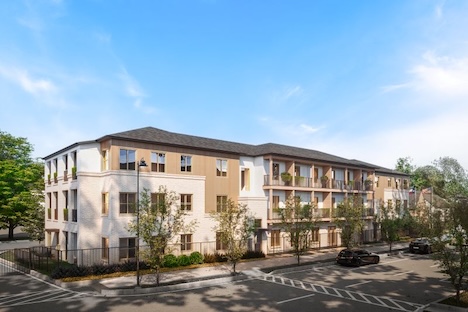
With first units expected in Q2 2027, Jefferson Quail Creek’s three-story, walk-up-style community will comprise 1-bedroom, 2-bedroom and 3-bedroom apartments. Amenities will include a resort-style pool, a courtyard with grills, a beer garden with an outdoor kitchen and seating, a main club room with a café, a resident lounge with TVs and gaming stations, an indoor-outdoor fitness center and yoga studio, open green space, and an enclosed dog park. An indoor mail and package room, tuck-under garages and EV charging stations will also be available on the property.

The fundamentals remain strong. That’s the message from Marcus & Millichap

The fundamentals are strong. That’s the takeaway from Marcus & Millichap’s latest commercial real estate research briefs.

In its third-quarter fundamentals report, Marcus & Millichap said that the CRE market’s fundamentals are holding firm. That’s good news.

But that doesn’t mean that commercial real estate professionals won’t face challenges throughout the rest of 2025 and in 2026.

In its latest report, Marcus & Millichap analyzed the state of the commercial real estate sector’s main asset types. The findings? These sectors might not be booming, but they are, mostly, holding steady even during national economic challenges.

Balance is returning to the multifamily market, according to Marcus & Millichap’s report. Demand growth in this sector is moderating, but so is new supply. That could lead to a more stable multifamily market across the United States, Marcus & Millichap reported.

According to Marcus & Millichap, while the national multifamily vacancy rate is still down 100 basis points on a year-over-year basis, this number did increase to 4.6% in the third quarter of this year.

Certain markets have also seen so much new apartment development that they are now experiencing higher vacancy rates. Marcus & Millichap pointed to markets such as Austin, Dallas-Fort Worth and Nashville. On the other side of the equation, markets with limited development, including Chicago, Cincinnati, Cleveland, Detroit and Minneapolis-St. Paul, have seen rent growth higher than 5%, Marcus & Millichap reported.

In a bit of good news, Marcus & Millichap reported that the U.S. office sector continued to post a positive performance in the third quarter, which might signal a modest recovery in some metropolitan areas.

According to Marcus & Millichap, nearly 38 million square feet of office space was absorbed across the United States in the third quarter. That marks the sixth consecutive quarter of positive net absorption in this sector.

This helped drop the national office vacancy rate down 30 basis points to 16.4% in September, Marcus & Millichap reported.

The office vacancy rate fell a strong 170 basis points in Milwaukee, making this Wisconsin city one of the stronger performers in this sector during the third quarter. Marcus & Millichap reported, too, that Cleveland and Indianapolis ranked among the least-vacant office metropolitan areas in the third quarter.

And in the industrial sector? Marcus & Millichap reported that years of heavy industrial supply continue to influence this sector’s performance.

According to Marcus & Millichap, nearly 20 million square feet of industrial space was absorbed from July to September following a second quarter that saw negative net absorption in this sector. Even with the absorption in the third quarter, though, increased construction activity pushed the vacancy rate in the U.S. industrial sector to a 12-year high of 7.8%.

Construction activity is the reason behind this higher vacancy rate. Marcus & Millichap reported that about 3.5 billion square feet of industrial space has been completed during the past 10 years in the United States. That space is still being absorbed.

The retail sector is holding steady, according to Marcus & Millichap. Net absorption in this sector was positive in the third quarter, but its vacancy rate edged up to a below-average 4.9%.

Retail vacancy rates, though, were below 3.5% in Indianapolis and Minneapolis-St. Paul. Marcus & Millichap reported that well-located retail space, especially space in centers with a higher concentration of necessity retailers, remains in demand by investors.

Construction starts on The RO mixed-use development in Houston

Transwestern announced the start of construction on the next phase of The RO (pronounced ‘row’). An inspired extension of the River Oaks neighborhood, The RO is a large-scale, once-in-a-generation project for the city of Houston.

This visionary mixed-use development on 17 acres at the intersection of West Alabama and Buffalo Speedway features The Birdsall, Auberge Collection, Houston’s first Auberge-branded hotel and residences; 80,000 square feet of chef-driven restaurants and boutique retail; The Clayton, a luxury multifamily community; and premier office space. The RO’s initial deliveries include a 145,000-square-foot Class AA office building that is nearing completion and scheduled for tenant occupancy in June 2026, with The Birdsall, Retail Village and The Clayton delivering in late 2027.

The Birdsall, Auberge Collection will include 44 private residences situated above a 105-room boutique, luxury hotel. The 34-story tower designed by Kohn Pederson Fox (KPF) includes architectural references to River Oaks, incorporating materials such as reclaimed Cedar Bayou brick, characteristic of the storied neighborhood’s original homes. The hotel’s interiors are designed by internationally acclaimed Roman and Williams, and the residences by one of River Oaks’ most respected architects, Dillon Kyle. Auberge Collection, the award-winning brand and operator of one-of-a-kind luxury hotels, residences, resorts and private clubs, has collaborated with Transwestern’s development and hospitality teams on the planning, design and placemaking of The Birdsall and will manage and operate the completed hotel and residences.

Each Birdsall residence features the privacy and sense of space of a gracious River Oaks estate while emphasizing proportion, natural light and material details you would expect to find in a custom home. Residential-only amenities include a covered, open-air swimming pool, outdoor entertainment deck, summer kitchen, game room, and areas dedicated to wellness and fitness. This is coupled with privileged access to the private members’ club, a destination Auberge restaurant, event spaces, a resort-style wellbeing destination, pool, fitness facilities, and dining and social spaces including a European-style café and private garden. Exclusive sales for The Birdsall Residences are being managed by Compass Development Marketing Group in collaboration with Laura Sweeney of Compass and William Wheless of Wheless Realty. 

Retail Village, designed by Michael Hsu Office of Architecture, represents a series of small buildings set within lush landscaping that includes a handful of heritage oak trees original to the site. Brick facades and pavers as well as a paseo will capture the aesthetic of River Oaks, which will be reinforced through restaurants and boutiques that balance sophistication with approachability.

The Clayton is a 317-unit luxury residential tower situated at the corner of West Alabama and Buffalo Speedway. It will integrate seamlessly into The RO through thoughtful architecture that includes masonry façades, gracious window lines and timeless interiors. The Clayton was designed by Pickard Chilton, renowned for iconic buildings around the world, and will be another example of its distinguished work. The RO’s initial office building, which is fully leased, was also designed by Pickard Chilton.

The Birdsall, Auberge Collection has been capitalized by Transwestern and private investor partners with a construction loan from Madison Realty Capital. Retail Village has been capitalized by Transwestern and private investor partners with a construction loan from Citizens and Amegy Bank. The Clayton has been capitalized by Transwestern in partnership with Nomura Real Estate Asset Management with a construction loan from Citizens, Amegy Bank and Texas Capital.