Plano Retailers Expect to Continue ‘Tech and Mortar’ Balance in 2022

Downtown Plano boutique Lyla’s Clothing, Décor & More did not have a significant online presence when businesses closed at the beginning of the coronavirus pandemic in March 2020.

Once a website was set up, Lyla’s owner Meagan Wauters said the page brought in nearly 50% of her revenues before people started feeling comfortable shopping in person again. And while that in-person traffic is now even better than it was before the pandemic, she said e-commerce still makes up nearly 15% of Lyla’s revenues.

“Store pickups have slowed down because people are excited to get out, but people are still utilizing it,” Wauters said.

That return to in-person shopping is happening throughout the Dallas-Fort Worth metroplex, according to Texas-based commercial real estate firm Weitzman.

“We’re in a much better place today [than March 2020],” Weitzman Executive Vice President Michelle Caplan said during the firm’s annual forecast that was live-streamed in January. “We’ve navigated risk and achieved one of the greatest market turnarounds ever.” Click to read more at www.communityimpact.com.

Workers are Returning to the Office. Now Companies Have to Earn Their Commutes

Office buildings have sat largely quiet for two years now thanks to the COVID-19 pandemic. Today, though, the move is on to bring many of these workers back, at least in a hybrid mode in which they work some days from the office and others remotely.

But what do these workers want when they return to the office? What are they looking for from their employers to make the return to the office as stress-free and productive as possible?

Steelcase, the national manufacturer of office furniture, attempted to find out in a report released in February of this year. The report, The New Era of Hybrid Work, surveyed 5,000 workers in late 2021, asking them what they wanted to see in the layouts and functionality of their offices in 2022 and beyond.

The results? Steelcase found that workers want private dedicated workspaces and aren’t happy with completely open office plans. They also want their offices to offer a variety of spaces that support individual work and in-person and virtual collaboration for small and large groups.

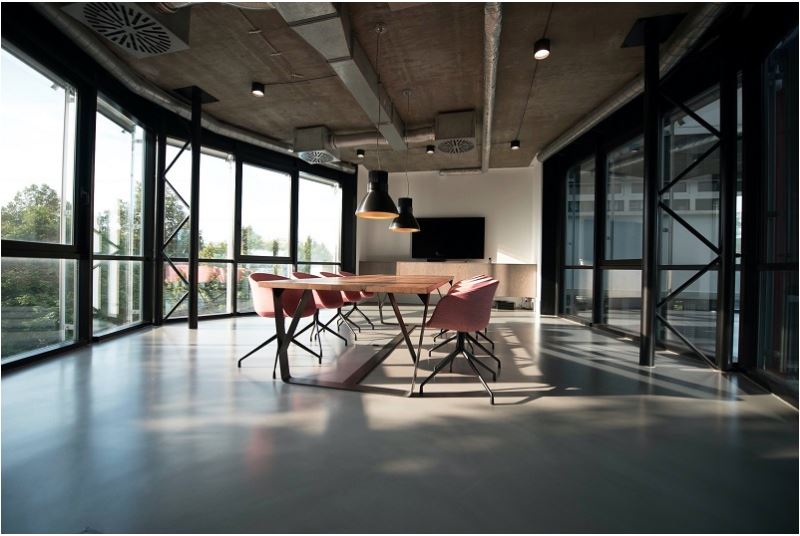
Workers are also interested in offices that feel more like home, providing comfortable furniture and greater control over where they perform their work.

Midwest Real Estate News recently spoke with Chris Congdon, director of global research communications with Steelcase, about the results of the survey and the steps companies and office owners need to take to boost the productivity of workers as they return to the office.

Here is what he had to say.

Let’s start with the important question: How would you describe a hybrid workplace?

Chris Congdon: A hybrid workplace is about empowering people to work from diverse locations. Different organizations will have different policies regarding the frequency of when they expect people to work in company offices or their own home offices. Right now, as people come back to the office, that will be fluid. What’s important, though, is that the workspace be designed to support this kind of work. A few fundamental factors need to change from the way office has been set up in the past.

What are some of those changes?

Congdon: At the highest level, you are trying to achieve equity. You want the people who are in the office and the people who are home to all be having a similar experience. You don’t want to compromise part of your employee base depending on the locations from which they are working. The second big factor is engagement. Companies need to recognize that people engage in different ways based on the medium in which they are working.

Consider that during this interview, we are all on Zoom. But not everyone has cameras on. In a lot of organizations, you have people working in an office and people who are on video. If I were to feel that I am not a full-on equal participant in a meeting because I am on video, I might be quieter. I might spend part of the meeting checking emails, tuned out and not engaged.

How can companies create that equity once people are working both from home and in the office?

Congdon: First, it has to be easy for people to do whatever it is they have to do throughout the day. Anything that creates friction for people causes them to resist. A workplace supporting hybrid work has to solve for those issues.

The way offices are set up can help with this. If more people are attending meetings on video, not everyone will be gathering in a big conference room. Instead, people can gravitate to spaces where they have higher levels of acoustical privacy. They can head to enclaves and enclosed spaces that have four walls and a door. You are going to see more people in the workplace needing those spaces.

That is the number-one thing people asked for in our survey: private spaces. That is more important now than before the pandemic. In our survey, 64% of respondents said they need places to do this hybrid collaboration. If companies want to support that equitable experience, they need to offer these spaces.

What else do people want to see from their workplaces as they return to the office?

Congdon: There is an increased demand for privacy. Even before the pandemic, there was a pushback against the open office plan. The way the open plan was interpreted by a lot of organizations was that everything was wide open. People were shoulder-to-shoulder. They were at benches. There was not a place to escape and get any kind of privacy, whether you needed to focus or needed to make a personal phone call.

The push against that was happening before the pandemic. Now you have sent people home for two years. During this time, 70% either had a dedicated private office or were able to take over a guest room or some other space that became their private office. Contrast that with what people have in the office. More than 50% of people are sitting in open workspaces. After two years, people have more control over privacy at home than they do in the office. As they migrate back to the office, they expect spaces with higher levels of privacy. People want that privacy when they come back.

They also want more work furniture that can either be moved easily by the user or by the installer. The demand is for less of a focus on permanence and more on flexibility.

How about safety measures? Are people worried about their safety with COVID and a return to the office?

Congdon: That does continue to be one of employees’ concerns. They want good air quality. There is less of a focus on material surfaces and more on air quality as we have learned more about COVID. Overall, employees have a heightened expectation that the workplace should be a place where you should be able to feel relatively safe from picking up crud, whether that’s a cold and flu or COVID. Organizations that are smart and savvy will focus first on their indoor air quality, on improving ventilation and filtration. They want to be able to say with confidence that they are providing a good turnover of fresh air for the people in their workplace. If they can’t do that, they’ll have to at least find more space for room-based air-purification systems or even personal ones.

Will companies use the improvements to their office space as recruitment tools?

Congdon: They already are. You can see where the investments are going. Organizations recognize that they have to earn people’s commutes. If people have alternatives, you can’t expect them to make those commutes for the same old thing they left behind two years ago. Organizations are very seriously looking at creating spaces that are checking all the boxes: inspiring, safer, designed specifically to suit the kind of work people are doing today.

The pandemic challenged our traditional assumptions about the way things are or might work, and that’s true, too, in the office.

CA Industrial Expands Partnership with DWS with Grand Prairie Logistics Center

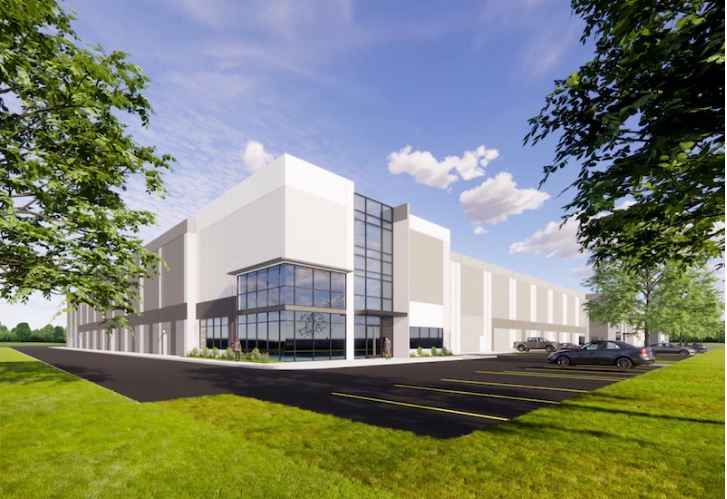
CA Industrial announced the groundbreaking of its 2700 Avenue K logistics and last-mile delivery facility in Grand Prairie, Texas. The development is the product of a joint venture partnership between CA Industrial and DWS Group and is anticipated to deliver in the second half of 2022.

Located eight miles from the DFW International Airport, the logistics center is situated within the Upper Great Southwest submarket – one of the strongest submarkets in the area in terms of occupancy and rent growth. The site’s proximity to major transportation routes I-30 and highways 183, 360 and 161 enables visitors to reach any destination in the metro within a 60-minute drive time. The modern, more than 200,000 square foot multi-tenant Class-A+ facility will feature 36-foot clear heights, 185-foot truck court, 124 parking spaces, 39 trailer stalls and 31 dock doors. All leasing efforts will be managed by Luke Davis of Stream Realty Partners.

Over the last year, CA’s industrial and logistics platform has closed transactions totaling approximately $1 billion of project costs and has more than 9.7 million square feet of industrial space across currently under development in key US markets including in Phoenix, Dallas, Orlando, Atlanta, Savannah, Columbus, Richmond, Union City, Watsonville, Indianapolis and Las Vegas.

Stan Johnson Company Arranges Sale Leaseback of Texas Industrial Portfolio

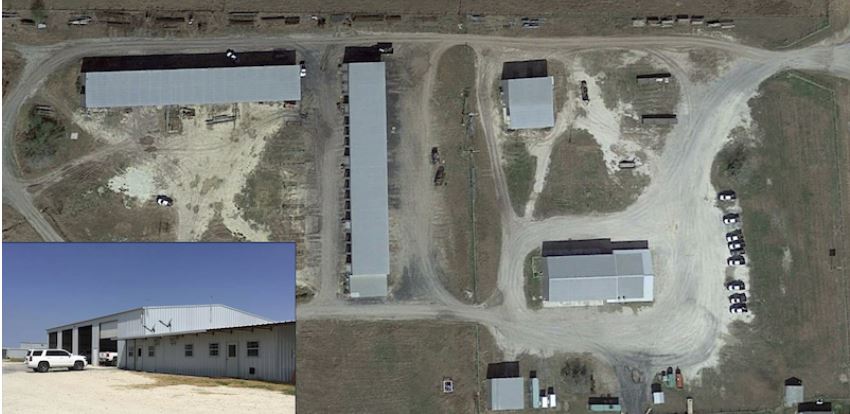
Stan Johnson Company, one of commercial real estate’s leading investment sales brokerage firms, has completed the sale leaseback of a two-location portfolio occupied by Oryx Oilfield Services. The facilities are located at 900 East Highway 11 in Kermit, Texas and 922 Farm to Market 81 in Goliad, Texas. Together, the transaction included 13 buildings totaling more than 118,000 square feet. Stan Johnson Company’s John Rotunno represented the tenant, who executed a long-term lease at the time of sale. The portfolio was acquired for an undisclosed price by Real Capital Solutions, a private equity group based in Colorado.

With roots in the oil and gas industry, Oryx has a solid history of service to key customers, providing facility maintenance and construction, pipeline construction and fabrication facilities for facility components. The portfolio properties serve as mission critical locations for Oryx’s service operations, and the properties feature office and warehouse space, manufacturing and fabrication facilities, as well as an abundance of fenced acreage totaling approximately 95 acres.

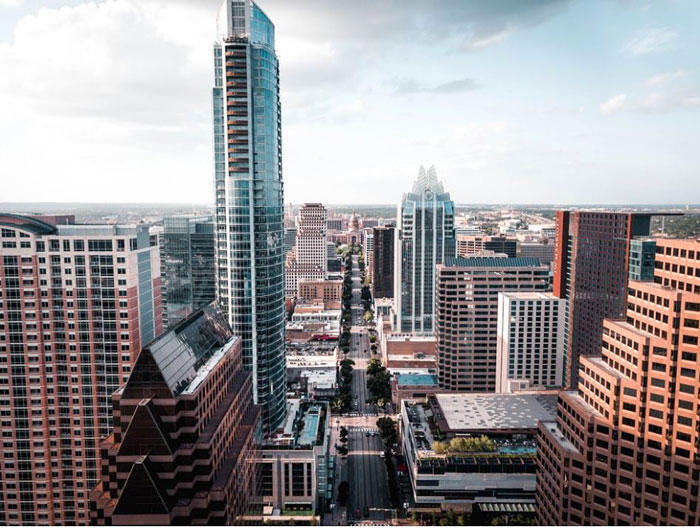
Austin Rises to No. 1 in Ranking of Best Office Markets for 2022

Buoyed by expected job growth of 5.6 percent, Austin reigns as the country’s No. 1 office market for 2022, according to a new report.

The report, published by commercial real estate services provider Marcus & Millichap, cites Austin’s position as a magnet for tech employers as one of the reasons for the bullish outlook regarding this year’s local office market.

Marcus & Millichap anticipates net absorption this year of more than 4 million square feet of office space in the Austin area. That would bring the region’s two-year net absorption total to more than 9 million square feet of office space, Marcus & Millichap says.

Net absorption refers to the amount of square feet that became occupied during a certain period, subtracted by the amount of square feet vacated during that period.

Of course, tech companies are spurring much of this activity. Office tenants in the tech sector are drawn to Austin for several reasons, such as a relatively low cost of doing business, an abundance of skilled workers, and opportunities to collaborate with related businesses, according to the report.

“This trend is not novel for the [Austin] market. However, location preferences are shifting,” the report says. Click to read more at www.austin.culturemap.com.

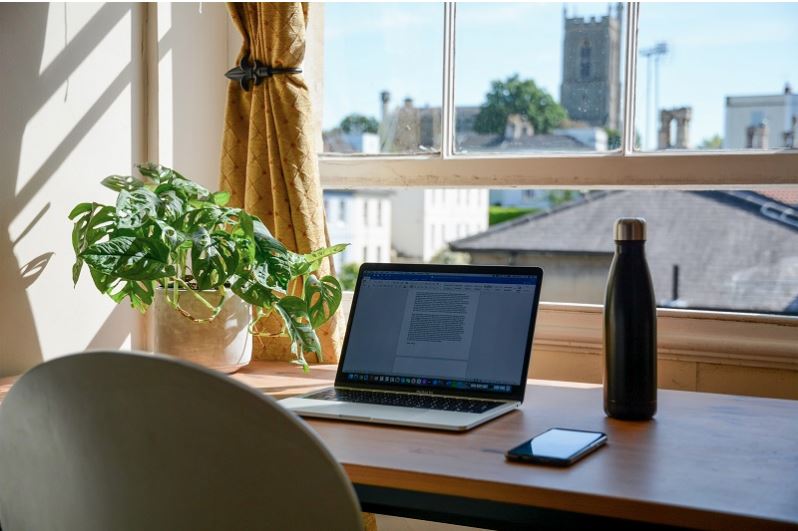
Apartment List: Not Everyone is Thrilled About Working from Home

Turns out, not everyone is excited about working from home. And those least excited? They tend to be the youngest members of the workforce, those in Generation Z.

Apartment List in December of last year surveyed workers about their feelings on remote work. And the survey found that older workers were much more excited about remote work than were younger ones.

According to the survey, 36% of workers 25 or younger said that remote work is “extremely” desirable, while 27% described it as “very” desirable. The survey found that 28% found it as “somewhat” desirable, while 9% said it was either “not so” or “not at all” desirable.

Among Boomers, though, 62% said that working from home is “extremely desirable,” while 54% of workers from Generation X agreed. A total of 51% of Millennial workers said the same thing.

What is clear, though, is that remote work remains common as the country continues to come out of the COVID-19 pandemic. According to Apartment List, 51% of workers were working from home at least 50% in April of 2021. By December of last year, that number fell to 44%, still a good number of workers.

And many of those people still working from home expect to be logging plenty of work hours remotely in the future. Eight in 10 people surveyed who do work from home told Apartment List in December of last year that their remote work arrangements would continue indefinitely.

There are nuances here, though. A total of 33% of respondents said they expected to work fully remote for the indefinite future, while 45% said they expected a hybrid arrangement in which they log some work hours at home and some at the office. Only 10% said they expected to work completely on-site in the near future.