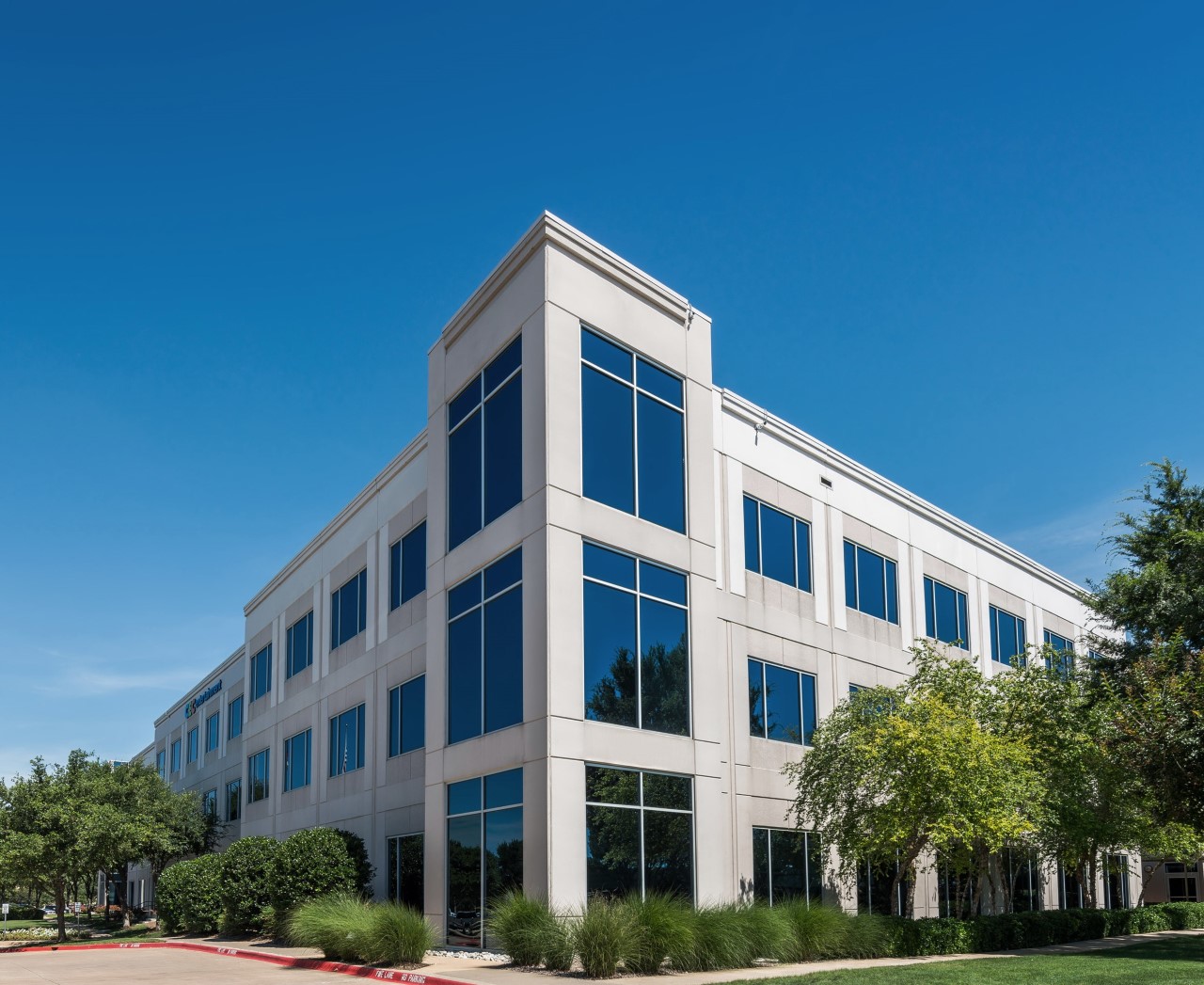
Pei Wei Moves U.S. Headquarters to Hartman Office Building

(Irving, TX)— Pei Wei Asian Diner, LLC (Pei Wei) has signed a long-term, 10,693 square foot lease at 1707 Marketplace Drive in Irving, TX. The Asian-inspired restaurant will occupy its new space on the third floor of the property. Westway One is a class-B office building owned and operated by Hartman Income REIT Management, Inc., a Texas-based commercial real estate owner and operator with $809m in assets under management.

Pei Wei’s new 10,693 square foot office space will feature standard offices and a flex/open space for hotdesking, hoteling, or cubicles. Included in the new space will be a private kitchen and breakroom with access to the property’s amenities.

Hartman’s Westway One office building is conveniently located just five minutes from the DFW international airport. The property is also highly desired as it features convenient access to MacArthur Marketplace retail shopping center, garage parking, 24-hour video surveillance, on-site security, on-site professional management, after-hours controlled access, and UPS and FedEx drop boxes.

Welcoming Pei Wei to the building, Hartman’s President and CEO, Al Hartman, shared, “We are delighted to welcome Pei Wei as our newest tenant at Westway One. With over 100 restaurants here and internationally, it is our honor to have their U.S. Corporate headquarters located in a Hartman building. We wish them continued success!”

Harrison Burt with JLL Dallas represented Pei Wei in lease negotiations with Hartman, and Allison Fannin represented Hartman, the landlord.

To learn more about leasing commercial real estate in San Antonio, Houston, or DFW (Dallas Fort Worth), please contact a Hartman leasing agent at 800.880.2212 or visit www.hi-reit.com.

Houston Ranks Among Leading Life Sciences Markets: CBRE Report

Aided by a high percentage of PhDs and a low cost of living, Houston ranks No. 13 in a new analysis of the nation’s top 25 life sciences markets from real estate firm CBRE.

The report sheds light on the growth of life sciences hubs beyond the traditional coastal markets such as Boston and San Diego. Houston is getting a boost from the growing Texas Medical Center and an influx of venture capital earmarked for life sciences research.

Job growth in life sciences professions – from bioengineers and biochemists to microbiologists and data scientists – expanded by 79% over the last two decades to roughly 500,000. In comparison, the overall U.S. job growth rate in that span was 8%, according to CBRE. That surge in life sciences jobs boosted mainstay markets such as Boston and San Francisco as well as emerging hubs including Nashville, Salt Lake City and Houston.

The report suggests that Houston’s life sciences labor market offers an attractive combination of affordability and a particularly strong PhD talent pool. Major research universities and medical institutions such as the UT School of Public Health and Baylor College of Medicine boosted the city’s ranking ahead of other Texas markets in CBRE’s analysis. Click to read more at www.houston.org.

Central Texas Hospital Systems Invest Billions in Expansions to Keep Pace with Population Boom

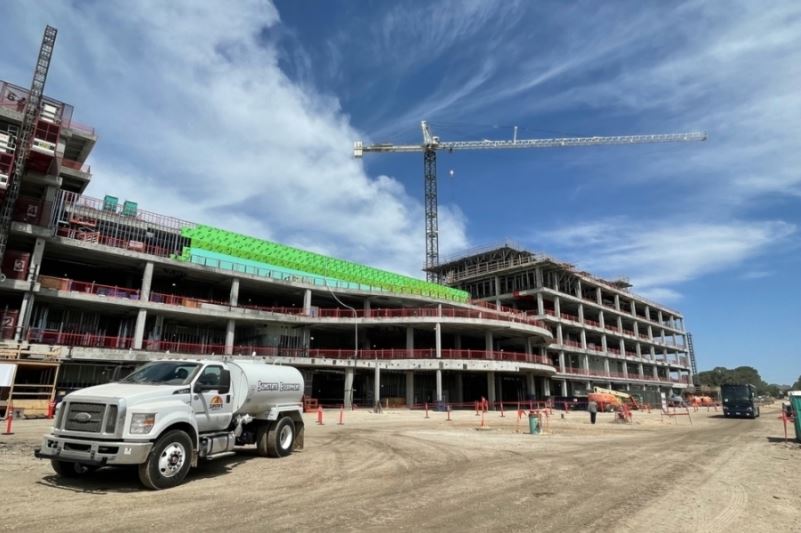
Central Texas is on pace to gain more than 600 hospital beds in the next three years, including two new hospitals in growing suburban areas, two new children’s hospitals in Northwest Austin, a new behavioral health hospital and expansions at seven existing facilities.

Combined, three major health care systems are investing almost $2.5 billion in physical infrastructure to increase access to services and meet the needs of the growing region.

Hospital officials said the additional space is necessary to care for the population of a rapidly expanding region, with Williamson and Hays counties ranking as some of the fastest-growing in the nation. Andy Davis, the CEO for Ascension Texas, a major health care system that includes Ascension Seton and Dell Children’s, said based on projections, within 10 years the metro area will have a 1,200-bed deficit.

“The great thing about Central Texas is the community is growing in every direction, and so it presents a unique opportunity for us to make sure that we’re doing all we can to be present in a way that keeps families close to home and together,” Davis said. Click to read more at www.communityimpact.com.

Pain, Pain, Pain: From Soaring Gas Prices to Rising Labor and Materials Costs, Inflation is Making Life Difficult for CRE Occupiers

Pain. That’s what inflation is bringing to both businesses and consumers today. Gas prices are soaring. Families are spending more at the grocery store. And the average interest rate on 30-year, fixed-rate mortgages has been inching ever closer to 6%.

Inflation is also upending the business models of commercial real estate occupiers, something that Cushman & Wakefield addresses in its latest research.

As the report says, the largest expenses for most businesses are labor costs, which range from about 30% of total operating expenses for transportation firms to 60% for office-using businesses such as accounting, legal, medical and professional services. And today, labor costs for real estate occupiers are rising more quickly than at any time in recent memory, according to Cushman & Wakefield.

According to the Employment Cost Index for the private sector, median wage growth in the first quarter of 2022 rose 6% when compared to the same quarter a year earlier. That’s tied for the fastest rate on record dating back to 1990.

Another challenge for occupiers? Retaining employees. Cushman & Wakefield reported that workers who changed jobs in April of this year received a year-over-year wage increase of 7.2% compared to the average wage increase of 5.3% that workers staying in their current roles saw. Workers understand that they’ll typically earn more by jumping to another company. This makes it especially difficult for companies to keep their best employees if they don’t want to match those bigger wage increases.

It’s little surprise then, that Cushman & Wakefield reports that the number of people quitting jobs remains near an all-time high.

These challenges aren’t likely to disappear soon, either. As Cushman & Wakefield says, escalating labor costs don’t ease as quickly as other forms of inflation. Wages tend to be sticky.

Rising labor costs aren’t the only inflation challenges that businesses face. Cushman & Wakefield says that commercial real estate occupiers are also facing higher electricity, heating and cooling costs. In the United States, the consumer price index for electricity rose 11% during the previous 12 months ending in April, while the consumer price index for natural gas rose 22.7%.

Then there are soaring transportation costs, increases that are especially difficult on companies that ship their product across the country. As Cushman & Wakefield reports there is no sign that these costs are heading down anytime soon.

Another rising expense? The cost of materials. According to Cushman & Wakefield, the Producer Price Index for industrial commodities — excluding fuel– rose 13.8% during the 12 months ending in April, with certain products such as plywood, steel and chemicals rising by even larger margins.

However You Describe it, There’s No Cooling Down the Texas Land Market

“White hot.” “Very active.” “Extremely strong.” “Unparalleled.”

Ask Texas land brokers about what the market is like today and you’ll get colorful descriptions that boil down to one thing: competitive conditions even those with decades of experience haven’t witnessed in their career.

“I’ve never seen the market as a whole have this much momentum in synergy and velocity,” says broker Rex Glendenning, Owner of REX Real Estate. “Over the past four decades, certain sectors of the market have been extremely hot, but I’ve never seen all the different sectors of the real estate industry have the type of momentum we have here right now.”

Glendenning, who started REX back in 1987, thinks the post-pandemic development cycle may have pushed markets such as Dallas-Fort Worth and Austin a whole cycle ahead.

“What may have taken six to eight years has happened in two or three years,” he explains. “Families are moving to Texas. New companies and corporations are building their headquarters here.” Click to read more at www.rednews.com.

Prologis Closes $26 Billion Acquisition of Indianapolis-based Duke Realty Corporation

Prologis and Indianapolis-based Duke Realty Corporation have completed their $26 billion merger agreement. In this major deal, Prologis will acquire Duke Realty in an all-stock transaction.

Both companies announced today that their boards of directors have unanimously approved the transaction.

“We have admired the disciplined repositioning strategy the Duke Realty team has completed over the last decade,” said Prologis co-founder, chief executive officer and chairman Hamid Moghadam, in a written statement. “(Prologis) has built an exceptional portfolio in the U.S. located in geographies we believe will outperform in the future. That will be fueled by Prologis’ proven track record as a value creator in the logistics space. We have a diverse model that allows us to deliver even more value to customers.”

How big is this acquistion? Proglois now acquires 153 million square feet of operating proproperties in 19 major U.S. logisics locations and 11 million square feet of developments in progress, about $1.6 billion in total expected investment.

Prologis is also acquiring 1,228 acres of land owned and under option with a build-out of about 21 million square feet.

“This transaction is a testament to Duke Realty’s world-class portfolio of industrial properties, long-proven success and sustainable value creation we’ve delivered over the years,” said Duke Realty chairman and chief executive officer Jim Connor, in a written statement. “We are confident that this transaction – including the meaningful opportunity it provides for shareholders to participate in the growth and upside from the combined portfolio — is in the best long-term interest of Duke Realty shareholders.”

Following personal dialogue between the executive teams of both companies, Prologis first sent a letter to Duke Realty on Nov. 29, 2021, regarding a potential transaction. On May 3, 2022, Prologis modestly increased the proposed exchange ratio – representing a 34% premium to Duke Realty’s stock price at the time– in a final attempt to engage privately to reach agreement on a mutually beneficial transaction. Duke Realty rejected the Prologis proposal that same evening.

The negotiations are now over, and the acquisition will move forward.