
Click to read more at www.avisonyoung.us.



Your Marketing Source For Texas Commercial Real Estate Reaching 100,000+ QUALIFIED Commercial Real Estate Brokers, Investors, Developers & Commercial Service Providers

Click to read more at www.avisonyoung.us.
Travelers tend to do a lot of work on their trips these days. This isn’t surprising: With so many people still working from home, it’s all too easy for vacationers to slip into work mode for an hour or two — or more — a day, even while they’re supposed to be lying on the beach, sitting by a fireplace or touring a national park.
This is why one of the globe’s biggest hoteliers is now introducing a product that provides travelers with more space on their stays, enough space, even, to set up their laptops and screens for a bit of mid-vacation work.
Marriott International on Nov. 9 announced that it is expanding into apartment-style accommodations with the launch of Apartments by Marriott Bonvoy. In a press release announcing this move, Marriott writes that it is responding to growing demand from families and other travelers who want more space in their vacation accommodations. This demand, Marriott says, stems from the blending of work and leisure travel.
Marriott already has 26 years of experience with its Marriott Executive Apartments brand, its apartment brand in Asia, Europe, the Middle East, Africa and Latin America. With the introduction of Apartments by Marriott, the company is now bringing what it calls its service-apartment concept to the United States and Canada.
“Travelers planning vacations and long business trips today are seeking more choice in accommodations,” said Stephanie Linnartz, president of Marriott International, in a written statement.
Marriott is launching Apartments by Marriott Bonvoy in its upper-upscale and luxury segments,something that will set it apart from Marriott’s existing extended-stay brands.
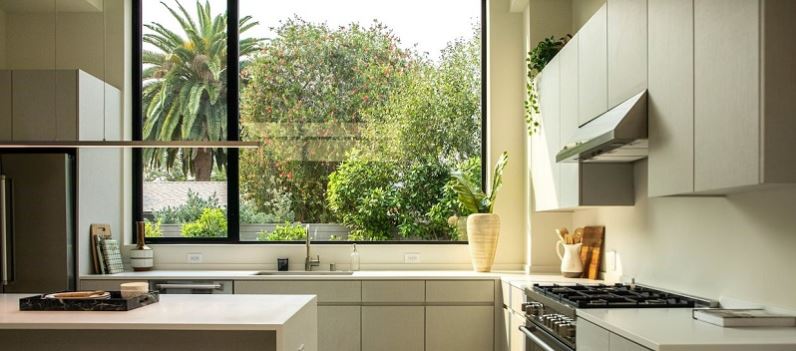
Apartments by Marriott Bonvoy will feature a separate living room and bedroom, full kitchen and in-unit washer and dryer, but will be differentiated from Marriott’s existing extended-stay brands by not providing certain traditional hotel services such as food and beverage, meeting spaces and retail.
Apartments by Marriott Bonvoy will offer developers the opportunity to build new properties or convert existing properties, with a design approach similar to the company’s successful Autograph Collection and Tribute Portfolio lodging brands.
Marriott says that today’s travelers are seeking premium accommodations that provide home-like amenities as they combine work and leisure trips. According to Phocuswright research, three of the top five reasons for selecting an apartment-style rental are more room or space, access to a full kitchen and laundry and home-like feel.
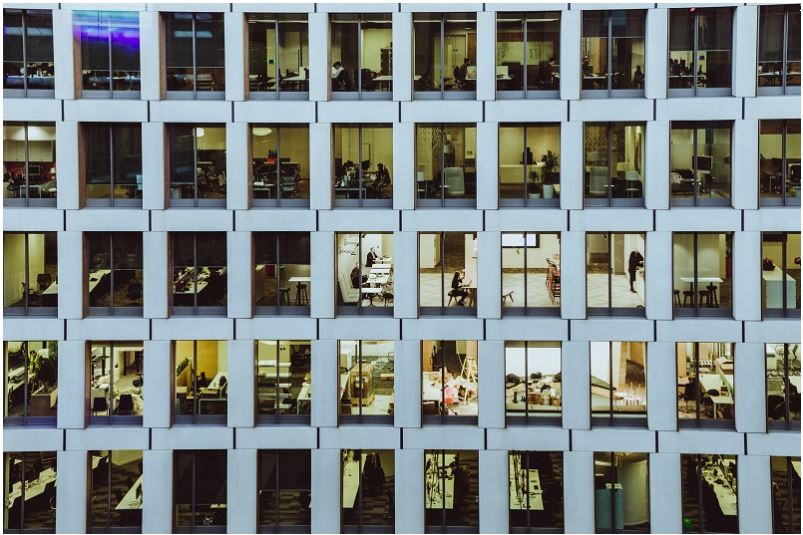
Plenty of outdated office buildings dot cities across the country. Their number has only increased since the start of the pandemic: Companies, which are seeing more of their employees work from home, don’t need as much office space. When they do make a move, they’re seeking higher-quality Class-A space, leaving all those Class-C buildings with rising vacancies.
What to do with these unwanted office buildings? Many developers are converting them to apartment units. And according to the latest research from Yardi Matrix, this trend is showing no signs of slowing.
Yardi Matrix reports that the number of apartment conversions jumped by 25% in 2020 and 2021 when compared to 2018 and 2019. These conversions brought 28,000 new rentals to the country during the last two years. That’s a big jump from the 22,300 apartment conversions the country saw in 2018 and 2019.
This increase in apartment conversions has been especially strong in big cities. This isn’t surprising: There’s a serious shortage of apartment units in most major U.S. cities. Demand for multifamily units far outpaces their supply in these metropolitan areas.
What is surprising is how the increase in conversions compares to the rate of growth of new apartment construction. Yardi Matrix found that adaptive reuse apartments grew faster than new apartments by a count of 25% to 10% during that same 2020 and 2021 timeframe.
Office-to-apartment conversions grew at an even faster rate, jumping by 43% during 2020-2021 when compared to 2018 and 2019. In raw numbers, the country saw 11,090 apartments created from former office space in 2020 and 2021 compared to 7,762 in 2018 and 2019.
The number of office-to-apartment conversions in 2020 and 2021 represent an all-time high. Former offices made up 40% of all adaptive-reuse conversions to rentals in 2020 and 2021, again a record high.
“The residential market needs significantly more density in the areas of the largest cities, where the demand is greatest and where the tallest office buildings are located,” said Doug Ressler, manager of business intelligence at Yardi Matrix. “Existing building architecture is the critical starting point. Not all buildings are equally threatened by the work-from-home revolution. Larger office buildings in abandoned central business districts are better suited to conversion than the often-smaller office complexes distributed around the suburbs.”
Washington D.C. leads the nation in the number of apartment conversions, with 1,565 in 2020 and 2021. In the Midwest, Chicago tops this list, with 1,139 conversions during the same period, good for third-highest in the nation. Cleveland came in fourth in the nation with 837 conversions, while Kansas City, Missouri, took the ninth spot with 568 conversions.

What will bring workers back to the office? Many companies are banking on flashy, high-end office spaces filled with amenities such as onsite cafes, fitness centers and high-tech conference centers. But a new survey suggests that these amenities might not play much of a role in convincing employees to leave their home offices.
According to a survey of 1,000 U.S. office workers commissioned by essensys, only one in five respondents said that amenities would bring them back to the office. But 63% of respondents said that technology and flexible workspaces do inspire them to work in the office.
Of those workers, 34% said they returned to their offices, at least on a hybrid basis, because they liked the convenience and layout of their office space. An additional 27% said they liked having access to multiple workstations, while 26% said they valued their office’s more reliable WiFi.
The survey also found that 81% of respondents are frustrated with their current office experiences and 52% envy the technology available in other office buildings.
“Many of the conversations we have had on the return to the office have been around investment into top-of-the-line amenity space,” said Jeremy Bernard, North American chief executive officer of essensys, in a statement. “While creating an attractive physical space is important, it’s only one part of the puzzle. Our research revealed that the real driver is access to in-office tech.”
More than half — 56% — of the 1,000 U.S. workers surveyed said that the tech in their offices enhances their ability to work.
What tech do workers want in their office buildings? Building-wide WiFi, sensor-controlled lighting and climate control and the ability to access space and services across a network of locations.
“Technology can’t be overlooked as a tool in the back-to-the-office battle,” Bernard said. “Against today’s backdrop of economic uncertainty, this can’t be, nor should it be, ignored. The modern office is completely changing. If real estate strategies don’t evolve quickly and support today’s occupiers, there will be even tougher roads ahead in the fight to remain competitive and relevant.”
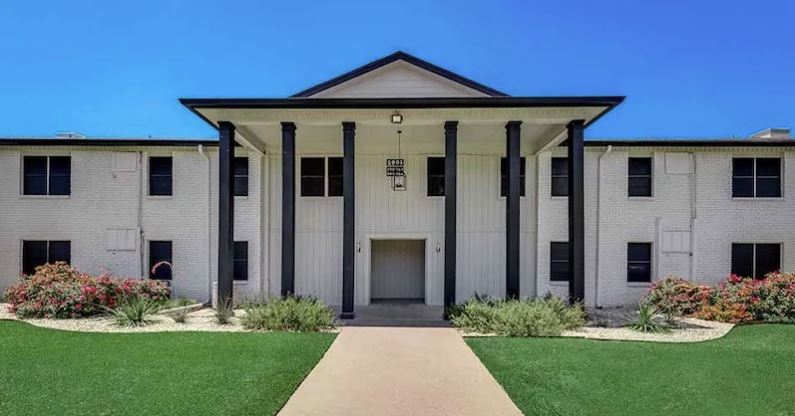
Fritz Waldvogel of Colliers Mortgage’s Minneapolis office closed a Fannie Mae loan for a repeat client for the refinancing of The Edmond in Waco, Texas. The 124-unit market rate property was constructed in 1967 and includes 10 two-story garden-style buildings and two one-story maintenance/storage buildings. Community amenities include a courtyard, BBQ/picnic area, covered parking, on-site management, pool, package receiving, clothes care center, on-site maintenance, and surveillance camera system.
The loan was arranged through a partnership with Old Capital Lending and carries a 10-year term.
Fritz Waldvogel of Colliers Mortgage’s Minneapolis office closed a Fannie Mae loan for a repeat client for the refinancing of The Edmond in Waco, Texas. The 124-unit market rate property was constructed in 1967 and includes 10 two-story garden-style buildings and two one-story maintenance/storage buildings. Community amenities include a courtyard, BBQ/picnic area, covered parking, on-site management, pool, package receiving, clothes care center, on-site maintenance, and surveillance camera system.
The loan was arranged through a partnership with Old Capital Lending and carries a 10-year term.
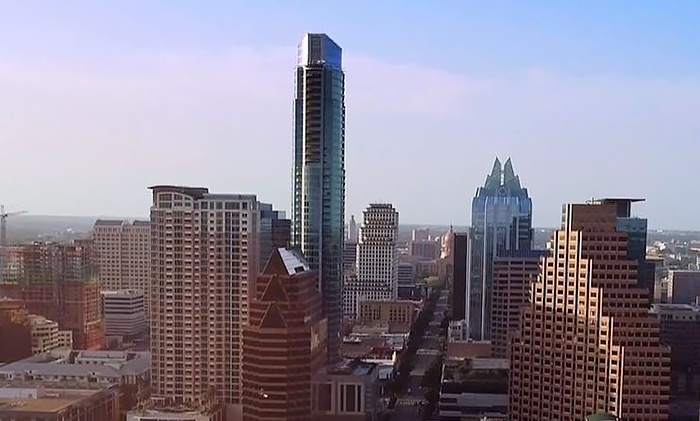
Hines, the global real estate investment, development, and property manager, announced that it has formed a joint venture with The Galesi Group (Galesi) to develop a Class-A industrial and logistics park at the NE corner of Harris Branch Parkway and Parmer Lane in Austin. The site encompasses 150 acres and lies between Harris Branch Parkway and SH 130 and is accessed by both Howard Lane, from the north, and Parmer Lane, from the south.
Phase I of the project is being designed by Powers Brown Architecture and will offer 315,000 square feet of Class-A industrial warehouse space across three buildings. The buildings will feature a sleek, distinctive design while also providing tenants with functional and efficient floor space, all within a controlled business park setting. The park will contain approximately 1.7 million square feet of industrial and logistics space upon full build-out. The venture is located two miles from the Samsung Austin Semiconductor plant, less than one mile from SH 130, and less than 10 miles from downtown Austin as well as the Tesla Gigafactory.
The site is in a PUD with LI Base Zoning and allows for warehouse distribution, light manufacturing, high-tech industrial, and e-commerce fulfillment center uses, among other permitted uses.