United Alloy Inc. Breaks Ground on Expansion of Manufacturing Facility in Seguin, Texas

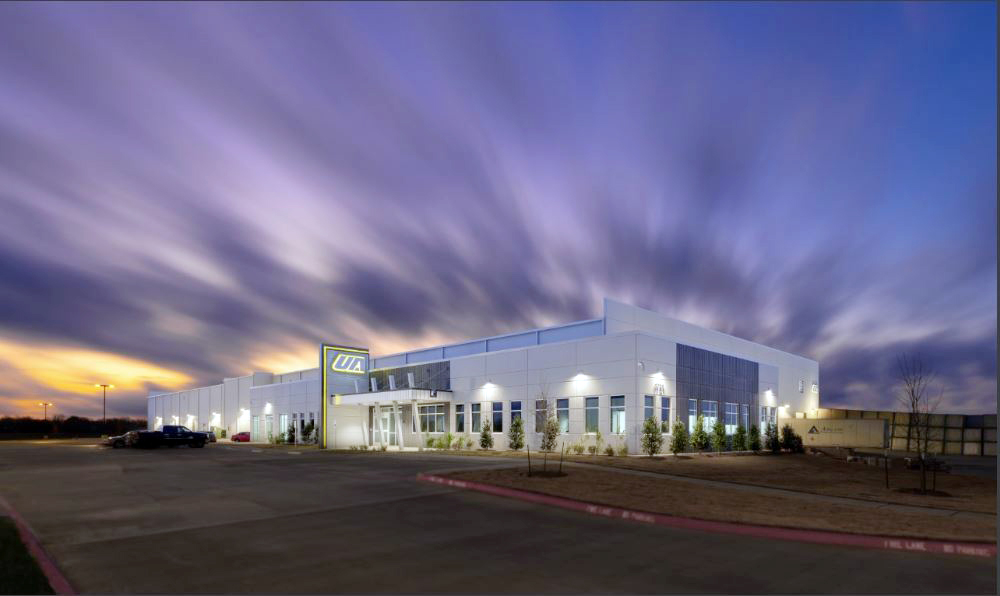
SEGUIN, TEXAS – United Alloy, Inc announced today that they are breaking ground on a nearly 110,000 square foot expansion of their existing manufacturing facility in Seguin, Texas. Headquartered in Janesville, Wisconsin, United Alloy, Inc. is a contract metal fabrication and powder coating company. United Alloy produces the highest quality leak-proof metal fuel tanks, hydraulic reservoirs, skids, frames, chassis, trailers, and complex weldments for an extensive list of long-term Fortune 500 OEM customers. United Alloy is ISO 9001 Certified and is also a recognized Woman/Minority Owned Business.

This expansion will include the latest automation for light sheet metal fabrication, powder coating, and assembly. The extra space will allow United Alloy to continue to grow its capacity fabricating and assembling sheet metal enclosures for large OEM customers. United Alloy also plans to dedicate space to launch an apprenticeship program that will allow it to train entry level welders, fabricators, painters, and assemblers. To learn more about United Alloy employment and apprenticeship opportunities please visit their website – www.unitedalloy.com or contact them at 830-549-5550.

In December of 2019, the City of Seguin and the Seguin Economic Development Corporation announced that United Alloy would be expanding to Seguin, Texas, with plans to construct a new stateof-the-art manufacturing facility in two phases on a 27-acre tract of land within the Rio Nogales Industrial Park. Phase 1 of United Alloy’s expansion to Seguin was completed in December of 2020, representing an investment of more than $17 million. Today, United Alloy has more than 100 employees at their
Seguin facility. Upon completion of Phase 2, United Alloy’s total building footprint will be approximately 230,000 square feet and will represent a capital investment of more than $35 Million.

“We are thrilled that United Alloy is expanding their operations in Seguin, Texas. Even though they have only been a member of our business community for a short period of time, United Alloy has developed a tremendous reputation as a quality employer and are a top-notch corporate citizen. We are excited to watch United Alloy grow and look forward to working with them for years to come.” said Josh Schneuker, Executive Director of the Seguin Economic Development Corporation.

Colliers Q2 2022 Houston Industrial

“Capital flows are still robust for industrial assets despite some near-term headwinds as the sector continues to show strength on the user (leasing) demand side and reasonable new construction pipelines. We believe that the central part of the country, including SE Texas, are well positioned for robust future industrial growth as the Gulf of Mexico Ports and North/South rail options push more distribution from the backlogged West Coast to this region.” Patrick Duffy | President of Colliers in Houston

Key Takeaways

  • Robust leasing activity
  • Positive net absorption
  • Vacancy drops 
  • Rental rates increase
  • Construction starts up

Houston Highlights

Houston’s industrial market continued to gain momentum as leasing velocity reached over 10 million square feet in the second quarter. The increase in demand for space continued to spur new development with over 21 million square feet under construction and an additional 65 million square feet proposed or in the final planning stage. Houston’s industrial market recorded 6.6 million square feet of positive net absorption in the second quarter. The vacancy rate decreased 280 basis points annually from 8.5% in Q2 2021 to 5.7% in Q2 2022.

Executive Summary

Commentary by Jim Pratt 
The headlines for the 2nd Quarter of 2022 might mimic a political campaign of yesteryear, “It’s the economy, stupid!” While that may be somewhat harsh, we are certainly in a period of dramatic change and uncertainty in the Houston industrial market. With inflation at 40-year highs, currently exceeding 9%, and YTD increases of 1.5% in the interest rates by the Fed, developers and investors alike are revising their investment parameters to reflect these significant shifts. While the appetite for investment doesn’t seem to be affected, there is a wider gap in Seller expectations and Buyer pricing that will likely grow through the end of the year. Further, additional increases in interest rates are expected to total 1.5% to 1.75% and should have a significant impact on valuations. As we are easing into a recession that could be exacerbated by the additional interest rate increases anticipated from the Fed, the impact of a national recession on the Houston economy, and more specifically the Houston industrial market, is unknown. We continue to have strong tailwinds that could likely carry us through without a huge impact.
International investment dollars are still pouring in as these investors are willing to accept lower returns in exchange for the safety of their investments. U.S. real estate is an excellent hedge against inflation and offers security. These investors may be muting the overall impact of rising interest rates on cap rates. While not rising point for point with interest rates, there is certainly movement in cap rates on most industrial real estate. Long-term debt has increased as much as 150 basis points, creating negative leverage where cap rates are lower than the interest rates on debt. To maintain the required debt coverage ratios, investors have to provide more equity with lower percentages of leverage to satisfy the lenders. All of these factors are affecting the pricing and will continue to have a more significant impact through the end of the year.
Nationally, according to the Wall Street Journal, property sales dropped 16% compared to April 2021. Prior to April of this year, sales had increased for thirteen consecutive months. The decline has been more pronounced in the Houston Industrial market. According to statistics from Real Capital Analytics, industrial sales dropped from 114 properties and $1,904,940,472 in the 4th quarter of 2021 to 57 properties and $1,549,963,942 in the 1st quarter of this year, and only 43 properties totaling $777,668,957 this quarter.  
Aside from the drop-off in industrial sales, we have a very healthy industrial market. The vacancy rate dropped from 6.11% in the 1st quarter to 5.6% this quarter. Year-to-date absorption through the end of the 2nd quarter was 13,078,101 square feet, in line with the record setting absorption in 2021. More importantly, the average rental rate increased from $7.88 to $8.60 over the past quarter. Where annual increases in rental rates had recorded 2% for many years, they increased substantially and are now typically ranging within 3.5% to 4%. Owners are bolstering their returns as they try to offset the impact of inflation with larger increases in the rental rates.
Another trend continuing to take root in the market is the preference for shorter-term leases by landlords. Houston has historically seen 5-6% annual increases in rental rates, but the weighted rental rate change over the 1st quarter was 5.52%. Landlords are reluctant to commit to long-term leases that lock in fixed rental rate increases, preferring shorter-term leases that allow for more significant rental rate increases at the end of the lease term. While lenders still want longer-term commitments for a stabilized cash flow on new acquisition loans and ground-up development, current owners typically renew for shorter terms.
So, despite all of the changes in the economy, we believe the Houston industrial market is strong and adapting to the changing parameters. We will continue to watch the economy closely, and adjust to changes in the market, but with a solid foundation, the outlook for the balance of 2022 continues to be good.

Westcore Acquires Eisenhauer Business Park from NIT Industrial for $36.6M

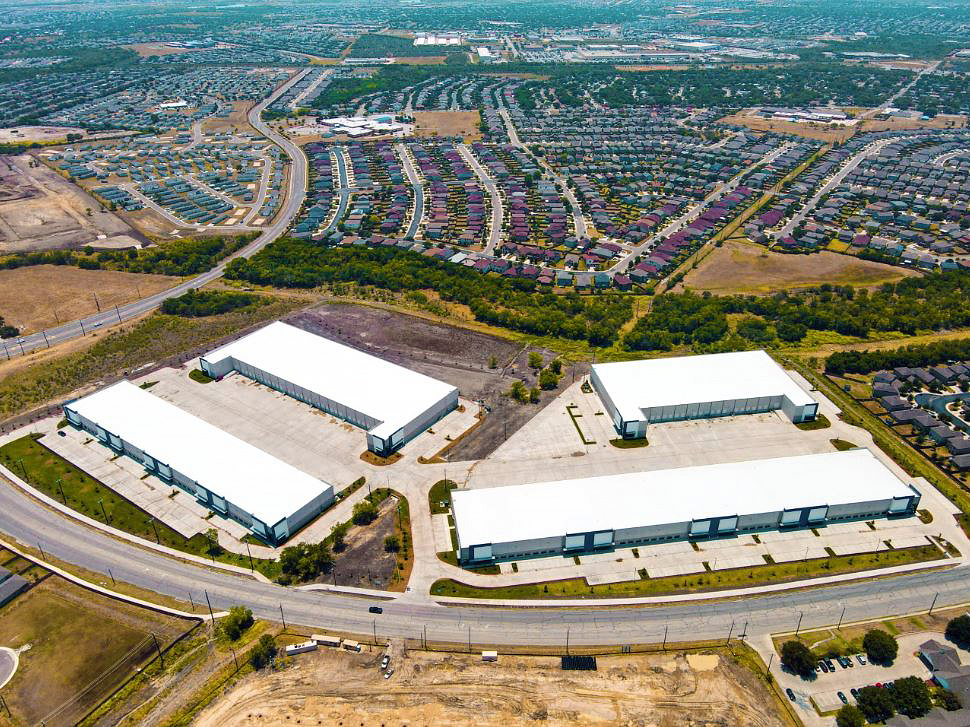
SAN ANTONIO (July 20, 2022) – Westcore, a leading industrial real estate acquisition, development and asset management firm, has acquired the recently completed Eisenhauer Business Park in San Antonio, Texas from NIT Industrial. The four-building property, comprising 377,318-square-feet, sold for $36.6 million.

In the fall of 2021, Westcore agreed to purchase both Cedar Port Park and Eisenhauer Business Park from NIT Industrial. The latter purchase was scheduled upon building completion.

The newly built Eisenhauer Business Park is located at 5473 Eisenhauer Rd., proximate to the three primary San Antonio thoroughfares of IH-10, Loop 410 and IH-35. The buildings feature dock-high and grade-level loading and clear heights ranging from 28 feet to 32 feet. The project accommodates small and large users alike.

“I am excited for the addition of the Eisenhauer Business Park to our portfolio—our San Antonio holdings now exceed 1.5 million square feet,” said Westcore Managing Director Peter Mette. “San Antonio remains an attractive investment market for us, and we hope to add more high-quality assets to our portfolio in the near term.”

Westcore represented itself in the transaction, while Stream Realty Partners’ Michael Kent represented the seller.

“Westcore will benefit from a 95% occupied industrial market with record absorption over the past 18 months and continued tenant demand,” said Kent. “Plus, the variety of product and flexibility of suite sizes exposes the Eisenhauer Business Park to a wide range of tenant demand.”

About Westcore

Westcore is a fully integrated commercial real estate investment company with institutional scale and capabilities that operates with speed, agility and adaptability. Since its founding in 2000, Westcore and its affiliates have acquired and managed more than $6 billion in industrial and office assets, comprised of more than 1200 buildings and totaling over 60 million square feet. In addition to its U.S. headquarters in San Diego, Westcore has regional offices in Los Angeles; Oakland; and Sacramento, as well as satellite offices in London, England; Berlin, Germany; and Vienna, Austria.

Media Contact: Jennifer Whitelaw
TW2 Marketing
jwhitelaw@tw2marketing.com, 619-733-5944

Colliers Announces Lease of Approx. 3.4 Acres Laydown Yard Near Interstate 10

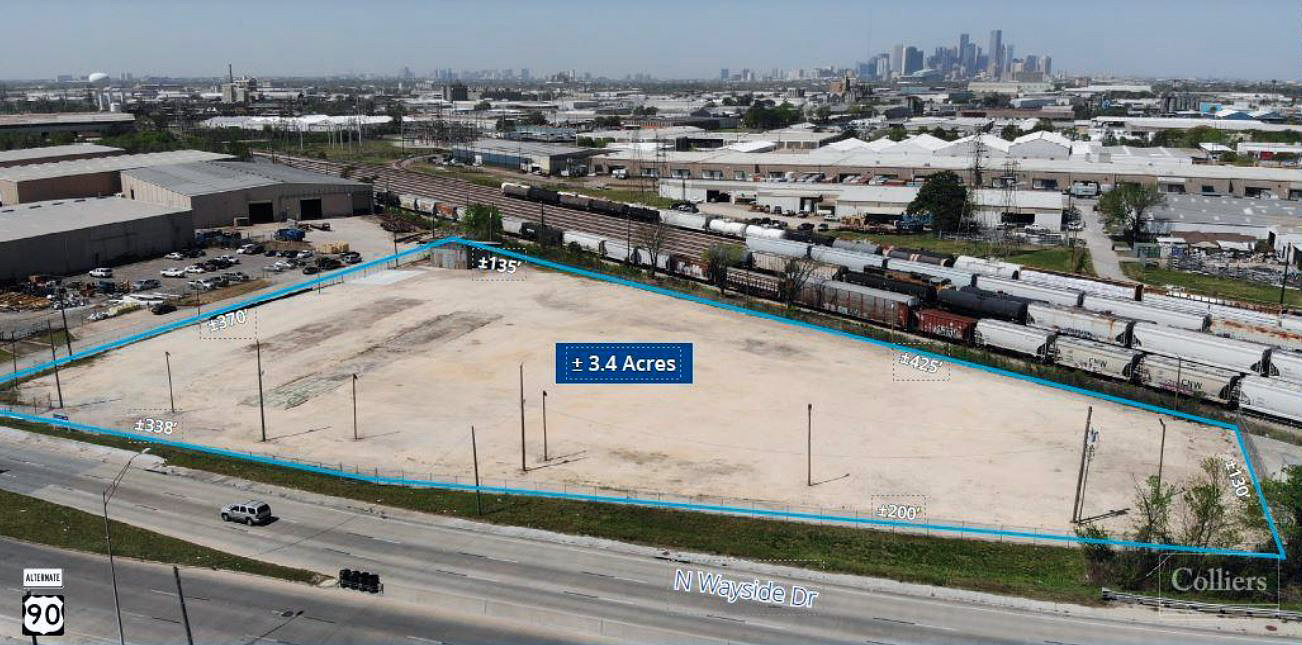
Houston, July 20, 2022 – Colliers is pleased to announce the lease of ±3.4 acres located at 605 Wayside Drive in Houston, Texas. The tenant, J.B. Hunt Transport Inc., was represented by Craig Jones of Fischer & Company. Zack Taylor, of Colliers Houston, represented the landlord, LP by Wayside Management, in the transaction.

“The ownership group purchased this asset last year due to its proximity to Houston’s Turning Basin Bulk Terminal. They thought the location would appeal to a variety of different users and could not be happier to have secured a lease with JB Hunt. This will be a fantastic long-term investment for the client,” said Zack Taylor of Colliers.

The property is located in Houston’s Downtown industrial submarket. The submarket contains 31.7 million square feet of industrial space, which is currently 95 percent occupied and the average asking annual market rental rate is $6.13 per square foot.

Zack Taylor
Senior Vice President
+1 713 830 2193 zack.taylor@colliers.com

Back to the office? Are CRE Workers Ready to Return to Their Desks?

It’s clear when looking at the quieter streets in downtowns across the Midwest that many office workers have still not returned to their cubicles and conference rooms. It’s equally clear that no one knows when workers will once again fill these office buildings.

But what about those working in the commercial real estate industry? Are they returning to the office? And do they want to?

That’s what Keller Augusta, a search and advisory firm focused on commercial real estate, wanted to find out. The firm recently conducted its second Workplace Reboot Survey, charting the opinions of 600 CRE employees and employers on whether brokers, developers and other CRE pros are returning to the office, if now is the right time for this and what a return to the office will look like.

What did this survey find? First, those working in commercial real estate are largely like most employees: They’re not eager to return to the office full time. Keller Augusta found that nearly half of all surveyed employees wanted to work one to days a week in the office.

The conflict? Only 20% of the employers surveyed by Keller Augusta mirror that hybrid schedule.

Kaitlin Kincaid, senior managing director with Keller Augusta, said that these results aren’t overly surprising. The COVID-19 pandemic changed the way many people think about work, and that includes those working in commercial real estate.

“Most commercial real estate salespeople and client-facing people were not sitting at a desk all day long before COVID,” Kincaid said. “But that doesn’t mean that commercial real estate companies didn’t face challenges with work-from-home. How do you manage a building from home? How do you build a building from home? How do you interact with tenants from home? A big part of the real estate industry is at the property level. When COVID hit, it became challenging when only emergency personnel were allowed to go properties.”

Those CRE workers who were allowed to do their jobs remotely found that they liked the flexibility of working from home, Kincaid said. They no longer had to make long commutes each day. They could spend more time with their families. They had more time to exercise.

This has forced many CRE employers to search for ways to provide at least some of that flexibility now, even as the United States has, hopefully, worked through the worst days of the pandemic. This might mean offering all CRE employees the option to work on a hybrid schedule, even those working in property management.

And employers who don’t give their workers some say in how many days a week they must come into the office? They might struggle to find and retain employees.

“A company that isn’t doing this could lose strong employees to a different opportunity,” Kincaid said. “The flexibility and hybrid schedules are a major retention tool for companies today. Employees are prioritizing flexibility over compensation in many cases. Employers have had to respond to that.”

Are employers in the commercial real estate world responding to this challenge? Kincaid said that they are. She said that most CRE companies are operating on a hybrid model in which employees work part of the time from home and other days in the office.

“The companies that quickly said that we are in the real estate business and we want people back in the office five days a week are losing people at such a high rate that they are backpedaling and are now working on a hybrid model,” Kincaid said.

But how permanent is this change? That’s a tougher question to answer, Kincaid said.

Kincaid said that she isn’t sure that hybrid work models are here to stay in the commercial real estate business. Many companies might be offering this flexibility on a temporary basis to keep their most talented workers. But the key word here is “temporary.”

“Companies might soon start to say, ‘If you can go to restaurants and bars and go on vacation, you can come to the office,’” Kincaid said. “Companies accommodated people who didn’t want to go into the office before we had vaccinations. Then companies kept this flexibility because they knew if they didn’t offer it, they’d lose workers. But when we continue to move past COVID will this working arrangement be here to stay? I don’t know.”

In the past, the only employees who asked for remote work were generally people with childcare responsibilities, mostly women, Kincaid said. That is no longer the case. Today, many workers are seeking the flexibility to work from home at least part of the time, with some saying they’ll never come back to the office five days a week.

This doesn’t mean that commercial real estate offices are empty. Kincaid said that few commercial real estate companies have not brought their employees back to the office in some capacity.

This is important, Kincaid said. Employers want their workers in the office at least part of the time as a way to foster collaboration and brainstorming. When everyone is working from home, that collaboration largely disappears.

Even a hybrid work schedule limits collaboration to some extent, Kincaid said. And this is one of the big concerns that CRE companies have.

“If everyone is in the office, that works well. If everyone is at home, that can work, too. But if some employees are at home and others are at work, that results in missed opportunities to have everyone collaborate at the same time,” Kincaid said. “The employees at home miss out on that moment when they are walking by someone’s desk and that person wants to sit and talk about a project. That is the part that is missing. If that one person is not in that day, that person might miss out on that conversation.”

Employers are concerned, too, about mentorship and training. It’s more difficult to train younger workers when they aren’t in the office.

Those who entered the workforce during COVID have borne the brunt of this, Kincaid said.

“They didn’t have the same kind of training,” Kincaid said. “Their internships were canceled. Their first year on the job they worked form their parents’ basement. They are lighter across the board on overall professional experience. They lack some of that mentorship that is so important.”

What are CRE employers doing to bring their workers back to the office, at least on a hybrid basis? Kincaid said that many companies are improving the work environment. This might mean something as simple as providing regular lunches and snacks onsite. Others are paying for their employees’ parking, while still others are bringing wellness services – everything from onsite fitness classes to mental health services – to their offices.

Some CRE firms are holding more social events to encourage their workers to leave their homes and mingle with their fellow employees. This might mean company lunches and off-site activities. Others are organizing community service events to get employees interacting with each other again.

“It’s about bringing people together again,” Kincaid said. “They are trying to recreate those relationships that employees had with their colleagues. They want their workers to say, ‘I enjoyed being with these people today. I want to go back.’”

The keys to retaining the top CRE workers, though, remain the same today as they were before the pandemic, Kincaid. It’s about offering not only solid compensation but opportunity, too.

“Employees want to feel as if they have an opportunity to advance,” Kincaid said. “It’s about creating a career path that employees can aspire to. Employees that have a desire to do more, will be happier at a company that offers them more professional opportunities.”

Mixed-use Retail and Office Property Near Dallas Sells

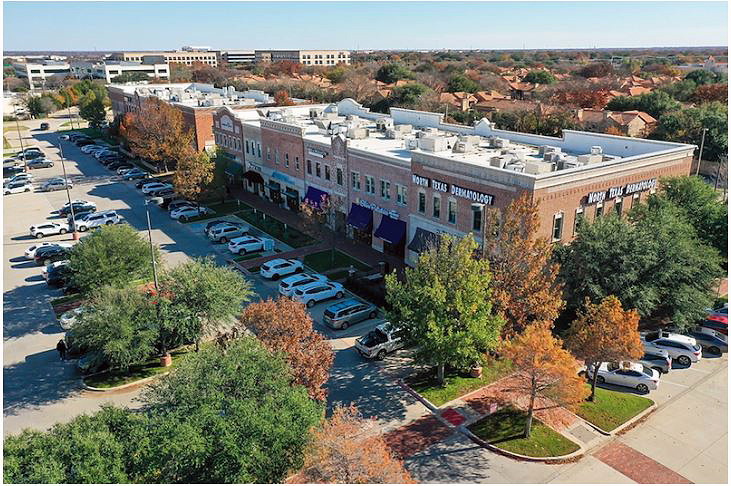
JLL Capital Markets has closed the sale of The Shire at CityLine, an 83,256-square-foot, premium, suburban mixed-use retail and office property in the Dallas-Fort Worth community of Richardson.

JLL marketed the property on behalf of the seller, Standridge Companies. Venture Investment Partners acquired the asset.

The 85% leased The Shire at CityLine features an eclectic tenant mix that includes Sweeney Eye Associates, Dogtopia, Silver fox, Shire Pediatrics, North Texas Dermatology, Anaya’s Seafood, Republic Title, Modern Dental, Ameriprise, Re/Max, Gillespie’s Tavern and more. The center, which was constructed between 2005 and 2006, has 414 dedicated parking spaces.

Situated on 6.22 acres at 2600, 3610 and 3650 Shire Blvd. and 2121 Infocom Drive, The Shire at CityLine is in Richardson, which has experienced a 14% increase in population since 2010 and is in Dallas-Fort Worth’s growth path. The property is near the high-traffic intersection of Central Expressway and President George Bush Turnpike and is adjacent to the $1.5 billion CityLine development, which is home to 11,200 employees and 2,221 multi-housing units. There are 109,992 households earning an average annual household income of $104,811 within a five-mile radius of the property.

The JLL Retail Capital Markets team representing the seller was led by Senior Managing Director Adam Howells, Senior Managing Director and Co-Head of JLL Retail Capital Markets Barry Brown and Analysts Jack Copher and Beth Copeland.