Data Center Supply Chain Struggles

Data centers have seen explosive growth year-over-year, and it looks like there’s no end in sight to the insatiable need for data as we continue to live in an increasingly tech-driven world. From work-from-home and the rise in telemedicine to FaceTime connections, explosive growth in financial trading, internet conferencing, virtual schooling, online gaming, and IOT—the list goes on and on. We utilize technology from the moment we wake up every morning, relying more and more on the critical infrastructure that enables our increasingly technology-dependent lives.

Despite its strong performance relative to traditional real estate sectors in the face of COVID-related disruptions, the data center industry has not been exempt from many of the challenges brought on by the global pandemic. Specifically, the data center industry has experienced significant strain on its global supply chain, spurred by global labor shortages, manufacturing constraints, and general transportation disruptions. In an industry where timing and speed-to-market are especially critical for essential operations, maintaining a robust supply chain is essential for data center operators and users alike to meet and satisfy user demand.

Like most of its traditional real estate counterparts, data centers rely heavily on many of the commodities that have experienced significant supply chain headwinds in recent months: steel, lumber, aluminum, copper, chips, and more, to build and operate. However, unlike office or industrial facilities, data centers rely on these commodities to manufacture the critical infrastructure components that enable global connectivity. For a data center user or operator, a slight disruption in the upstream supply chain could have a significant financial impact. Click to read more at www.dmagazine.com.
130-acre Weiser Business Park Under Construction off Highway 290 in Cypress

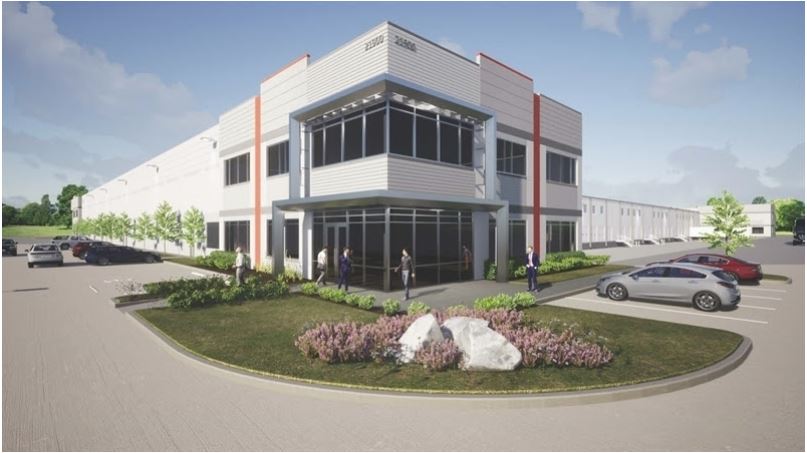
Phase 1 of Weiser Business Park is underway at 21904 Hwy. 290, Cypress, the former site of the privately-owned Weiser Air Park. Three Class A industrial buildings totaling 557,490 square feet are planned for this phase of development, which is slated for completion in the second quarter of 2022.

Commercial real estate developers with Trammel Crow Co. have broken ground on the project in partnership with Clarion Partners LLC, a real estate investment management firm, officials announced in a Sept. 8 news release.

“Weiser Business Park is located in the heart of the northwest industrial submarket, an ideal distribution point for companies in the e-commerce, consumer goods and home building industries due to the proximity to the Woodlands, Katy and the growing master-planned communities of Bridgeland and Towne Lake,” Jeremy Garner, principal with Trammel Crow Company’s Houston office, said in a statement.

Trammel Crow officials said the project’s design and location are intended to “minimize the interaction between car and truck traffic.” Weiser Business Park will be accessed via a new extension of Fallbrook Drive between Huffmeister Road and Hwy. 290.

The 130-acre property is located near Carl’s BBQ, Cypress VFW Post 8905, Cypress Creek Baptist Church, HCA Houston Healthcare North Cypress and several hotels, among other businesses. Cy-Fair High School, Arnold Middle School, a Cy-Fair ISD transportation center and the school district’s police department are located just west of the project. Click to read more at www.communityimpact.com.

Bradford Secures Two Office Leases for One Lake Park Office Building

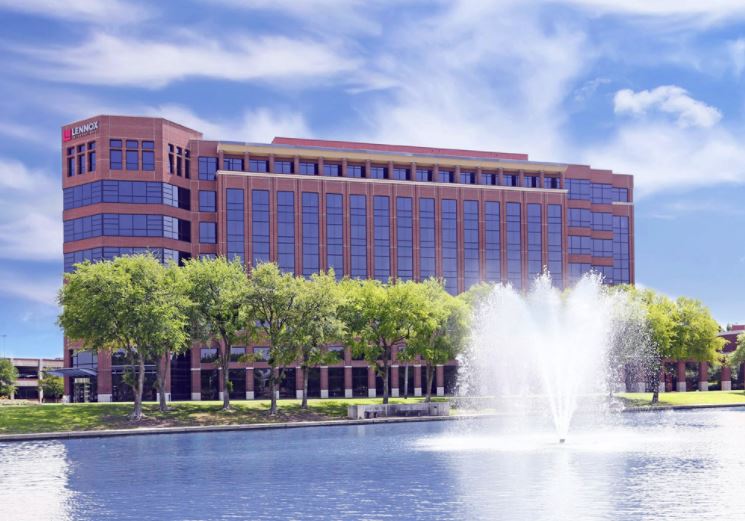
International firm Kroll Inc. and MaxDecisions Inc. are relocating and expanding their offices in North Texas, snapping up the remaining space in the class A One Lake Park in Richardson’s Telecom Corridor.

Kroll and MaxDecisions have leased 11,896 sf and 3,154 sf, respectively, on the first floor of 2140 One Lake Park Blvd. The new deals restore the mid-rise’s historical 100% occupancy after one year of downtime due to the pandemic.

“We were in the early stages of marketing the spaces when COVID hit. Once tours picked up again, we quickly had commitments in hand for the vacancies,” says Melanie Hughes, senior vice president of Bradford Commercial Real Estate Services. She and Elizabeth Hooper, market director, lease the 192,213-sf office building for Lennox International Inc., an owner/occupant.

Kroll is eyeing a September move-in. The firm has retained ARCO/ Murray, a national design and construction firm, to build out its new office, which has views of the lake and walking trails on Lennox’s multi-building campus. Alexandra Boury and Greg Langston of Avison Young represented Kroll, formerly Duff & Phelps, in the long-term lease negotiations.

MaxDecisions has just relocated its headquarters from nearby Plano to One Lake Park. Hughes and Hooper negotiated a direct deal with the IT firm, which also has offices in Oregon, Utah and California. The company is an analytical provider for the financial services industry.

The eight-story One Lake Park features such high-end amenities as an Aramark Corp.-operated, 120-seat restaurant, fitness center with personal trainers, structured parking and 24/7 manned security. The dining facility and gym are scheduled to come back online on Sept. 1 in tandem with Kroll’s move-in.

“Lennox is a Fortune 500 company so the infrastructure and amenities are top of the line,” Hughes says. “As a result, One Lake Park attracts leading tenants in their respective industries.”

Kroll is relocating its Addison team and keeping the Uptown office intact. The company provides diverse services to 61% of the Fortune 100 companies, including valuation, investigations, corporate finance, cyber risk, security, restructuring and regulatory compliance. The advisory firm employs nearly 5,000 professionals in 30 countries and territories around the world.

KKR Agrees to Sell Riata Corporate Park in Austin, Texas

KKR, a leading global investment firm, today announced that KKR has agreed to sell Riata Corporate Park (“Riata”) to a global institutional investor in a deal valued at over $300 million. The transaction is anticipated to close in the coming months.

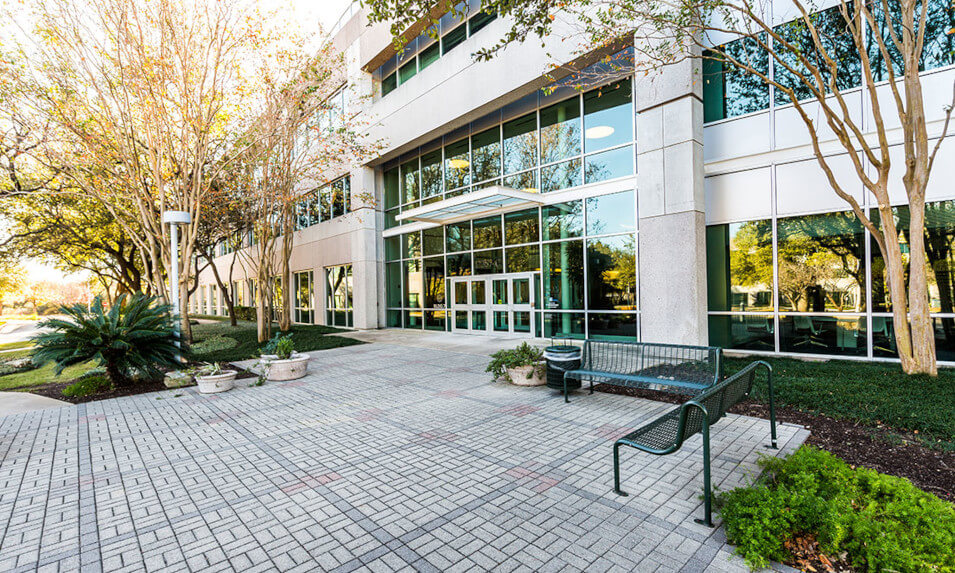
Riata Corporate Park is an eight building, 688,100 square foot, Class A office campus located in the Austin Technology Corridor in Northwest Austin, Texas. The campus is well located just minutes from The Domain, Austin’s premiere mixed-used retail and entertainment hub. The property is 100% leased and occupied by a high-quality tenant group that includes publicly traded companies along with a mix of technology, financial services and healthcare businesses.

Since purchasing Riata in December 2019 through its Americas opportunistic real estate strategy together with Endeavor Real Estate Group (“Endeavor”), KKR has substantially upgraded the property’s fitness center, café, landscaping, outdoor amenities and other features. KKR and Endeavour also completed significant deferred maintenance.

“Our long-term focus on high-quality properties in great locations within attractive growth markets led us to invest in Riata, a tech-focused office campus in one of the country’s most desirable cities,” said Roger Morales, KKR Partner and Head of Real Estate Acquisitions. “We are proud of the property and capital improvements delivered under our ownership in what has been a very successful pre-pandemic office investment. Click to read more at www.valdostadailytimes.com.

The Built-For-Rent Land Rush Is Intensifying; Here Are Five Drivers

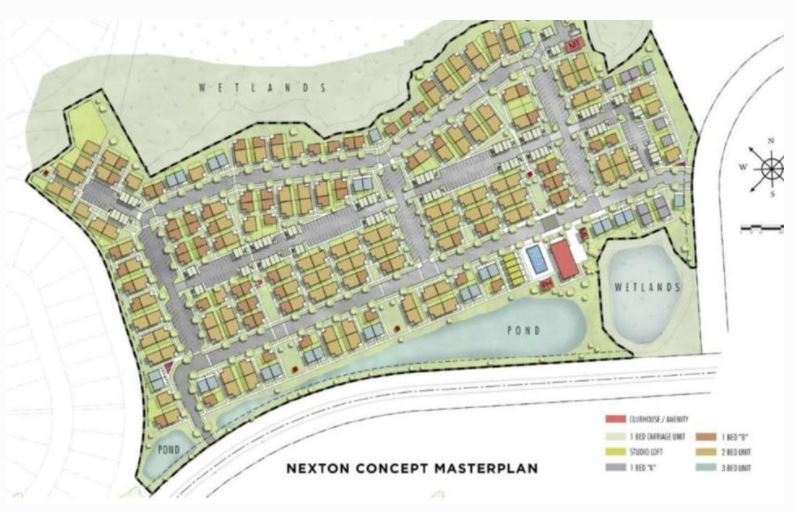
The hottest thing in residential development is built-for-rent single-family communities (BFR), and billions of investment dollars are lined up to serve the growing need. Investors seeking yield are having difficulty finding enough built homes to buy, so they are shifting more attention to “ground-up” development of brand-new rental single-family neighborhoods.

The land-rush is intense. Land brokers get 50 calls from groups just now entering the BFR arena for everyone “veteran” buyer, and the demand for land far outstrips the supply of suitable land for sale. A site that is well-suited for built-for-rent will typically get between 10 and 25 offers.

Land brokers dealing in residential parcels traditionally sell to developers and builders who are planning communities in which people buy homes. Now, they are starting to see a growing share who are buying land to build rental single-family communities.

I spoke with my friend Greg Vogel, who runs Scottsdale, AZ-based Land Advisors, the largest land company in the U.S., and he told me that between 5% and 10% of their land sales are for BFR right now, and that the percentage share is growing rapidly month after month. He said he anticipates that percentage will “double or triple in the next couple of years.” Click to read more at www.forbes.com.

Flipping the Switch: Multifamily Experts See Market Bounce Back

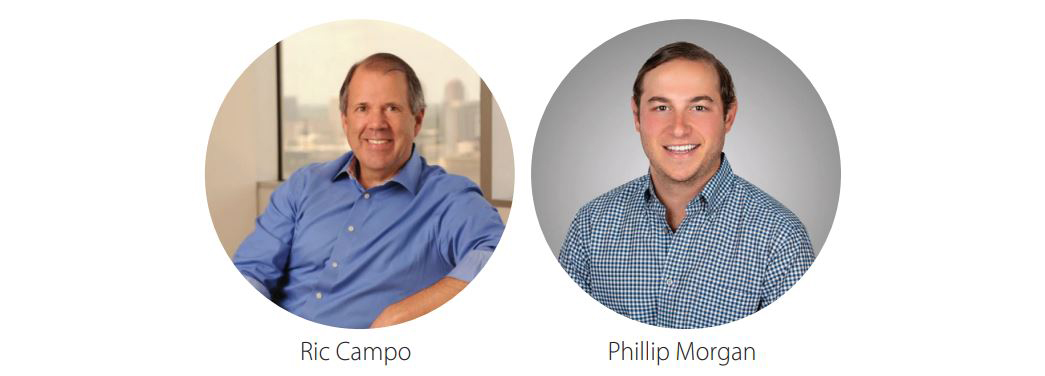
Ric Campo rode out a number of storms in his career. He co-founded Camden back in 1982, then helped take it public 11 years later. Anyone who’s worked in commercial real estate since the early ‘80s has seen the effects of a recession, Campo included, which is why his evaluation of the past 18 months is so good to hear.

“This is the best recovery out of a recession that I’ve ever seen in my business career,” says Campo, Camden’s Chairman of the Board and CEO.

The multifamily firm has developed dozens of luxury apartment communities all over the country — from Atlanta to Los Angeles. Campo says at the beginning of the pandemic, occupancy dropped about 100 basis points.

“When you get down to it, that’s not awful,” he says. “But what happened then was we rebuilt that occupancy in the summer of 2020 and now our national occupancy levels are in the 97 percent range.”

Campo says the turning point really seems to be March 2021. That’s when Camden noticed the biggest bump, especially in its Texas properties. Between Houston, Dallas and Austin, Camden operates nearly 50 multifamily communities in the Lone Star State.

“We were still weak coming out of 2020, then all of a sudden came March. You had more people getting vaccinated, the mask mandates being released and jobs were being added back in Texas overall,” explains Campo.

He says the impact is clear when you compare Q1 occupancy rates to those in Q2. Every single Texas market saw a bump for Camden. Austin went from 96.3 percent to 97.3 percent. Dallas got a boost from 96 percent to 96.6 percent. Houston grew from 94 percent to 95.7 percent. Quarter-over-quarter revenue is up too: 3.6 percent for Austin, 2.7 percent for Dallas and 3.3 percent for Houston. Click to read more at www.rednews.com.