Under 4 Percent Vacancy Rate for the First Time Ever: U.S. Industrial Market Enjoyed Record-breaking Year in 2021

An exceptionally high note. That’s how 2021 ended for the U.S. industrial market, according to the latest research from JLL.

According to JLL’s most recent U.S. Industrial Outlook report, this sector saw record-setting rent growth in 2021 and soaring net absorption. And vacancy rates? They fell to minuscule levels.

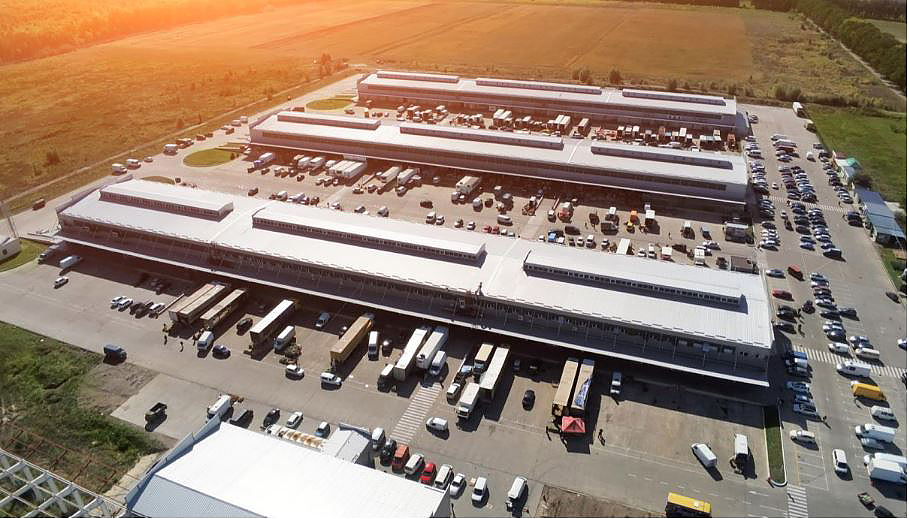
The numbers tell the story. According to JLL, industrial tenants signed leases for 122 million square feet in the fourth quarter of last year. Industrial rents rose to $7.11 a square foot during the same quarter. That continues a long trend: JLL reported that industrial rents have grown by 11.3 percent since the fourth quarter of 2020.

Absorption stats were impressive, too. More than 141.8 million square feet of industrial space was absorbed in the U.S.market in the fourth quarter, according to JLL. This was just the continuation of a boom year for the industrial sector. JLL said that year-end net absorption totals exceeded 496.3 million square feet.

Overall, net absorption in the industrial space increased by more than 81 percent on a year-over-year basis.

And for the first time in history, the vacancy rate for industrial real estate dropped below the 4 percent threshold, with this rate falling to 3.8 percent in the fourth quarter.

Who leased the most industrial space in 2021? JLL said that logistics and distribution companies leased 46 percent more industrial space last year than they did in 2019, while 3PL companies leased 41 percent more space during the same time period.

Overall tenants leased more than 500 million square feet of industrial space in 2021. This is the first time tenants have also cracked the 500-million-square-feet mark.

Not surprisingly, developers have been busy, too. JLL reported that developers completed nearly 89 million square feet of new industrial product in the fourth quarter of last year and 304 million square feet throughout the entire year.

Nearly two-thirds of the industrial buildings that these developers delivered last year were preleased, up from 45 percent in 2020 and 50 percent in 2019.

Investors haven’t been shy, either, about taking advantage of the U.S. industrial boom. According to JLL, investors sunk $143 billion in industrial facilities in 2021. That shatters the previous annual total from 2019 by 32 percent.

In the fourth quarter of last year alone, U.S. industrial investment activity hit $59 billion, good enough for an all-time quarterly record.

And for the rest of this year? JLL says that the demand for industrial space that the country saw in 2021 is expected to continue this year. JLL predicts that industrial rents will rise as demand outpaces supply. JLL also said that industrial vacancy rates might fall again this year if the availability of industrial space continues to shrink and net absorption keeps rising.
AllianceTexas Surpasses 100B in Economic Impact for North Texas

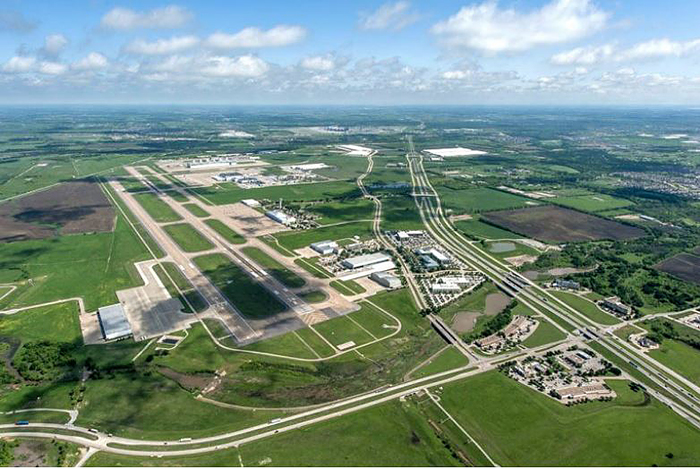
ALLIANCE TEXAS (WBAP/KLIF)-AllianceTexas, Hillwood’s 27,000-acre master-planned, mixed-use community in north Fort Worth, continues to be one of the state’s most formidable economic engines with approximately $100 billion generated in regional economic impact and over $3.13 billion in total taxes paid to local public entities during the past three decades. According to its annual Insight Research Corporation report, more than $8.66 billion of the development’s economic impact was generated in 2021 alone.

A driver for regional success, AllianceTexas is now home to 559 companies, with more than 53 million square feet of office, retail and industrial space built since 1989. Significant milestones in 2021 can be attributed to the continued success of the e-commerce sector, the backbone of the AllianceTexas industrial complex. The Alliance corridor now represents the largest industrial submarket in North Texas with the highest net-absorption, according to CoStar, the international leader in commercial real estate data in the U.S., Canada and the United Kingdom. In 2021, Hillwood leased over 6.3 million square feet of space, and launched the largest industrial speculative building at AllianceTexas to-date, Alliance Center East 1, totaling over 1.2 million square feet. In addition, Hillwood broke ground on Alliance Center North 8 and 9, two speculative industrial buildings that are nearly 1 million square feet combined. Click to read more at www.wbap.com.

CRE 2022 Outlook: It looks Good for America

“The risks are manageable, and the outlook is strong.”

This was the key takeaway from Cushman & Wakefield’s CRE 2022 Outlook. In the report, Cushman & Wakefield Head of Economic Analysis and Forecasting Rebecca Rockey discussed the company’s predictions for the US. commercial real estate market.

While some predictions will come as no surprise, others are not so straightforward. All things considered, 2022 looks good for CRE in America.

Office

Cushman & Wakefield predicts a turning point for office next year, and there are encouraging signs that this recovery has already begun as people gradually revert to normal behavior. One sign is that leasing is trending higher. Businesses are signing longer-term leases, and sublease space is trending down. Vacancy is also falling in an increasing number of markets, a trend that Cushman & Wakefield predicts will peak by year-end in the U.S.

Offices will continue to calibrate for remote work, challenging building owners to find the best ways to attract and maintain tenants.

Regional absorption is also on track to turn positive in the second half of 2022.

Industrial

Last year was a booming one for industrial, with demand surpassing 500 million square feet for the first time ever. According to Rockey, this rate of growth is not sustainable and was largely driven by confined demand from 2020. Cushman & Wakefield says that demand will remain 100 million square feet higher than historic norms, exceeding 400 million square feet for the next few years.

Despite the major pickup on the supply side, Rockey thinks vacancy will remain under 4 percent for the next two years in the aggregate. This will only further fuel rent growth. Values are expected to climb by close to double digits, and investors will be left to decide how much they’re willing to pay.

Retail

Retail was another sector that experienced a record year in 2021. Demand surpassed 37 million square feet in 2021 — the sector’s best year since 2017. In combination with the constrained supply side that was largely oriented toward mixed-use in specific high-growth markets, vacancy peaked at a much lower level. Vacancy continues to trend downward toward 6 percent. Cushman & Wakefield predicts an even further dip as we head into 2023.

“This is a different territory for retail,” Rockey said. “We’re seeing this narrative unfold. Recovery will pick up steam in gateway cities where international tourism, return to office and accelerating business travel will start to push the fundamentals in a more significant manor.”

Multifamily

Like industrial, last year’s significant growth rate is not sustainable over the long term, but Cushman & Wakefield says demographic forces will continue to fuel the sector during the next few years.

Rockey expects higher rates still on household formation: 1.3 million square feet this year and 1.2 million square feet in 2023. This year’s rate of demand is translating into one that is more than twice the long-term average.

Though supply is ramping up, it’ll remain a low vacancy environment for the next couple of years. Of course, this factors into rent pressure, resulting in strong overall rent growth. This will remain an asset class that investors will remain focused on, but the recoveries and expansions in retail and office will also start to push investors and rotate them back into those sectors, Rocky said.

Alternatives: Self Storage, Data Centers, Student Housing, Life Sciences, Senior Housing, SF Rental Homes

Just 10 percent of all sales were alternative pre-pandemic. Now it’s 15 percent and climbing, with demographics driving niche categories, like life sciences, which were among the first to post positive absorption within the broader office of R&D space markets.

High Expectations: Office Prospects Pursue Quality in Recovering Market

If there’s one thing to take away from Brandi Sikes’ analysis of the Houston office market, it’s that recovery may be slow, but the market is recovering.

“Based on what we know today, the worst is behind us,” says the Principal & Senior Advisor for SVN J. Beard Real Estate – Greater Houston, who merged Limestone Commercial Real Estate in November 2021.

Negative absorption peaked in Q3 2020 and leasing activity began to increase in Q2 2021, Sikes adds, noting Houston just posted its first quarter of positive absorption.

“Houston has one of the highest vacancy rates in the nation – 25 percent,” says Sikes. “Class A availability is closer to 30 percent, but the flight-to-quality offices with abundant amenities will help mitigate this vacancy over time.”

The demand for quality by prospective tenants almost assuredly requires buildings to offer amenities to remain competitive, she says.

“Tenants have high expectations when it comes to incentives but learn quickly that not all buildings are created equal,” Sikes points out. Stabilized assets can hold out for better deals in better days while the less fortunate are opting to ‘buy’ tenants on a short-term lease in hope of making it up on the renewal.” Click to read more at www.rednews.com.

Urban Farming Enterprise Infarm to Open Second U.S. Facility in Kyle

Infarm, a network of urban farms founded in Berlin with centers in Asia and Europe, is expanding its footprint within the U.S. with a new facility in Kyle. This will be the second facility in the U.S. with the first located in Seattle.

Urban farming refers to growing food indoors, in or near heavily populated cities. The goal of Infarm is to minimize risks to the environment and provide pesticide-free food. The facility will be able to provide food 24/7 without any supply chain issues and thereby be more reliable, according to a press release.

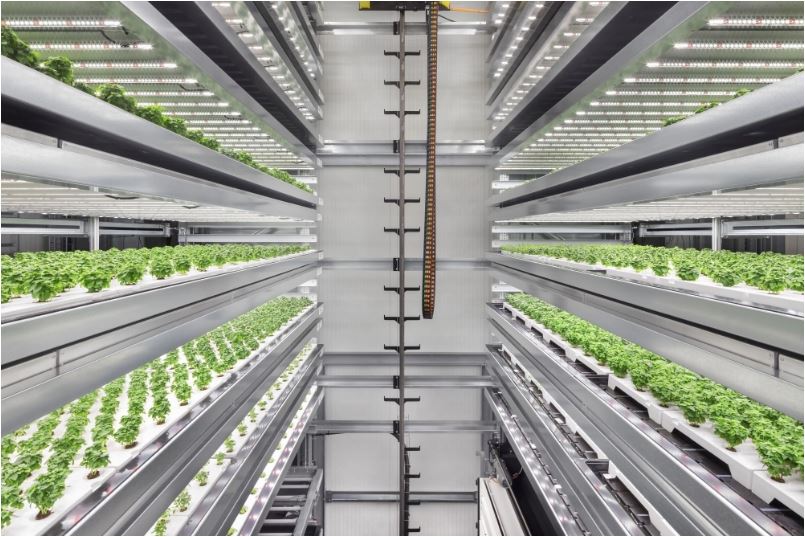
To maximize space, the facility will be equipped with vertical farming units standing 33 feet tall and “producing the crop equivalent of land the size of a soccer field, using 95% less water and 95% less land compared to traditional soil-based agriculture.”

With the U.S. playing a significant role in Infarm’s global expansion plans, Texas was strategically chosen to root a new facility that will be able to feed over 18 million people, co-founder and CEO Ere Galonska said in the release. Click to read more at www.communityimpact.com.

Construction Financing Secured for Austin High-Rise Multi-Housing Development

JLL Capital Markets secured construction financing for The Travis, a 423-unit, high-rise multi-housing community located in the Rainey Street District of downtown Austin, Texas.

JLL worked on behalf of the borrower, Genesis Real Estate Group and PGIM Real Estate, to secure a construction loan through JPMorgan Chase.

With a projected completion of the fall 2024, the 50-story tower will be Austin’s tallest single-purpose, for-rent multi-housing high-rise, redefining Austin’s skyline and providing future residents top-tier accommodations and views of downtown and Lady Bird Lake. In addition to luxury residences characterized by technology-enabled living spaces, modern interiors and over one acre of community amenities, the property will offer connectivity to over 14,000 acres of public parks and trails found within the city.

Located at 80 Red River St. within downtown Austin, the property offers convenient accessibility to the growing 17.3 million square feet of office space in the Central Business District, which includes the Convention Center District. Residents are also proximate to Rainey Street, Austin’s historic avenue turned cultural and nightlife attraction. The property provides walkability to over 40 restaurants and bars and shops.

The JLL Capital Markets Team representing the borrower was led by Senior Managing Director Campbell Roche and Senior Managing Director Robert Wooten.