Embrey Closes on Land Purchase For Single-Family Rental Project, Collection at Gruene

Embrey has closed on the land purchase for Collection at Gruene, marking the first project for the company’s newly launched single-family rental platform.

Embrey’s single-family rental program will consist of one- and two-story homes within a rental community with best-in-class amenities and professional property management. Embrey’s plan includes 126 duplex-style homes, with 252 units.

The deal was financed by PlainsCapital Bank, one of the largest banks in Texas, based in Dallas.

“This is an exciting offering for Embrey that expands our current portfolio of luxury living experiences beyond traditional multifamily residences,” said John Kirk, Managing Director and Executive Vice President of Development for Embrey.

Gruene, a historic area of New Braunfels, sits just off the I-35 corridor between Austin and San Antonio, Texas, in the second-fastest-growing market in the U.S. according to the U.S. Census Bureau.

“The single-family rental living experience is highly desired by today’s discretionary renter,” said Jeremy Williams, Senior Vice President of Development for Embrey. “We have a premier location where residents can walk to historic downtown Gruene. The community is easily accessible to both Austin and San Antonio and close to local attractions like the Schlitterbahn Waterpark & Resort and the Guadalupe and Comal Rivers.” Click to read more at www.prnewswire.com.

Developer Scarlet Breaks Ground on $32,000,000 City Park Project

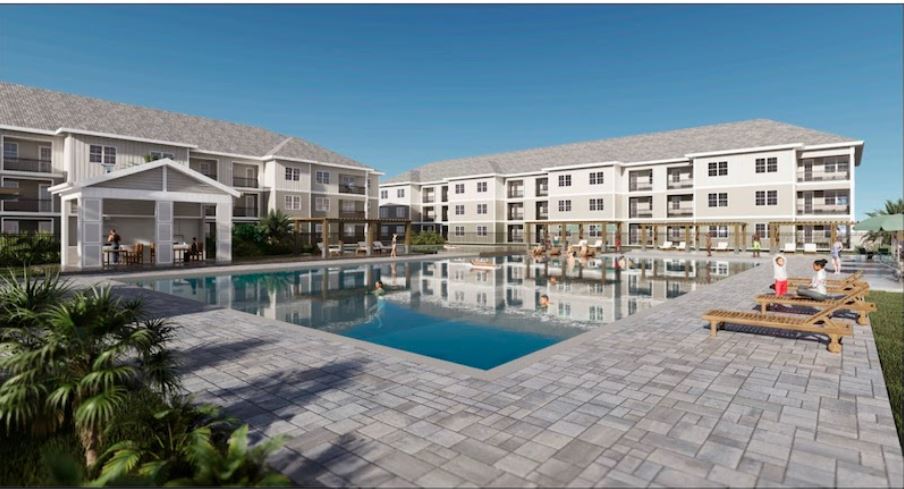
Houston-based Scarlet announced breaking ground on Frame Almeda Genoa, a 216-unit residential multifamily development in Houston’s City Park neighborhood. The $32 million development will provide reasonably priced, high-quality housing near downtown Houston.

Developed in partnership with veteran Houston real estate investor Avishai Ron’s Urban Meridian group, the Almeda Genoa project is located minutes from Pearland, Hobby Airport, and the University of Houston. With convenient freeway access, the project also offers transportation to the Texas Medical Center and downtown Houston. 

Designed by E Studio Group, Frame Almeda Genoa features six multistory residential buildings surrounded by more than eight acres of native plants, recreational areas, swimming facilities, and ponds. With experience building over 1,000 comparable units over the past five years, the project partners will also serve as general contractors on the job, with a hands-on approach to ensure construction quality, building efficiency, and adherence to the project’s timeline.

Founded in 2018 by Houston real estate developers Daniel Ron and Alexander Ron, Scarlet is committed to building high-quality development projects guided by the philosophy of intentional design — a hands-on approach where every detail is carefully considered, and every decision made with a clear vision in mind.

The City Park community, located just south of Houston’s Central Business District, is a vibrant neighborhood featuring retail locations, entertainment venues, golf courses, and medical care, plus easy access to parks, concert venues, sporting facilities, and Galveston’s beaches. With Houston ranked as the country’s 13th fastest-growing large metropolitan area in the latest U.S. Census, City Park is primed to emerge as a major center for economic and cultural growth, with more than 1,800 new homes currently planned in the immediate area.

Foreign Investors in U.S. CRE: NAR’s 2021 Findings are, Well, Shocking

We’ve said it before—2021 was a remarkable year for CRE. And the latest research on the continued demand that foreign investors have for commercial real estate? That just provides even more evidence of how unusual last year was.

The steady rebound of CRE came as somewhat of a surprise last year. According to the National Association of Realtors’ 2022 Commercial Real Estate International Business Trends report, foreign investors can be credited as at least one reason for the busy year.

Cross-border inflows of at least $2.5 million for the acquisition of U.S. commercial real estate have recovered to pre-pandemic levels, increasing by 44% to $52.9 billion in 2021, compared to $36.6 billion during the same period in 2020.

The largest sources of cross-border flows came from Canada and Asia, according to NAR. Canada acquired $19.2 billion of CRE in the U.S. in the four quarters ending 2021 Q3—up 63% from the prior four quarters—followed by Singapore, South Korea and Saudi Arabia, respectively.

Drawing the highest share of these flows? Non-major markets, given recent migration trends and the cheaper cost of acquiring property. Seattle, Atlanta and Dallas dislodged Manhattan as the top destinations among foreign U.S. investors, according to NAR. In fact, the share of cross-border capital of the six major markets continued to decline throughout 2021.

Industrial drew the largest share of acquisitions, accounting for 34% of $52.9 billion in total. Office drew the next largest share at $16 billion, or 30% of total acquisitions, based on NAR’s report. Surprising, considering the market’s record-high vacancy.

In the “small” CRE market or sales below $2.5 million, NAR estimates that foreign investor acquisitions facilitated by NAR commercial members more than doubled in 2021 to $4.8 billion from $2 billion in 2020. Foreign transactions made up 3.1% of the estimated transactions of $155.5 billion among NAR commercial members.

While Canadians and Asians were the largest buyers of U.S. CRE valued at $2.5 million or over, the majority of small-market transactions were from Latin America, with Mexico being the top country at 23%, followed by Columbia (10%), Argentina (8%), Venezuela (8%) and Brazil (5%).

Interestingly, NAR found that Florida remained the No. 1 state for U.S. buyers—18%—and no NAR respondents reported a foreign buyer buying in New York, even though it accounts for 3% of NAR commercial members’ business.

Multifamily buildings and land were the preferred small-market property acquisitions, based on the report. Office acquisitions only accounted for 7% of purchases made by NAR commercial members’ foreign buyers, a sharp contrast with the 30% share of large-investor market acquisitions.

Finally, NAR found that investor transactions accounted for 97% of small-market transactions.

As the pandemic continues to wane, NAR members expect foreign acquisitions of CRE to increase for most property types, excluding office and hospitality.

The Property Tax Protest: A Step You Should Take Each Year

The start of the year is a busy time for just about everyone. Friends and neighbors are looking to make good on shiny new resolutions, companies are taking steps to start things off on solid footing and, of course, property tax season is just around the corner. For those who own commercial properties, it also means property tax protests aren’t far off.

Although the idea of going up against authorities — or even in front of an appraisal review board — to dispute your commercial property tax assessment can be daunting, these efforts play a crucial role in ensuring you’re paying your fair share. When using a targeted approach, the process is fairly straightforward. Here are a few things to keep in mind as you contemplate whether a protest is the right move for your business.

Protests Should Be an Annual Occurrence for Any Commercial Property Owner

In a world where most of us attempt to avoid conflict, annual commercial property tax protests might seem counterintuitive — and uncomfortable. In truth, however, there’s no reason not to go that route. Protests of assessed values are successful in reducing bills more than 50 percent of the time, and
can save you hundreds of thousands of dollars through the years. As an added bonus, these efforts don’t impact your commercial property’s resale
value.

Having Your Ducks in a Row Can Make All the Difference

A little organization makes just about any process easier. Before diving headfirst into a commercial property tax protest, it’s important to know what you’re up against, and to plan accordingly. Click to read more at www.rednews.com.

Grocery Déjà Vu? Empty Shelves Might Mirror 2020, but There are Promising Signs of Improvement

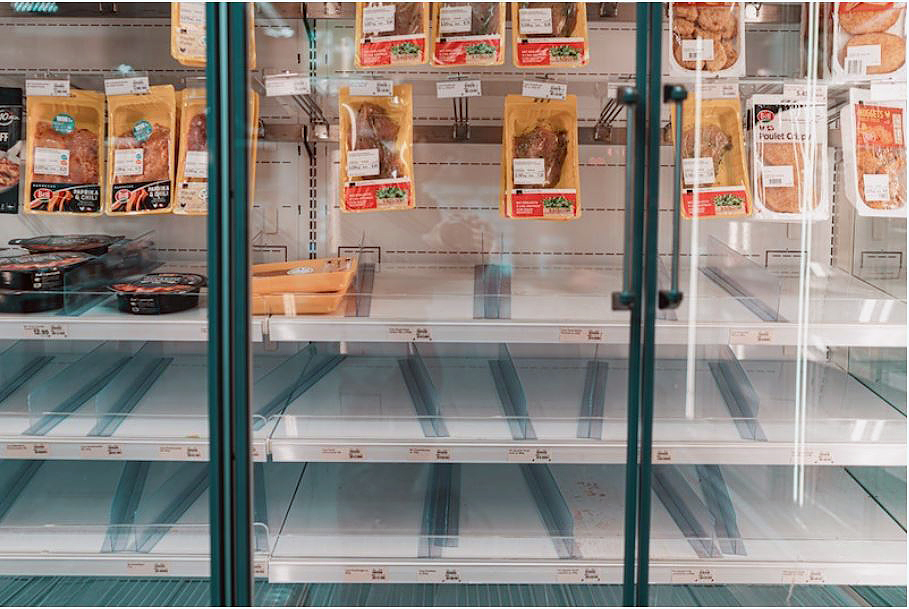
If you’ve taken a recent trip to your local Trader Joe’s or Whole Foods, you might notice some empty store shelves and rising prices. And it’s not just big names that are experiencing rising prices and food shortages, nor is it a simple fix. Are we slowly returning to early pandemic days of grocery hoarding?

The good news? Probably not. A recent report by Avison Young finds promising signs of improvement in the grocery world.

We talked with Avison Young Capital Markets Leader Erik Foster about the complex issues impacting our food and grocery supply chains today, as well as the role industrial real estate plays in a grocery company’s ability to deliver goods.

Could you talk about the factors that are contributing to the shortages we’re seeing now?
Erik Foster: What we’re continuing to see in the supply chain, and especially in food, is congestion. The supply chains are in a state of flux. The producers of food are having trouble getting it to the manufacturers, and the manufacturers are having trouble getting it to the consumer. There are also employment issues, which are contributing to both the manufacturing and the distribution of that food.

It’s not just one thing. It’s a very wholistic problem around food and how it gets produced and then delivered to the consumer. The supply chain continues to be stretched.

So it’s still a tail-end pandemic issue?
Foster: It is. What’s also starting to impact the consumer is inflation. We’re seeing prices spike. I do believe that the suppliers of food and the end product are retooling how they work. Hopefully the issue will start to alleviate itself as the pandemic wanes, but it is still an issue.

Do you think things will get worse before they get better?
Foster: From an industrial distribution standpoint, I think that our point of view allows us to see signs of hope that people are solving for the larger issue. I believe the worst of it is behind us.

Are the factors contributing to these shortages in 2022 the same as those in 2020?
Foster: Yes. In 2020, food manufacturers and processors were still moving through existing inventory and making their way through. We then started to see these shortages creep up as these factors that we talked about earlier started to impact the supply chains down the line.

How difficult it is today for grocery stores to attract labor? Are they struggling to find enough workers?
Foster: They are. Those types of jobs are in high demand right now. We’re seeing what people are calling The Great Resignation, and many people are leaving the workforce. That is impacting both white- and blue-collar jobs. The grocery store retailer is having the same issue as the warehouse distribution facility and the pork or protein producer in Wisconsin. It’s the same issue up and down the continuum.

What do you think is the main reason for these workforce shortages?
Foster: It’s the demand that’s being put on those who are hiring, and it’s the lack of people, since they have left the workforce. When looking for an employer, people are looking for jobs that don’t require them to go into a facility. Many people are enjoying working from home. We are hearing about all of these things with clients and owners of real estate, and all of it is affecting the supply chain.

Do you foresee it evening out, and how soon?
Foster: We believe that industrial will still be a highly sought-after product by both tenants and investors in real estate. You have high demand by tenants, constraints on delivery of new product and historically good fundamentals that are in favor of landlords.

These three things are going to continue for the foreseeable future, and I would estimate it to be well over 12 months. Possibly 24. How that impacts employees within these facilities and the tenants, I think is yet to be determined.

ve taken a recent trip to your local Trader Joe’s or Whole Foods, you might notice some empty store shelves and rising prices. And it’s not just big names that are experiencing rising prices and food shortages, nor is it a simple fix. Are we slowly returning to early pandemic days of grocery hoarding?

The good news? Probably not. A recent report by Avison Young finds promising signs of improvement in the grocery world.

We talked with Avison Young Capital Markets Leader Erik Foster about the complex issues impacting our food and grocery supply chains today, as well as the role industrial real estate plays in a grocery company’s ability to deliver goods.

Could you talk about the factors that are contributing to the shortages we’re seeing now?
Erik Foster: What we’re continuing to see in the supply chain, and especially in food, is congestion. The supply chains are in a state of flux. The producers of food are having trouble getting it to the manufacturers, and the manufacturers are having trouble getting it to the consumer. There are also employment issues, which are contributing to both the manufacturing and the distribution of that food.

It’s not just one thing. It’s a very wholistic problem around food and how it gets produced and then delivered to the consumer. The supply chain continues to be stretched.

The Long-Term Impact of the Supply Chain Crisis on Commercial Real Estate

Supply chain stories continue to make headlines as manufacturers and retailers struggle to keep shelves filled, and consumers feel the pain of product shipping delays and price surges. This global traffic jam began when the logistics pipeline that delivers $1 trillion worth of electronics, games, toys and furniture each year was abruptly disrupted, leading to downstream effects for industries that provide critical components and raw materials. Not only are freight costs up, but the entire supply chain is backed-up, and it’s taking twice as long to receive goods as it did prior to the pandemic.

The bottom line is that the COVID-19 pandemic was the catalyst of supply chain problems and transitions that were already underway and were only exasperated. It’s impossible to point to just one reason for this back-up. It’s the confluence of multiple issues that has led us to rethink the true impact of supply chain and the domino effect that will have lasting effects across industries for years to come. Now, experts estimate things won’t be back to status quo until 2023.

This has particular implications for commercial real estate, from building material shortages in the development and tenant improvement phases of projects, to operators rethinking their strategies around offshoring production and leaning into just-in-time inventory strategies. Click to read more at www.dmagazine.com.