Class Action Embroils Wells Fargo Commercial Real Estate Underwriting Practices

A judge is set to rule on the bank’s motion to dismiss the complaint, which names the company, ex-CEO Tim Sloan and former CFO John Shrewsberry among the defendants.

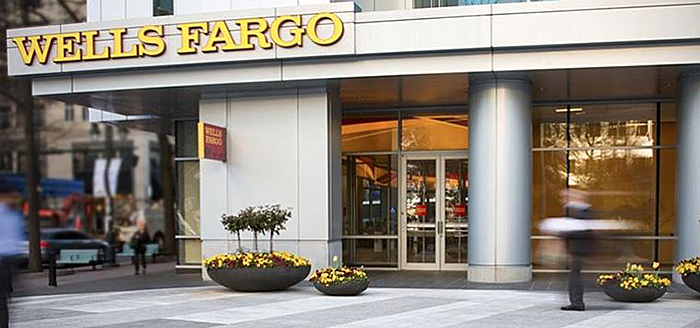
A federal judge is poised to rule on Wells Fargo’s motion to dismiss a suit that alleges the bank routinely made risky commercial real estate loans using improperly inflated underwriting metrics in the years leading up to and into the pandemic that left the company and its shareholders vulnerable to losses in 2020.

The suit spotlights the minefield that CFOs and financial executives have navigated as they grappled with soaring real estate losses early in the pandemic amid broader scrutiny of mortgage underwriting practices. It also comes as an unrelated civil investigation is proceeding into allegations that the Trump Organization inflated property values to secure favorable terms on loans it was applying for or trying to modify.

The pleading alleges Wells Fargo had loose underwriting practices that were part of a strategy designed to win borrowers and grow its commercial real estate business, according to an amended complaint filed Aug. 31. At the same time, the class action alleges the practices contradicted assurances from bank executives that it used conservative and disciplined underwriting standards. Click to read more at www.cfodive.com.

New 46-story Office Tower to be Built Next to Frost Bank Tower

Cielo Property Group will break ground on a 750,000-square-foot office tower in downtown Austin this summer, according to an email press release from Compass Communications on behalf of the company.

Named Perennial, the 46-story building is the first of two planned high-rises and will house three floors of retail space. It will be located at 208 E. Fourth St., Austin, on the city block east of Frost Bank Tower.

The outdoor space will include a 28-foot waterfall that ends in a sunken garden and a 30,000-square-foot Sky Garden for residents, according to the email.

It is scheduled to be complete in 2025. Click to read more at www.communityimpact.com.

As Apartment Rents Rise, is an Affordability Crisis Looming?

How have rising apartment rents made life more challenging for tenants? The latest research from the National Association of REALTORS found that renters are spending a lot more of their household income on rent this year than they were in 2021.

How much more? According to the association, in January of 2022, renters earning the household median income for their area were spending 29.7% of their income to lease a typical apartment unit. That is up from 24.8% in January of 2021.

The association reported that January marked the eighth month in a row where rent growth has reached double digits for apartments with up to two bedrooms. That pushes the median apartment rent in the 50 largest metro areas of the country to $1,789, according to Realtor.com’s Monthly Rental Report.

The challenge, then, becomes affordability. How many renters won’t be able to afford apartment units as monthly rents continue to rise?

In January, renters earning the median household income in 15 of the top 50 metro areas in the United States were already spending more than 30% of this household income on rent.

This is important. Generally, economists say that households should spend no more than 30% of their income on housing costs. HUD defines cost-burdened households as those that pay more than 30% of their income for housing, including utilities. Households that pay more than 50% of their incomes on housing costs are defined as severe cost-burdened households by HUD.

In January, the Miami-Fort Lauderdale-Palm Beach, Florida, area ranked as the least affordable rental market in the United States. The National Association of REALTORS said that renters earning the median household income for this area would spend 59% of this income on a typical apartment of up to two bedrooms here.

The most affordable rental city among the top 50 largest in the United States in January was in the Midwest, Kansas City. Here, renters earning the median area income were spending just 20% of their income on a typical apartment with zero to two bedrooms.

St. Louis ranked as the fourth most affordable city for renters, with those earning the household median income spending 22.3% of their income on a typical apartment unit, while in the Indianapolis area, that figure stood at 22.8%, good for fifth on the list.

Two other Midwest cities made the most affordable list: Louisville, where renters earning the median area income spent 23.1% of this income on a typical apartment unit; and Minneapolis-St. Paul, where that figure was the same.

Housing Cost Crisis? On-site U.S. Workers Struggle to Find a Way to Pay, Unlike Those who Work from Home

A housing cost crisis in America?

It’s safe to say, considering one-in-three “cost-burdened” households spent above the recommended 30% of gross household income on housing costs in 2019, according to a recent report by Apartment List.

Housing affordability has remained a concern in the U.S., long before recent spikes caused by COVID-19, leaving millions of families priced out. Renters have especially felt the sting.

More niche, renters who work on-site jobs.

Economic division continues to polarize on-site workers and their remote-friendly counterparts. Apartment List found that 15% of Chicagoans in remote-friendly occupations are cost-burdened, compared to 22% whose jobs must be performed on-site. It’s roughly the same divide at the national level.

The correlation? On-site workers are significantly more likely to be renters. Thirty-two percent of on-site workers in Chicago are renters, based on the report, a notably higher rate than 28% of those who work from home. Cost burden rates for the two groups are 35% and 22%, respectively.

Analyzing the data for both on-site and remote workers separately, Apartment List also found notable imbalances in cost burden rates between races. Among remote-friendly workers in Chicago, 19% of Black workers and 18% of Hispanic workers are cost-burdened, as opposed to just 13% of White workers, regardless of occupation type.

It’s interesting to consider how these numbers have evolved since 2019. Housing costs have continued to increase, according to the report, apart from a 1.4% decrease in 2020. The median rent increased by nearly 18% in 2021. Average hourly wages have increased by 10.4% over the same period. Good news, but still, this growth in earnings has not been enough to bridge the divide.

And rents are growing fastest in the markets where on-site jobs are more prevalent.

In Chicago, 32% of all workers were employed in remote-friendly occupations in 2019, while rents have jumped by 6% since the start of COVID-19. For comparison, around San Jose, California, 46% of workers are employed in remote jobs (largely because of Silicon Valley) and rents have decreased by 7% since March 2020.

This makes sense. Because on-site workers have less flexibility to move in search of more affordable housing, they’re left to find a way to pay.

People Keep Quitting. Why?

Here’s a startling statistic: More than 47 million Americans quit their jobs last year, according to the U.S. Bureau of Labor Statistics. But why? What has led to what many are calling the Great Resignation?

Real estate company Clever has come up with some answers. The company surveyed 1,000 people who resigned from a job since January of 2021. Clever found that everything from the COVID-19 pandemic to bad company culture inspired these respondents to make a job change.

According to Clever, 31% of survey respondents said they left their jobs because of toxic company culture. An additional 30% said they left because they didn’t agree with their company’s response to the COVID-19 pandemic. And another 30% said they moved on because they had changed their career goals.

These employees often made their decisions to leave quickly. Clever found that 60% of respondents considered leaving their jobs for just one month before they resigned. And one in four respondents debated leaving for one week or less before quitting.

November of last year saw an especially high number of resignations. The Bureau of Labor Statistics said that a record-setting 4.527 million workers quit their jobs in that month.

Of course, the pandemic played a big role in these resignations. A total of 80% of respondents to Clever’s survey said that the pandemic influenced their decision to quit. And of those employees who said that they quit because of the pandemic, 41% did so because they said their employer didn’t enforce health and safety protocols while 28% said they didn’t want to follow their employer’s COVID-19 protocols.

Respondents weren’t shy about leaving quickly, either. Clever found that 49% of respondents gave their employers one-week notice or less when they quit. One in four gave no notice at all.

Employers struggled to convince respondents to change their minds. Clever found that 80% of respondents received a counteroffer from their employer when they resigned but still decided to leave.

JLL Arranges Acquisition Financing for Class-AA Office in Dallas’ Uptown District

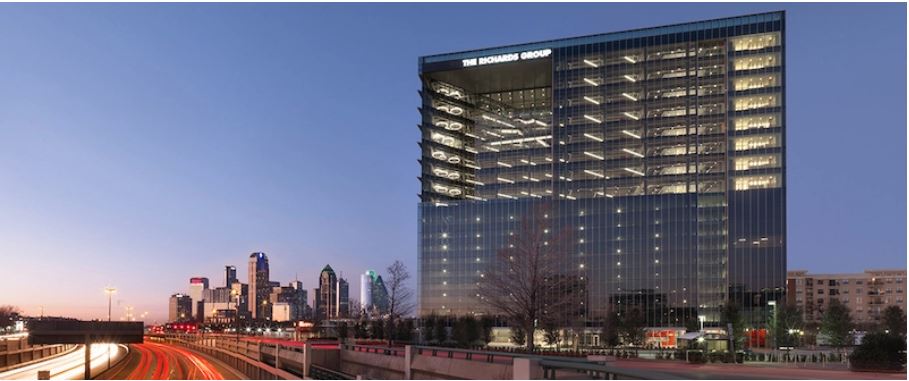
JLL Capital Markets has arranged acquisition financing for 2801 NCX, a Class-AA office building totaling 240,000 square feet in the West Village subsection of Uptown in Dallas, Texas.

JLL worked on behalf of the borrower, OliveMill Holdings and Hunt Realty Investments in a partnership with Angelo Gordon, to secure the five-year, floating-rate loan with a fund managed by AllianceBernstein.

2801 NCX is located in the Uptown District, which is a vibrant mixed-use neighborhood offering high-end residential developments, top entertainment destinations, fine dining options and luxury hotel accommodations. The population in the immediate area has grown more than 40% since 2010 and is projected to continue as residents and companies migrate to Dallas for low-cost business and living costs. The property benefits from a highly amenitized location surrounded by the city’s most prominent employment centers, leading demographics, and a walkable environment within Uptown’s West Village district. 2801 NCX also has a best-in-market signage opportunity due to its extreme visibility from North Central Expressway.

Completed in 2015, 2801 NCX offers 12 floors of office space that is fully leased to a Dallas-based advertising agency. The property features an on-site fitness center, 11th-floor outdoor space offering views of Uptown and a 609-space parking garage.

The JLL Capital Markets team representing the borrower consisted of Senior Managing Director Jim Curtin, Senior Director Kris Lowe, Vice President Rex Cruz and Analyst Ryan Pollack.