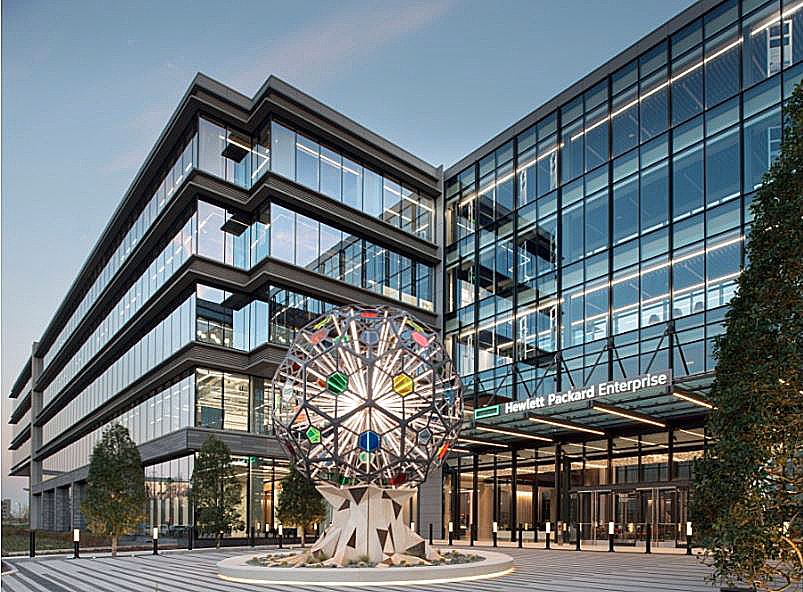
Hewlett Packard Enterprise Opens New Headquarters in City Place in Spring

Following just over two years of construction, officials with Hewlett Packard Enterprise announced the completion of its new campus in City Place via a news release April 4.

As previously reported by Community Impact Newspaper, construction first began on the new campus in February 2020. In December 2020, HPE officials announced the new campus would also become the company’s new headquarters, which was previously located in San Jose, California.

Located at 1701 E. Mossy Oaks Road, Spring, the new campus comprises two five-story buildings that are connected by bridges at each level. The campus includes 440,000 square feet of rentable space, structured parking for 2,055 cars and a slate of amenities, among which are a fitness center and cafe as well as a large central courtyard with a multiuse basketball pavilion.

“HPE’s Houston headquarters is the embodiment of our vision for the future of work, designed to enable our hybrid Edge-to-Office work model,” the release reads. “At HPE, 80% of our team members are now designated ‘Edge,’ working primarily remotely but encouraged to come into the office for collaboration. So rather than building a headquarters where teams will spend all their time working, we designated a collection of flexible, high-tech spaces to foster teamwork and social interaction—and accommodate team members’ changing needs.” Click to read more at www.communityimpact.com.

CBRE Pre-leases 169,011-Square-foot Speculative Industrial Development in East El Paso

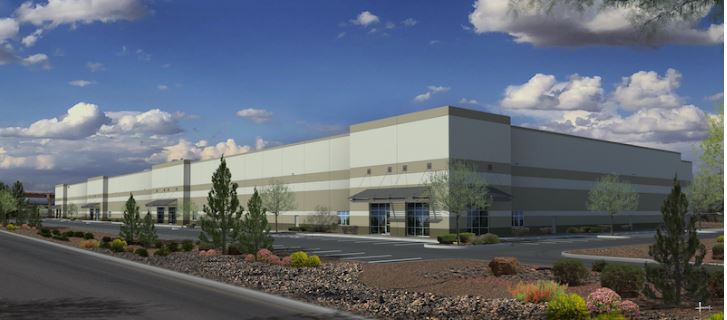
CBRE has arranged the lease of a 169,011-square-foot speculative industrial building in far East El Paso to an undisclosed logistics company.

CBRE’s William Caparis and André Rocha represented the developer, Mississippi-based EastGroup Properties, in lease negotiations.

EastGroup Properties began construction on the speculative warehouse/distribution building—located at 12291 Gateway Boulevard West—in September 2021 with an estimated completion date of July 2022. The real estate investment trust currently owns a little over 1.2 million square feet of industrial space in El Paso.

Once complete, the building will be 255 feet deep with modern specifications including a clear height of 32 feet, 52- by 50-foot column spacing, and 42 dock-high doors. Additional specifications include skylights, three-phase power and an ESFR sprinkler system. The building will sit on 12.61 acres and include a 135-foot deep truck court with staging for 50 trailers, as well as parking for 163 cars.

The new warehouse is situated in El Paso’s East submarket, a premier industrial corridor with quick access to Interstate 10 and Texas State Highway Loop 375. At the end of the first quarter of 2022, the submarket accounted for nearly half of all industrial construction with approximately 2.1 million square feet in progress according to CBRE research. Of the 4.2 million square feet of industrial space under construction throughout the metro, 2.0 million square feet were speculative developments.

Inflation? War? COVID? None of it can Slow Down the Multifamily Market

Yes, inflation is battering the U.S. economy. The country is still dealing with COVID-19. And Russia’s continued attack on Ukraine brings its own set of worries. But despite all this turmoil? The U.S. multifamily market continues to boom.

In its April Multifamily National Report, Yardi Matrix said that the average asking apartment rent in the United States rose $15 in April to an all-time high of $1,659. This is an increase of 14.3% from the same month a year ago.

In the largest 30 metropolitan areas in the United States, monthly rent growth was up at least 8.8% during the last year in all but one. And this increase in monthly rents was remarkably consistent. Yardi Matrix reported that rent growth was positive in each of these large metropolitan areas during the last one-month, three-month and 12-month periods.

Of course, not all markets are equal. Yardi Matrix said that Miami led the way in April with a 24.6% year-over-year rent increase. Overall, though, asking rents increased by 20% or more on a year-over-year basis in five of the largest 30 metropolitan areas and 10% or more in 26 of the biggest 30 markets.

The rent growth wasn’t as robust in all Midwest markets. Yardi Matrix said that year-over-year rents increased by just 4.7% in Minneapolis-St. Paul and just 8.8% in Kansas City, Missouri. These ranked among the lowest percent increases among the biggest metropolitan areas in the country.

What does the future hold? Yardi Matrix said that the fundamentals are still in place for steady growth in multifamily rents. Most importantly, the country still faces a shortage of new single-family housing. Yardi Matrix reports that an average of 16 million to 17 million new homes were built between the 1980s and 2010. That number fell to less than 11 million in the 2010s.

This has left the United States short of several million single-family homes. Leonard Kiefer, deputy chief economist at Freddie Mac, says that the country went from a surplus of 1.9 million units of housing in 2010 to a shortfall of 3.8 million units in 2020.

You can blame the financial crisis of 2008 and 2009 for the shortage of newly built homes. During and after the crisis, banks slowed the amount of financing they made available for single-family and multifamily housing. That resulted in a slowdown in new residential construction.

Today, a shortage of land and the high cost of construction materials and labor is contributing to the slowdown in residential construction. Developers also face regulatory hurdles and NIMBY protests in many areas.

This all adds up to higher costs for housing, including of the multifamily variety. And these pressures are showing few signs of lessening, meaning that monthly apartment rents aren’t forecast to decline anytime soon.

What does this mean for renters? They can expect to pay more for their units, especially if they plan on living in a major metropolitan area.

Dealin’ in Dallas: Near ‘White Hot’ Market Fueled by Capital, Retail Expansion

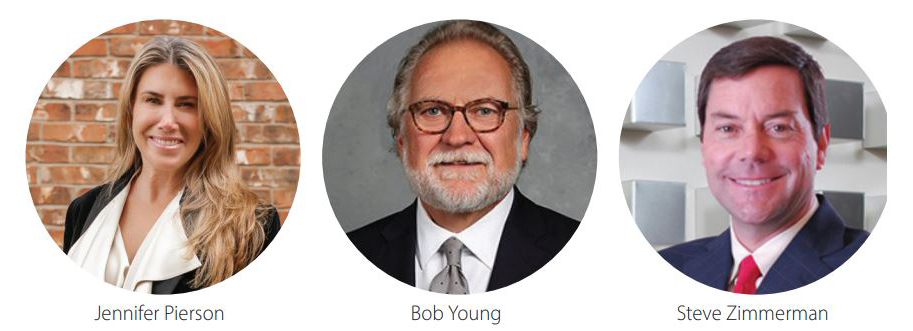
In retail, few things are constant, but one thing Texas CRE professionals can always count on is that more rooftops generate more retail demand. And those rooftops are going up as fast as they can in the Dallas-Fort Worth area. “Retail here is on the heels of white hot with cautious optimism,” says Jennifer Pierson, Managing Partner of STRIVE. “The reason I temper it a little bit is because we had such a robust Q2 and Q3 of last year and a robust
Q1 of this year, but we’ve just had our first interest hike and it hasn’t slowed anything down yet, but we’re wondering if it will.”

When she says robust, she means it. STRIVE sold 107 properties last year and already in 2022, Q1 numbers doubled.

“That’s a lot of product,” Pierson says.

That product is at a premium right now, according to Steve Zimmerman, The Retail Connection’s Managing Director in Brokerage.

“The supply of quality available space is very low due to the extreme lack of new development,” he explains. Click to read more at www.rednews.com.

Global Investors Remain Enthusiastic About the U.S. Commercial Real Estate Market

The U.S. commercial real estate market – with Dallas ranking fourth in the most favored spot – continues to be seen as attractive by global investors over both the short and long term, according to the Association of Foreign Investors in Real Estate (AFIRE) 2022 International Investor Survey Report, released in mid-April.

About 75 percent plan to increase their volume of activity this coming year, and 25 percent anticipate increasing it considerably. Beyond 2022, about 80 percent of investors expect to increase their U.S. exposure over the next three to five years. These are topline results of the annual survey of some 175 organizations in more than 20 countries. CBRE and Holland Partner Group served as underwriters of the research, conducted in February by AFIRE and PwC.

Atlanta is the city most favored for future real estate investment by the respondents (with 37 percent indicating it was their top destination). Atlanta was especially popular among those outside the United States. Austin and Boston tied for second. Dallas took the fourth position, followed by Seattle, New York, Charlotte, Los Angeles, Denver, Raleigh, District of Columbia, Phoenix, and San Francisco. Click to read more at www.dmagazine.com.