Dallas industrial market: A closer look at submarkets and future trends

The industrial real estate sector in Dallas, Texas, has witnessed remarkable growth and achieved significant milestones in recent years. With the market surpassing the one-billion-square-footage mark, second only to Chicago, it has become a key player in the industrial sector.

According to Q1 2023 data from Colliers, the Dallas-Fort Worth (DFW) industrial market continues to thrive. Construction levels remain elevated, with 62 million square feet under development. However, for the first time in eight quarters, the quarter-over-quarter construction growth rate has slowed. The delivery of a record 19 million square feet of speculative development has affected vacancy levels, resulting in a slight increase to 6.3%.

Rental rates in the warehouse sector have surged to all-time highs, with big-box rates reaching $5.72 NNN and non-big-box warehouse rates peaking at $8.39 NNN. These escalating rental rates indicate the robust demand and competitive nature of the Dallas industrial market.

To truly understand the Dallas industrial market, it is crucial to examine submarkets within the region. Transwestern Development Company Regional Partner Denton Walker emphasized the variations across different submarkets.

“The best submarkets in North Texas, such as north Fort Worth and north Dallas, have positive lease activity where there is better labor supply available,” said Walker. “The southern sector of the Dallas-Fort Worth area will experience slower lease activity for ample bulk distribution warehouse space due to the large supply available and less labor available.”

By focusing on submarkets, real estate professionals and investors can identify specific areas with unique characteristics, labor availability and infrastructure that align with their requirements.

In addition to submarkets, another delineation that’s important is the size of the project. Allen Gump, EVP at Colliers, splits the market between projects larger than 250,000 square feet and those that are smaller.

“In some places in the Metroplex, it’s very hard to find 150,000- or 200,000-square-foot space. In Dallas, for example, you really do have trouble finding spaces under 250,000 feet that fit the criteria that you’ve got,” Gump said. “The dynamics are very different.”

He explains that industrial development in the Dallas market has reached a turning point. While there are still numerous buildings under construction, the feverish pace of development has eased. Developers are now adopting a more cautious approach, with fewer new projects being initiated without significant leasing activity.

“It wasn’t that long ago that there were something like 17 million-square-foot buildings under construction around the Metroplex. That’s a lot of million-square-foot buildings,” said Gump. “It costs a lot to carry a million-square-foot building for several months or even longer.”

With factors such as rising interest rates and reduced liquidity, developers are now seeking greater stability and demand before commencing construction. This shift signifies a return to a more sustainable pace of development.

Newmark Managing Director Zach Riebe shed light on the capital markets for industrial properties in Dallas. Smaller, bite-sized deals are currently in focus due to challenges in financing larger projects. This shift aligns with the cautious approach taken by both equity and debt providers.

“There’s a theme we continue see is that buyers, developers, and equity/debt providers continue to prefer smaller, more infill projects in today’s environment, whether that be pursuing acquisitions or speculative development,” Riebe said. “However, we anticipate that there will be some larger portfolio trades and capitalizations in 2023 as larger institutional investors creep back into the market and feel the pressure to deploy capital .”

While the cost of capital has increased, the broader macroeconomic tailwinds in Texas, including favorable borrowing costs and availability of capital, continue to support the demand for industrial real estate. Despite the evolving financial landscape, the Dallas market remains a strong performer compared to other tier-one markets across the country.

Newmark President and Global Head of Industrial and Logistics Jack Fraker underscored the strength and resilience of the Dallas industrial market.

“The market’s fundamentals, including leasing activity, absorption, and rental rate growth, are at record levels,” he said. “The presence of a vast inventory of smaller buildings offers reliable and predictable returns, particularly in infill submarkets closer to population centers.”

Looking ahead, the Dallas industrial sector is expected to maintain its strength due to a variety of factors. These include the exceptional labor force, excellent transportation infrastructure, central location, access to major airports and availability of economic incentives for industrial development. The growth of educational institutions in the area, such as Southern Methodist University and the University of Texas, further contributes to a talented workforce.

With a diverse range of submarkets, a slowdown in big-space development, and a cautious approach in the capital markets, the Dallas industrial sector is adapting to changing conditions. Despite challenges, the market’s fundamentals remain strong, attracting investors and tenants alike. As the sector moves forward, careful analysis of submarkets and an understanding of future trends will be essential to unlocking the full potential of the Dallas industrial market.
CBRE National Partners arrange sale of Class A+, 114,000-square-foot industrial property in Plano

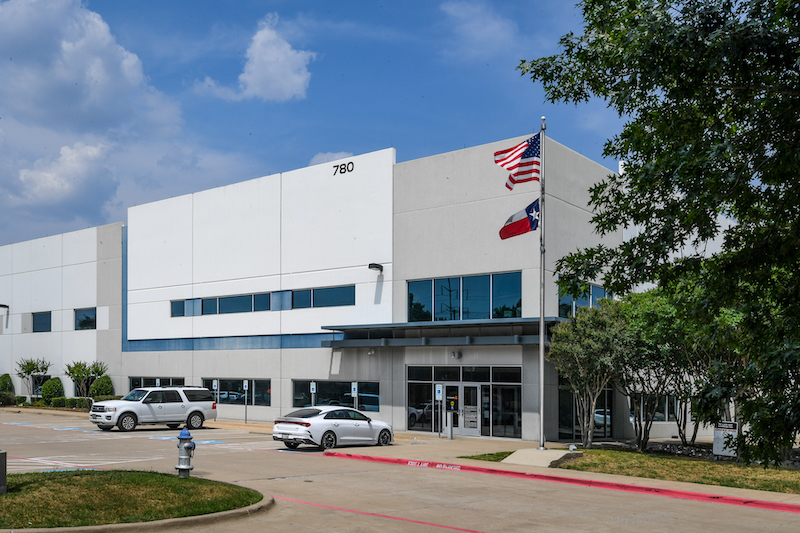
CBRE National Partners announced the sale of 780 Shiloh Road, a Class A+ industrial building located in the NE Dallas submarket. A private Californian investor purchased the property from Founders Properties for an undisclosed price.

Randy BairdJonathan BryanRyan ThorntonNathan Wynne and Eliza Bachhuber with CBRE National Partners arranged the transaction on behalf of the seller. 

Ideally located in Plano’s Research/Technology district and minutes from US-75, 780 Shiloh Road has direct access to President George Bush Turnpike which connects I-35E, I-30 and the Dallas North Tollway. Built in 2001 and renovated in 2007, the property is leased to a single tenant through 2030.

CBRE arranges sale of Cooper Street Plaza in Arlington

CBRE announces the sale of Cooper Street Plaza, a 91,856-square-foot shopping center located at 4619-4623 Cooper Street in Arlington, Texas. Vista Property Company purchased the property from a Texas based real estate investment trust.

Jared Aubrey and Michael Austry represented the seller in the marketing and sale of the property.

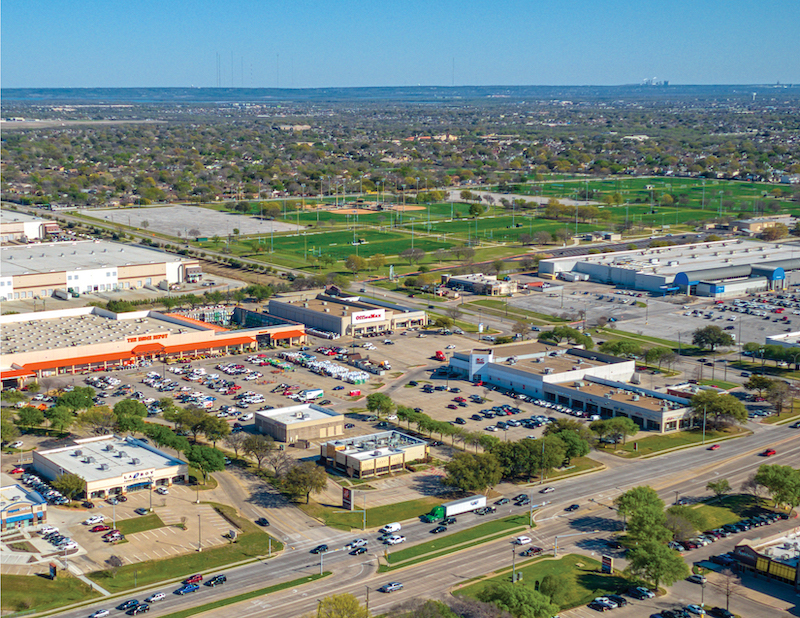
Located along I-20 in the middle of a dominant retail corridor in Arlington, the shopping center was 97.5% occupied at the time of sale. The center garnered significant investor interest due to its high-visibility, long-term triple net leases and below market rents. The center is anchored by K&G Mens Company and Office Max and features other prominent tenants including Black Rifle Coffee Company, UPS, State Farm Insurance and Ninja Sushi. 

Moroch Partners relocates into new 24,000-square-foot office HQ in Dallas Design District

Transwestern Real Estate Services (TRS) and Quadrant Investment Properties (QIP) announce Moroch Partners, a Dallas-based full-service, independent marketing and communications agency, has signed a new, long-term 23,365-square-foot office lease at the Manufacturing District (MD), located at 147 Manufacturing St. The firm relocates from Hall Street at The Centrum and plans to move its employees into its new offices in 2024. Transwestern’s Paul Wittorf, Kim Brooks, Laney Delin and Collin Burwinkel represented QIP in lease negotiations. Jihane Boury and Clay Vaughn with Savills represented Moroch Partners.

Moroch Partners is a leading full-service, independent marketing and communications agency based in Dallas, with a presence in over 30 markets across North America. Moroch clients include McDonald’s, Planet Fitness, Six Flags Entertainment Corporation, Altitude Trampoline Park, Disney, Sony, Universal, Make-A-Wish Foundation and Midas, among others.

Moroch joins other tenants on-site at MD, including Alto, Smart Business Concepts and Kirksey. In June, Pennsylvania-based 84 Lumber, the nation’s largest privately held supplier of building materials, signed a 4,933-square-foot lease for its new western office headquarters. With the recent leases, MD is now more than 80% leased.

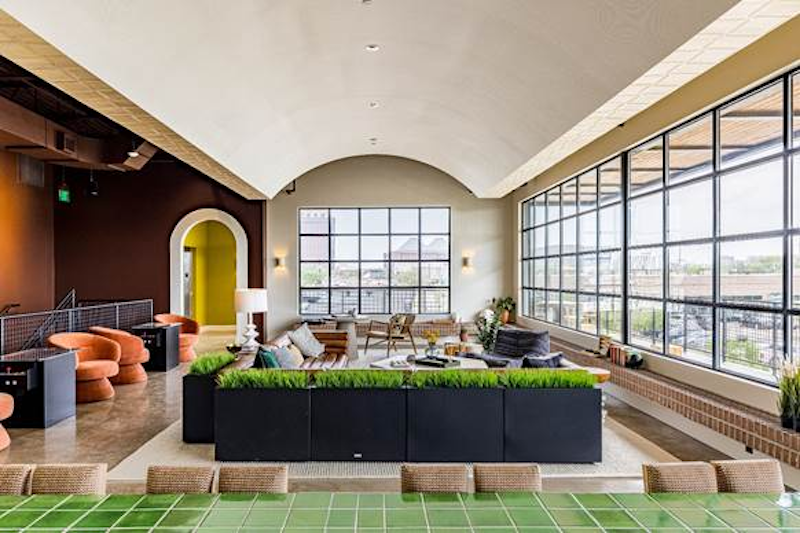
With tenant amenities such as a shared rooftop lounge featuring unobstructed panoramic views of downtown Dallas, Triumph’s Espresso & Whiskey, a pedestrian path that was re-envisioned from an abandoned rail spur, and The Grove, a shared outdoor community lounge with casual seating, lush landscaping and 6G Wi-Fi, amenities on-site at MD were carefully designed to create opportunities for tenants to work, socialize and enjoy outside of their office environments.

According to Transwestern research, the Design District has seen nearly $1 billion in private investment over the last 15 years. With top-tier local and out-of-market restaurants and new retail concepts recently announced, the area is one of Dallas-Fort Worth’s most widely sought-after locations.

For more images of the Manufacturing District, click here.

Nuveen Green Capital closes largest C-PACE deal in San Antonio

Nuveen Green Capital, a leader in sustainable commercial real estate financing solutions, and the Texas PACE Authority, the administrator of 92 PACE programs in Texas, along with CBRE, the global leader in commercial real estate services and investments, announced the closing of the Curio Collection by Hilton Hotel in San Antonio, Texas. This closing marks Texas’ largest C-PACE (Commercial Property Assessed Clean Energy) transaction to date.

C-PACE is a creative financing mechanism that provides commercial property owners and developers access to low-cost, long-term, fixed-rate financing for energy efficiency, water conservation, renewable energy, and resiliency commercial real estate projects.

Located in downtown San Antonio’s Hemisfair District, the Curio Collection by Hilton Hotel is situated on roughly 1.5 acres near the intersection of South Alamo and Market streets. The ground-up development of this 17-story, luxury, full-service hotel will feature 200 guest rooms, ballroom and meeting spaces, a signature restaurant and bar, café, a rooftop bar, an underground speakeasy bar, terrace pool with cabanas, a full-service spa, a fitness center, ground floor retail space and a public garden. When complete, this hotel is slated to be the most luxurious in the area as the city continues its economic revival. Overland Partners Architects designed the full-service property, which will be owned and operated by Zachry Hospitality as a Curio Collection by Hilton.

The C-PACE proceeds will fund key sustainability measures including envelope, lighting, and plumbing.

The Texas PACE Authority administers Texas’ PACE statute by taking a market-based approach to energy finance and economic development by facilitating energy and water improvements that are both economically sound and environmentally friendly. The Texas PACE Act was passed by the Texas Legislature in 2013 and The Texas PACE Authority has facilitated $450 million in PACE financing throughout Texas.

Construction of the 200-room hotel is expected to begin this fall with a target to open its doors to guests in late 2025.

Thriving opportunities in Austin’s multifamily sector

The Austin multifamily market continues to demonstrate resilience and attractive investment opportunities, despite challenges posed by a variety of factors. Geopolitical pressures, capital markets instability, recession fears, oversupply, softening apartment fundamentals and sector-specific job layoffs have influenced the market dynamics. In response, operators have shifted their focus from true rent growth to retaining residents and enhancing asset management and operations.

According to analysis by Institutional Property Advisors, Austin is experiencing an incoming supply wave, leading to an elevated pace of new unit additions. This surge in supply is expected to have a near-term impact on vacancy rates, raising them from the record lows reached in the first half of 2022. However, Austin’s population growth remains strong, with the metro projected to have the highest year-over-year inventory change since at least 2000. The influx of younger residents, particularly in the 20 to 34 age cohort, who are historically inclined to rent due to Austin’s heightened homeownership costs, will contribute to long-term property performance and validate the ample construction pipeline. Despite the temporary pressure on vacancy rates, Austin is still projected to outperform most other major markets in terms of net absorption in 2023.

Berkadia Senior Managing Director Kelly Witherspoon acknowledges the prevailing challenges in the market.

“The general tenor this year is hanging on to what you have,” he said. “I do believe true rent-growth is a secondary focus for most operators right now, rather, focused on retaining residents with a stronger eye on asset management and operations.”

Kelly Witherspoon

Witherspoon expresses gratitude for Berkadia’s holistic culture and growth, emphasizing the firm’s commitment to exceptional service and integrity.

“In Central Texas and Austin, we’ve created an amazing culture and will continue to provide our clients exceptional service with integrity, honesty and grit,” he said.

Berkadia’s expertise spans various property types, serving both institutional and private firms. From lease-up developments to older vintage value-add assets and land, Berkadia’s comprehensive capabilities make them a formidable player in the Austin market.

The company recently concluded a successful campaign for a larger, well-located 1990s vintage community in Austin that had never undergone a programmatic renovation.

“It had been owned for over 25 years, incredibly rare in Austin, and we had tremendous activity,” shared Witherspoon. “We had over 50 tours, over 30 offers and 500 confidentiality agreements executed.”

This exceptional response highlights the high demand for value-add opportunities in the market. Investors are keen to acquire properties with potential for rent premiums post-renovation, particularly in well-preserved assets from the 2000s to 2010s.

While there is still a thinner competitive pack at the top of the market, there are significant opportunities for investment.

“There were many campaigns in 2022 that didn’t materialize into transactions, which is incredibly rare for Austin,” Witherspoon explained. “In 2023, we’ve had very few of them, mainly due to sellers understanding the market is different.”

Although there is a bid-to-ask spread, indicating a difference in price expectations between buyers and sellers, the market still attracts numerous interested buyers. Austin’s multifamily market continues to be an appealing destination for investors seeking long-term growth and stability.

“It continues to be a competitive environment in Austin,” said Institutional Property Advisors Senior Managing Director of Investments Kent Myers. “We’ve had increased levels of transaction level activity and are starting to see institutional interest back in the market.”

Kent Myers

Myers highlights the substantial number of units currently under construction, leading to a considerable supply wave. Nevertheless, the market’s resilience is underpinned by Austin’s robust job growth and the current decline in permitting activity currently a -27% decrease year over year.

As the market continues to evolve, lower-cost areas are poised to receive increased demand. Austin’s strong net in-migration has benefitted outer cities that connect the market to San Antonio, resulting in an intertwined metropolitan area. San Marcos, for instance, boasts a vacancy rate lower than the overall metro and the lowest mean effective rent, showcasing the appeal of well-connected and cost-efficient locales. Additionally, urban areas with limited development pipelines, such as Northwest Austin, are well-positioned for growth. The upcoming Phase 2 of Apple’s campus in September is expected to create high-paying jobs, which will benefit Class A and B rentals in the area.

“Given the job growth in Austin and in-migration that we’re continuing to see, the market’s been extremely resilient,” Myers stressed. Even with the heightened level of supply previously referenced, we expect Austin to end the year with rent growth numbers slightly below 3%.

While challenges persist, the Austin multifamily market remains resilient and opportunities for investment abound. Firms including Berkadia and Institutional Property Advisors recognize the shifting dynamics of the market and are adapting their strategies to retain residents and optimize asset management. As Austin continues to experience robust population growth and net in-migration, the multifamily sector is poised for long-term success. The combination of ample construction, favorable demographic trends and the appeal of lower-cost areas indicates a promising outlook for the market.