Newmark Represents Sale of 33-Asset Industrial Portfolio in Midland, Texas’ Permian Basin

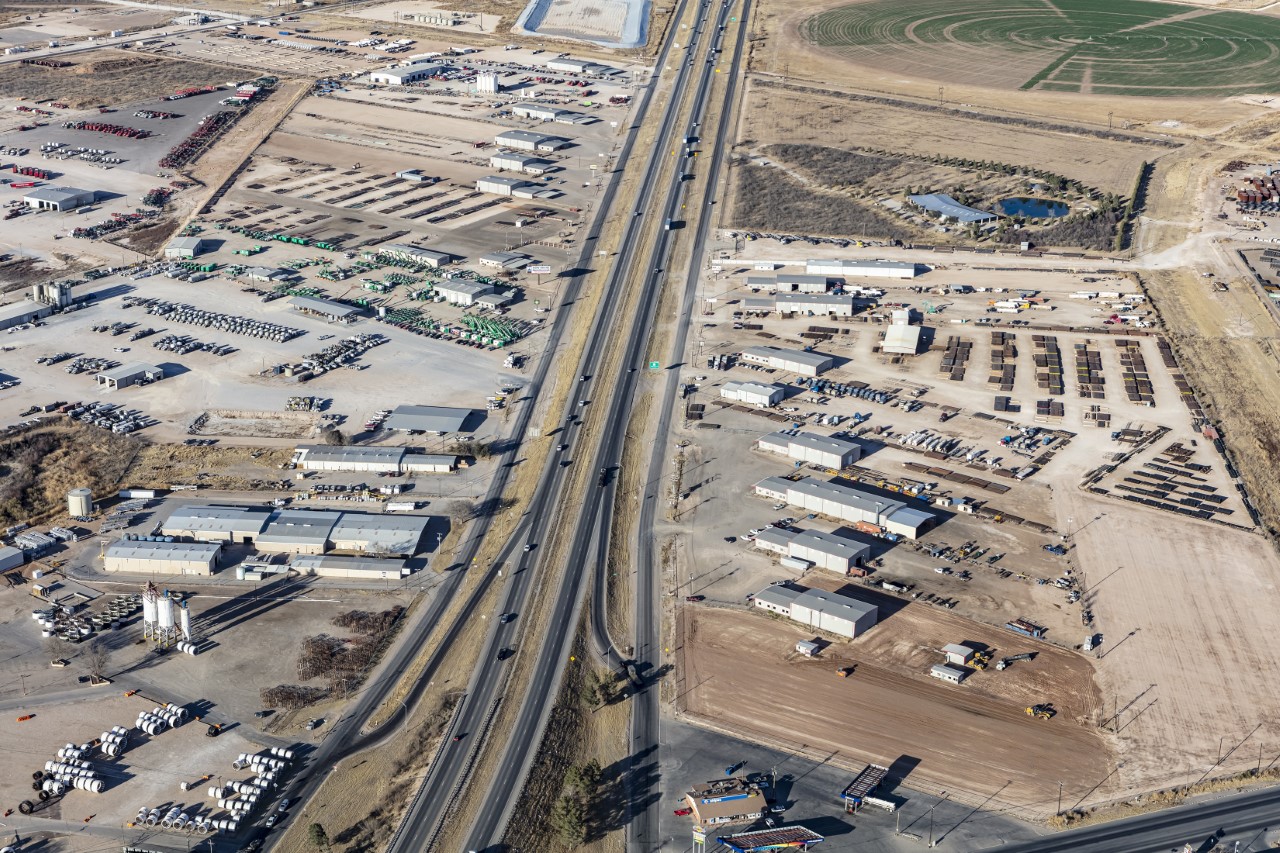
Irvine, CA (July 13, 2022) — Newmark announces the for-sale opportunity of the ERP industrial collection, a 33-asset net leased industrial portfolio located in the Permian Basin in Midland, Texas, one of the largest oil fields in the world.

Newmark’s Net Lease Capital Markets group comprising of Vice Chairman Matt Berres, Director Samer Khalil and Associate Karick Brown in partnership with Vice Chairman, Divisional Head of International Capital Markets Alex Foshay and International Capital Markets Analyst Victoria Radman are representing Energy Related Properties (“ERP”) as the exclusive sales agents for the collection in cooperation with Newmark Executive Managing Director Lispah Hogan, CCIM, MCR.

The portfolio comprises 33 single- and multi-tenant net leased assets totaling 662,714 square feet on 160.7 acres. Currently 91% leased, the portfolio offers a diversified and staggered rent roll and has maintained an average occupancy of more than 90% over the past five years, despite fluctuations in oil prices. Out-of-area investors have the option of retaining and benefiting from Midland-based Energy Related Properties’ highly experienced portfolio management and unique knowledge of the Permian Basin market.

The Permian Basin is the highest producing oil field in the world and one of the largest. The region stretches from Western Texas into Southeastern New Mexico. The strategically located tier 1 assets were selected for their best-in-class locations in immediate proximity to Midland’s major highways such as Interstate 20 and Texas State Highways 80, 158, 191 & FM 1788. The portfolio assets are also proximate to the Midland International Airport, providing ease of access to both tenants and ownership.

“This is an extremely rare opportunity to acquire a masterfully curated portfolio of the best assets in the Permian Basin and a significant market share position,” said Berres. “Global oil markets are exceptionally tight given current geopolitical tensions and possible disruption to supplies.

In line with the wider increased energy production of the Permian Basin, this portfolio stands to benefit significantly from these market dynamics.”

Foshay added, “Beyond the physical real estate precisely meeting the market’s needs and the locations of this collection of assets, the portfolio’s tenancy profile also offers immediate access to substantial growth and a highly efficient inflationary hedge, a combination which is increasingly difficult to find in today’s market. The mix of high-quality upstream tenants at rents 20% below market and the attractive staggered lease profile, against the backdrop of outperforming oil markets, make the portfolio one of the few commercial real estate offerings with genuine significant growth in the short to medium term.”

Press Contact: Alexa Nestlerode t 949-608-2170 alexa.nestlerode@nmrk.com

GenCap Partners, Inc. Closes Sale of The Sarah at Lake Houston Apartments to SunSail Capital

Dallas-based developer, GenCap Partners, Inc. announced the sale of its luxury apartment development, The Sarah at Lake Houston, to a group led by New York’s SunSail Capital on July 7, 2022. The transaction of this 350-unit class A+ property nestled in the affluent northeast Houston suburb of Humble was brokered by Zach Springer of Newmark. Construction commenced in mid-2019 and the project delivered its first units in November 2020 while the COVID pandemic halted in-person touring in Houston. The multifamily community reached stabilized occupancy in September 2021.

GenCap’s CEO, David Castilla reported “The fact that we leased up above our proforma rental rates and absorbed units faster than we predicted before the COVID virus impact, confirmed to our investors that the multifamily sector remains resilient despite the challenging economic conditions we’ve faced or will face in the coming years.”

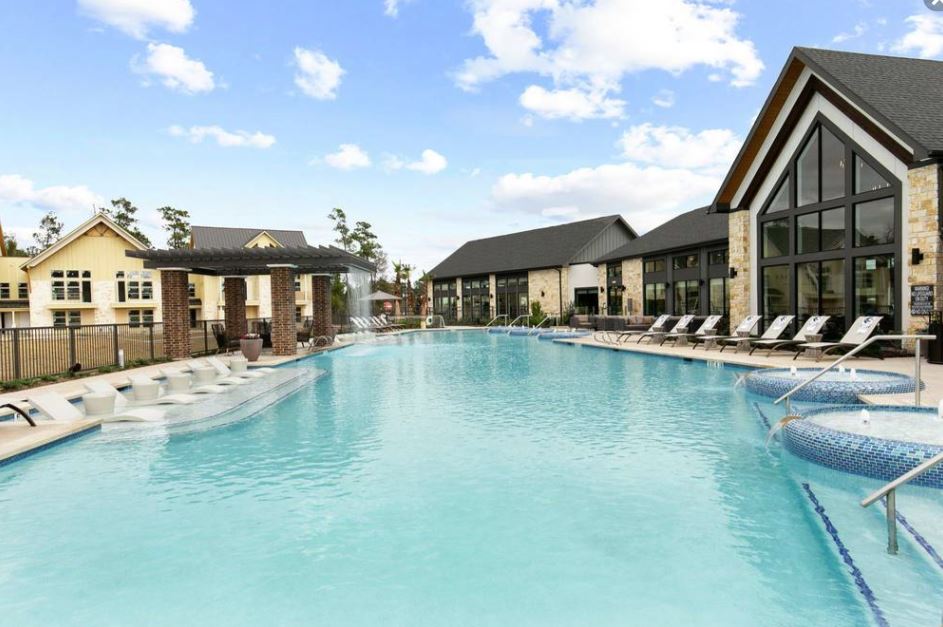
The three-story garden-style apartment development caters to those with a discerning appreciation of high-end interior finishes and offers lakeside living and convenience to top-ranked schools. Deluxe community amenities include: a resort-style pool, bier garten, state-of-the-art athletic facilities, golf simulator, dog park, and business and conference center designed to accommodate today’s tech-savvy renter who might work from home. 

This acquisition was a strategic addition to SunSail’s portfolio of superior quality, high-performing multifamily assets in burgeoning Texas cities.

GenCap Partners, Inc. provides real estate investment advisory, asset management, and development services to domestic and international investors in core markets in the Southern USA. The firm focuses on creating value and superior returns for its clients through investments in multifamily and office products.

GenCap Partners develops between $250 million and $400 million in new multifamily projects annually.

For more information, contact David E. Castilla at dcastilla@gencappartners.com.

Market Dislocation May Uncover Silver Lining For Commercial Real Estate Lending

The global economy, commercial real estate included, has forced some lenders and investors to sit on the sidelines. Changing interest rates, inflation and recent shifts have resulted in investors losing deals and having to push the pause button. The volatility has slowed down activity and market rates have moved quickly.

Some experts believe interest rates for debt could rise 200 to 300 basis points, which would not favor borrowers. Not only will that make it challenging to underwrite deals, but many will no longer even pencil, especially those expecting to find a low cost of capital.

he global economy, commercial real estate included, has forced some lenders and investors to sit on the sidelines. Changing interest rates, inflation and recent shifts have resulted in investors losing deals and having to push the pause button. The volatility has slowed down activity and market rates have moved quickly.

Some experts believe interest rates for debt could rise 200 to 300 basis points, which would not favor borrowers. Not only will that make it challenging to underwrite deals, but many will no longer even pencil, especially those expecting to find a low cost of capital.

The historically low interest rates over the past 10 years have created an environment where the norm was cheap money. That is swiftly changing, and borrowers must adjust. Debt is getting more expensive, though I have seen that equity is cheaper in many instances as investors accept lower yields. Overall, the reality is lenders are not underwriting like they used to.

We are seeing a flight to fixed rates as borrowers attempt to reduce their exposure to rising rates and skyrocketing interest rate caps costs. In times when interest rates were flat or lower, the cost of interest rate caps was cheap. But costs have soared in the past year. Additionally, some shorter-term investors are shifting strategies (paywall) to a longer-term hold since they cannot find strong deals to replace existing assets.

The rise of interest rates is putting downward pressure on loan dollars and overall loan-to-value ratio which has reduced lending activity. Some seller servicers and DUS lenders are pushing the agencies to reduce their debt service coverage requirements to mitigate the loss of loan dollars, but it is not likely that Fannie Mae or Freddie Mac will change any requirements. There is some room in the spreads to be reduced since they have been lower in past.

Forecasting

There are changes and adjustments underway in the marketplace. For now, it doesn’t look like any agency relief is forthcoming, and that is expected to continue holding back deal flow. In the second half of 2022, I predict that activity could accelerate as the agencies look at their allocations and realize they need to push more capital into the marketplace to meet their annual goals. But the reduction of spreads remains uncertain and bridge loan spreads are increasing.

Real market dislocation may be ahead and that could result in a 10% or 15% drop in asking prices. Opportunities may surface for deals that are falling out now to get sucked up by those waiting in wings. We may see institutional capital move into the middle market space and pursue smaller deals or explore secondary markets that they might not have looked into before.

Higher rates might allow these institutions to absorb lower leverage since they are flush with cash. The market was previously driven by 1031 exchange opportunities, but investors will need more to put down and pay more to win deals. We continue to see those buyers active because many are selling or have sold, so they need to move into a new investment before the tax advantages they gained evaporate. It will be interesting to see how investors like institutional groups handle lower leverage.

On the lending side, especially in the bridge debt space, debt yield requirements are being raised and that will affect loan amounts in the lower levels. Investors may not buy assets at a low cap rate, electing to chase yield in other sectors such as limited-service hotels.

Market disruption brings opportunities for those who are savvy and patient. First, some of the competition will be reduced. I believe the market has been too frothy, so taking a breather may be the pause needed to return to sound fundamentals.

Second, a slowdown will allow those on the sidelines or new entrants previously boxed out to come in. The market ahead may be one in which lower returns become popular. Lenders may focus on de-risking strategies and pull back from certain markets where they have more portfolio exposure, helping to ensure diversification. Smart money could decrease leverage 5% from the current loan-to-cost ratio (paywall), currently in the 70% to 75% range, and could help reduce the leverage offered in the bridge lending space.

Completing construction deals is a bit more troubling today because rent increases are not keeping pace with construction costs. That’s causing projects to enter a zone where they no longer are viable. Traditionally, construction lenders have focused on the projected yield on cost (the projected net operating income divided by the total project cost) to determine viability. For multifamily, this figure sits around 6% (the lowest it has likely ever been).

Lenders want to see a spread between the yield on cost and the property’s market cap rate to ensure profitability. For example, if a multifamily property sells at a 4.5% cap rate and the yield on cost to build to finished product is also 4.5%, there’s no profit incentive to move forward.

We are seeing deals with low yield on cost emerge due to construction cost increases. The developer then must find other ways to make a project pencil, though trying to do so via higher rents could be problematic. Construction budgets from just a few months ago are, in many cases, significantly higher.

Still, many lenders and investors are sitting on large amounts of cash as we enter this uncertain market. Sellers who have divested assets, or investors who have de-risked portfolios, are now in a position to weather what may come and could capitalize on opportunities that arise. Even if they elected to stay put, I predict they will be just fine since they hold real assets that provide hedges against inflation and have proven to be a sound place to invest in and place money in.

There have been moments when we’ve needed to tread with more caution. This is probably one of those times.

Old Three Hundred Capital Secures $47.3 Million in Acquisition Financing for Multi-housing Community in San Antonio

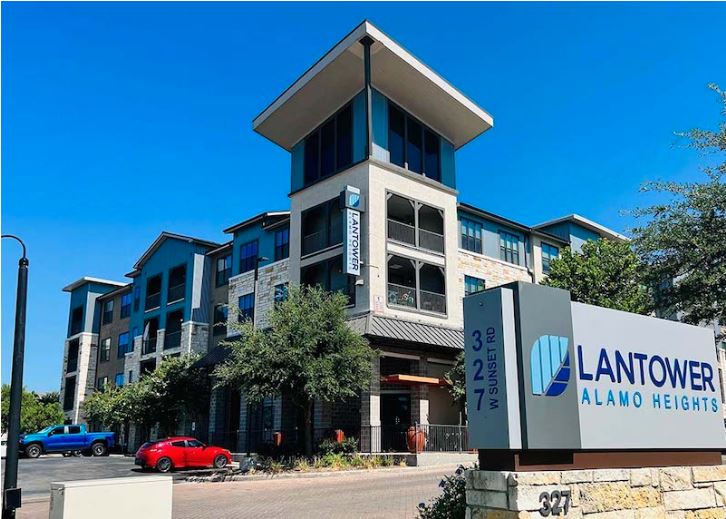
JLL Capital Markets announced that it has arranged $47.3 million in acquisition financing and secured the preferred equity for Lantower Alamo Heights, a 312-unit multi-housing community located in the Alamo Heights neighborhood of San Antonio.

JLL worked on behalf of Austin-based sponsor, Old Three Hundred Capital, to arrange its second transaction with Sound Mark Partners this year. Additionally, JLL secured a non-recourse, floating-rate acquisition loan through Prime Finance on behalf of the partnership. JLL has now financed a total of approximately 1,800 units for Old Three Hundred Capital in the last 18 months. 

Built in 2015, Lantower Alamo Heights totals 312 one-, two- and three-bedroom units. The property features 259,951 rentable square feet and was 93% occupied at acquisition. The complex features a conference/meeting room, courtyard, dog park, pet wash station, elevator access, fire pit, fitness center, game room, outdoor living and grill area, parking garage, resort style pool and pet-friendly community. 

Located at 327 W. Sunset Road, the apartments are situated in one of the top neighborhoods in San Antonio with its own independent, private school district and median home prices averaging $1 million. Close to the popular Pearl District and downtown San Antonio, the property offers residents plentiful access to greenspaces and excellent “A+ Rated” schools, upscale eateries and a high barrier to new construction, which make this an uncommon asset in San Antonio.

Lantower Alamo Heights offers Old Three Hundred Capital a unique opportunity to gain exposure to a top San Antonio submarket with limited supply and proximity to multiple strong economic drivers.

The JLL Capital Markets Debt Advisory team representing the borrower was led by Senior Director Marko Kazanjian, Managing Director Chris McColpin, Senior Managing Director Max Herzog and Associate Andrew Cohen out of the New York City and Austin offices.

Commercial Development Races to Keep up with Growth

As the population of New Braunfels continues to grow at a rapid pace, so does investment and construction in commercial real estate.

At the same time, a very low rate of vacancy in some areas of commercial real estate, such as office and retail, is putting pressure on developers to build more around New Braunfels to bring increased options for businesses.

“We’ve seen nearly 100% absorption of our office market,” said Jonathan Packer, president of the Greater New Braunfels Chamber of Commerce. “We have opportunities emerging where there’s going to be some evolution of all of our retail areas both new and existing in the city to bring jobs and people clustered together and to attract the right type of job. We need to have the spaces that allow us to compete for those opportunities.”

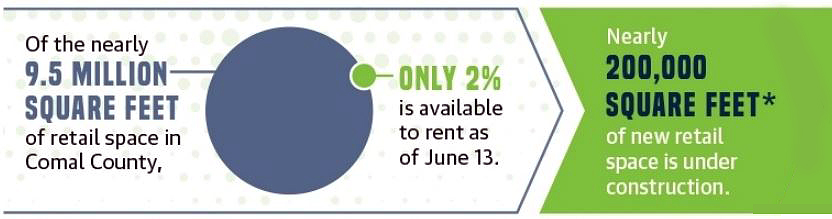
Data produced for the GNBCC from CoStar Group, an organization that researches and analyzes the commercial real estate industry, shows that nearly 200,000 square feet of new retail construction is under construction in 2022. Click to read more at www.communityimpact.com.