CREW Austin SAFE Donation Drive

Join us to support local women and children through the SAFE Alliance (Stop Abuse For Everyone). We will be collecting donations to support SAFE’s mission of a just and safe community free from violence and abuse at the June and July CREW Luncheons. Donations of Gift Cards, Food and Pantry items, Home goods, and Toiletries are encouraged. 

A list of SAFE’s ongoing needs can be found here.

Additional information about the SAFE Alliance can be found at //www.safeaustin.org/.

DATE
July 19, 2022

LOCATION
Westwood Country Club, West Room

TIME
11:30 a.m. – 1 p.m.

Recession-Proof REITs: Senior Housing Demand Bounces Back After Two Catastrophic Years

Few places seemed riskier during the early, pre-vaccine peaks of the Covid-19 pandemic than nursing homes and senior housing facilities. That includes Arbor Court Retirement of Topeka, the oldest retirement community in Topeka, Kansas.

“There was a lot of fear,” says Linda Clements, the director of business development at Arbor Court of Topeka, an independent living community for people 55 and older. Arbor Court contained the few Covid outbreaks it experienced – the 58-apartment community saw one Covid-related death. Nevertheless, like many senior housing communities, the business struggled during the pandemic to bring in new residents to fill empty apartments when residents either passed away or moved to facilities offering more medical care.

Highly publicized Covid deaths at nursing homes early in the pandemic forced many families to rethink congregate living and long-term-care plans, but experts and senior housing groups say demand is now picking back up.

Click to read more at www.forbes.com.

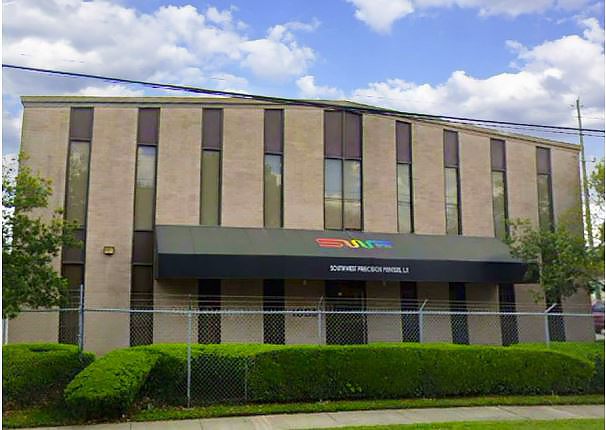
Tarantino Sells former Southwest Precision Printers Warehouses

[Houston, TX] – July 14, 2022 – Tarantino Properties announces the sale of 1053 & 1055 Conrad Sauer Drive in Houston, Texas.

The property includes two warehouse buildings totaling 47,000 SF. The property was the former home to reputable Houston print company, Southwest Precision Printers. SWPP was founded in 1975 and earned the title of largest independent family-owned commercial printer in the Southwest.

The buildings are located in an extremely coveted location between the CITYCENTRE area, one of Houston’s most popular retail, dining, and entertainment hot spots — and the residential area of Spring Branch, one of the fastest-growing neighborhoods with a mix of luxury multifamily, townhomes and single-family homes.

Kim Brake — Commercial Associate with Tarantino Properties — represented the seller in the transaction. The listing generated multiple offers and went under contract within one week. The sale closed on June 28, 2022 and sold to a local Houston developer.

About Tarantino Properties, Inc.

Tarantino Properties is a real estate investment and service company based in Houston, Texas, specializing in income-producing properties since 1980. The company manages more than $2 Billion in assets throughout the United States providing a full complement of quality services including management, brokerage, leasing and construction services for multifamily and commercial properties.

Contact:
Angela Sandoval, Director of Marketing & Leasing
Tarantino Properties, Inc.
Phone 713-974-4292
Fax 713-974-5846
asandoval@tarantino.com
www.tarantino.com

Higher Pay? Lower Requirements? Nothing Drawing Employees Back

Where are the workers? That’s a question that employers have been asking since the early days of the COVID-19 pandemic. And so far? No one really knows.

A June report from the ADP Research Institute demonstrates just how serious the shortage of workers has been for employers. Citing numbers from the U.S. Bureau of Labor Statistics, ADP reports that in March of this year, total public and private employment is 822,000 workers short of what it was in February of 2020. Part of the reason is that so many employees have quit since the pandemic started.

ADP, again citing numbers from the Bureau of Labor Statistics, found that the number of people who quit their jobs in 2021 rose 36% when compared to the previous year. That’s a jump of nearly 12 million people leaving their jobs.

In all, 45.4 million people quit their jobs in 2021. As ADP says, the Great Resignation is a real event.

This has made it difficult for companies to fill their open jobs. In 2019, employers found new hires for about 84% of their job openings, ADP said. In 2021, that number had fallen to 71%. As ADP reports, applicants aren’t showing up to fill all those open jobs.

According to the report, there were nearly 30 million more private-sector job openings last year than in 2019. That’s a jump of 39%. And it’s not that employers aren’t trying to fill these positions. They’re even offering a greater number of remote job opportunities. ADP says that unique job postings for remote positions more than doubled in 2021 from the year before, hitting 2.8 million.

ADP found that employers are desperate enough for new workers that they are lowering their standards when it comes to whom they are willing to hire. The minimum years of experience that employers are requiring for new workers has shrunk from 5.8 years from January of 2018 to February of 2020 to 4.3 years from March of 2020 to March of 2022.

Companies are offering more money, too. ADP said that advertised wages were up 4% for commercial truck drivers, 10% for cashiers, 8% for registered nurses and 13% for stockers and order fillers when compared to the months leading up to COVID.

When will these perks have an impact? When will all those missing employees rejoin the labor force? Unfortunately, no one yet knows.

Investor Demand for Multifamily? It’s Been Insatiable

Insatiable. That’s the best way to describe investor demand for multifamily assets during the last five years.

Need proof? Consider a bulletin released late last month by Yardi Matrix. According to the company’s research, Yardi Matrix tracked more than $215 billion of U.S. multifamily property sales in 2021. And these properties traded for an average of $192,100 a unit.

Both of these figures are all-time highs, according to Yardi Matrix.

The company found, too, that 4,500 multifamily properties in the United States sold at least three times during the last decade. That’s about 5.3% of all U.S. apartment properties.

According to Yardi Matrix, investors have been most interested in smaller apartment properties that target working-class residents, mostly because these properties have the potential for higher rent growth. When investors purchase these properties, they tend to have lower rents even though they sit in markets with above-trend rent growth.

This gives investors the opportunity to raise rents on these properties, increasing their returns on investment.

The investment numbers that Yardi Matrix tracked are rather impressive. According to the company’s report, transaction activity in the multifamily sector bottomed out at $13.3 billion in 2009. Increasing steadily each year, this figure rose to a then high of $128.7 billion in 2019.

In 2020, a year of decline related to the COVID-19 pandemic, multifamily transaction volume fell to $95.5 million. Then came 2021, and a record-setting $215.3 billion in transaction volume. That is an increase of 67.3% when compared to the prior record-setting year of 2019.

Last year also set new highs for the number of multifamily properties sold — 6,488 — and the total number of units traded, 1.34 million.

Pricing has been on the rise, too. After bottoming out at $62,344 in 2009, the average price per unit has jumped all the way to $192,105 in 2021. That figure climbed 21.6% in 2021, the biggest one-year increase in decades.

Asymmetrical Risks? How the CRE Industry is Reacting to the Fed’s Inflation-fighting Moves

Last week, the Fed did something that it had not done since 1994: It raised the fed funds rate by 75 basis points.

Leading up to the announcement, the Fed reiterated that it intended to raise this rate by 50 basis points. The Fed stated that it changed its approach to address high, persistent inflation. Ultimately, that claim seems substantiated. But more directly, it appears that the Fed changed its mind because markets signaled that the Fed was not doing enough to control inflation.

Equity markets fell into bear market territory and fixed income yields pushed higher as bond prices declined. The Fed won’t admit so, but it seems that the markets forced the Fed into doing something that it otherwise wouldn’t have done, even with May’s upside inflation surprise.

The Fed also raised the terminal fed funds rate in its forecast by 100 basis points to 3.8%, well past our estimate of r-star (neutral) at about 2.5%, with the Fed taking a harder stance that more squarely pits interest rates against inflation. Both sides of that battle carry risks, which might prove asymmetrical.

Inflation leads

Let’s take inflation first. Empirical research dating back decades proves that inflation upsets consumers (overall) more than other economic phenomena, including high unemployment and job losses.

But we do not need to reach into the distant past for evidence of this. In early June, consumer sentiment reached its lowest level on record. Yet, empirical research also demonstrates that unless inflation reaches very high levels, it tends to have a negligible cost and impact on economic growth. Our own humble contribution to this research reaffirms this position.

That raises the obvious question: “Why is the Fed so concerned with inflation?” There seems little chance of inflation rising to a high-enough level to impair economic growth. But concerns about inflation, especially outsized ones like we observe now, could influence behavior in a way that negatively impacts the economy. If consumers believe that inflation will cause economic trouble in the future (i.e. a recession), they might alter their behaviors in anticipation of such an outcome, and in the process bring about a self-fulfilling prophecy.

While that risk is likely increasing, it remains far from certain that it would manifest. In the absence of such an outcome, risk of higher inflation on economic growth remains incredibly limited.

Interest rates follow

What about the other side of this battle? Higher interest rates attempt to reduce inflation by impacting the demand side of the economy. Because central banks like the Fed can exert little or no direct control over the supply side of the economy, they raise rates to increase the cost of borrowing, negatively impacting the prospects for interest-rate-sensitive industries such as housing, financial services and durable goods.

As those industries experience lower revenues and slower job growth (if not outright job losses), growth in the economy starts to slow as those businesses and their employees (or former employees) spend less.

That helps to bring demand and supply back into balance. But the risk here is much clearer. If the Fed raises rates too much, the probability of a recession increases significantly because the decline in spending spirals into further job losses in other industries and an even greater reduction in overall spending. Most post-war recessions in the U.S. occurred because the Fed overshot interest rates.

Can the Fed actually reduce inflation?

Against such a backdrop, it might seem foolish for the Fed to start pushing even harder on interest rates. Many have noted such risks since last week’s Fed meeting. But another key question remains unanswered: Can the Fed actually reduce inflation? And here the evidence also seems suspect.

During the last four tightening cycles dating back to the 1990s, the data appears to show limited efficacy. Using the Fed’s preferred inflation measure, the core (excluding food and energy) personal consumption expenditures (PCE) index, monthly inflation did not trend downward during periods of Fed tightening. The monthly data appear somewhat random, and not indicative of deceleration brought about by higher rates.

Moreover, in the current environment, inflation is increasingly driven by food and energy, partially because of war in Europe and partially because of lack of capacity in energy production and refining. The Fed exerts almost no control over these. Therefore, the Fed is targeting what it can – the labor market.

The Fed sees excess demand for labor (most clearly in the 11.4 million open jobs) and believes it is contributing to the inflation problem. Even though wage growth and core inflation have both decelerated in recent months, the Fed seems willing to weaken the labor market to attempt to reduce headline inflation. The Fed would likely accept a higher unemployment rate, slower job gains and even job losses to tamp down inflation.

Yet that path tends to be a slippery slope to recession. To be fair, on multiple occasions the Fed has successfully managed to slow the economy and bring down inflation without causing a recession. It does not receive enough credit for this. But the course that the Fed charted last week could lead to a troublesome destination if it is not careful.

Lookout! Errr … outlook

The upshot? The 75-basis points increase by itself does not mean much. Rates remain low. But the forecast for the fed funds rate creates greater concern. If the Fed follows through, it will almost certainly push past the neutral rate into contractionary territory. How long the economy could sustain such rates without a recession remains murky. And the Fed does not need to adhere to its own forecast.

For those looking for a silver lining, the Fed has a terrible track record of following through on its own forecasts. If the Fed went too far, the Treasury market would likely signal so, much as it did during the last business cycle. That could prevent the Fed from hiking too much.

For now, our base case shows moderate growth for the economy, driven by a strong labor market and robust consumer spending. But the Fed’s increasingly hawkish interest rate forecast is raising recession risk.

What it means for CRE

Commercial real estate is digesting all the changes from recent months, including last week’s Fed decision and forecast. The market has not yet lost faith, but because things are changing so quickly, market participants are taking an extra beat or two to ensure that they are not making a mistake.

Interest remains high, but the rapidly changing environment requires extra homework. Borrowers, lenders, buyers, sellers, landlords and tenants are all assessing rapidly changing conditions, trying to avoid making a costly error. Participants are weighing longer-term confidence in the asset class against short-term uncertainty.

Ryan Severino is chief economist with JLL.