



D. N. G. Electrical Services renewed 4,800 square feet at 5151 Mitchelldale in Houston, TX. Justin Harrity represented the landlord, Hartman Income REIT.
Author: Sarah

All Those Remote Workers only a 2-Minute Drop in Commute Times? Doesn’t Seem Fair
The move to remote work continues to shake up the U.S. office market, with office vacancies reaching all-time highs in many cities during the third quarter of 2022. But more people working from home should come with at least one positive: a reduction in commute times as fewer cars clog U.S. highways.
The problem? The commute time for the average worker has dropped since the start of the COVID-19 pandemic. Unfortunately, it’s only dropped by about 2 minutes.
That’s the finding from a report released October 31st from Yardi Kube. Yardi reported that in 2019, 94% of the U.S. workforce was commuting and 8.9 million people worked remotely. That resulted in an average time of travel to work of almost 28 minutes.
In 2021, 27.6 million people worked remotely, resulting in about 18.6 million fewer commuters. The average time for commuters to travel to work in the United States that year fell to 26 minutes.
That isn’t much of a drop, but Yardi reports that this dip of 2 minutes equals about 8.5 hours in commute time saved a year for the average commuter.
But why isn’t the drop in commute times even higher with so many more employees working remotely? Yardi points to commuter habits.
Last year, more than 126 million workers 16 and older were commuting to work each morning. The company’s analysis of U.S. Census Bureau data shows that across the United States 67% of these commuters leave for work between 6 a.m. and 10 a.m. The busiest timeslot for the morning commute is between 7 a.m. and 7:29 a.m., when more than 18 million people leave for work, or about 14% of total commuters.
The next busiest time slots are 7:30 a.m. to 7:59 a.m. and 8 a.m. to 8:29 a.m., with 12% and 11% of commuters leaving for work during these times.
Yardi’s research finds that commuters can save a significant amount of time on their travel to work by delaying or advancing their time of departure to work by just half an hour.
Consider Chicago. If commuters leave for work at 6:30 a.m. instead of 7 a.m. or after 8 a.m., they can save an average of 17.2 hours in commute times every year. This change can make an even bigger difference in Dallas. Yardi reports that commuters here can save an average of 22.2 hours a year by leaving at those same times.
And in Austin, Texas? Commuters can save a whopping 31.4 hours a year in travel times by leaving at 7:30 a.m. instead of 8 a.m. or 9 a.m. instead of 8:30 a.m.

Unique Commercial Condo Concept XSpace Lands in Texas
“It’s an evolution from traditional development”
The story has reached a level of infamy at this point, but it bears repeating. The weekend after Thanksgiving, Byron Smith sat at a Houston restaurant with a margarita in his hand.
“I was in a strip mall, but looking out, I saw a church, a school next to it,
an ugly office building and then a strip club,” he laughs. “I just thought, ‘Well, that’s a bit on the nose, isn’t it?’” Smith and his business partner Tim Manson had been looking for a market to expand their Australian-based XSpace concept.
“Until now, you were either in an office building or a warehouse or self-storage,” says Smith. “We thought there had to be an innovative way to
reimagine how people can use and think about space.”
The result is XSpace, which blurs the lines between commercial and creative space. Success in Australia helped the partners see the gap in the market in America.
“It’s an evolution from traditional commercial development,” Smith says. Click to read more at www.rednews.com.
The Texas Office Rebound is One of the Strongest…
But, Can the Same be Said for Houston?
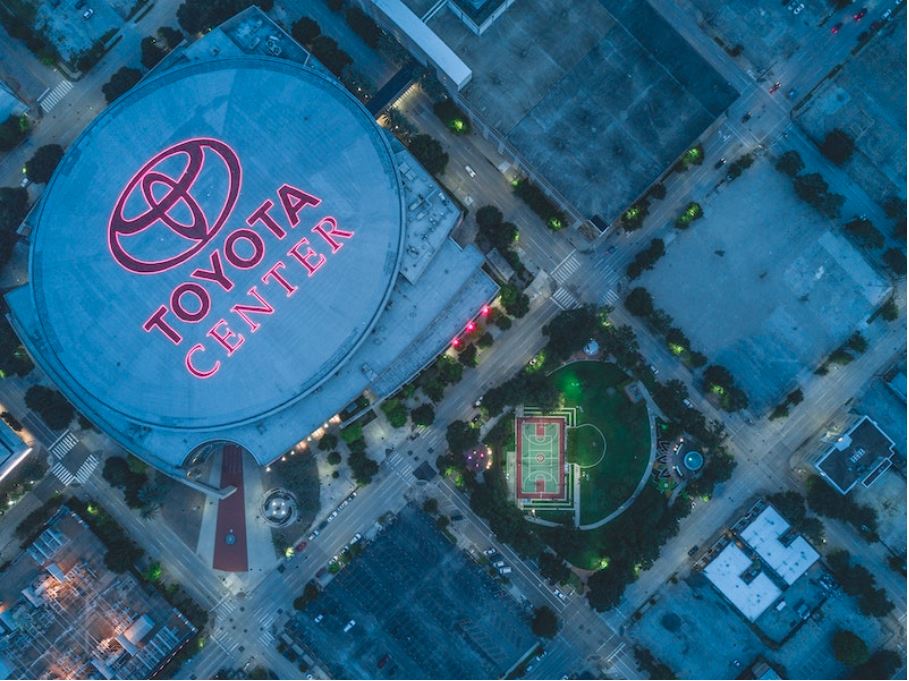
Texas’s office market has proven itself to be one of the strongest in the U.S. The market has continued to reflect positive trends throughout its post-pandemic recovery, though the numbers differ slightly from city to city.
Houston, for example? Vacancy and availability continue to rise, despite office brokers reporting increased activity and leased commitments.
To break it down, Partners recently analyzed the area’s activity during the first eight months of the year — August 2022 compared to August 2021.
Houston Office Vacancy at 25.5%
Overall vacancy was at 25.5% in August 2022, based on the report, up 100 basis points from last year’s 24.5%. Availability was nearly 30%, up 80 basis points from August 2021. Partners said the difference between this figure and the vacancy rate reflects expected future move-outs. Houston has recorded 9.3 million square feet of leasing activity of both new leases and renewals, which is down 13% from the 10.7 million square feet recorded at this time last year. Net absorption is at negative 100,000 square feet, up from negative 2.2 million square feet year-over-year. In addition, the amount of construction underway is at 2.5 million square feet — down almost 30% from last year.
Downtown Office Leases
Even though leasing activity is down from last year, this year’s new and renewed leases are quite large. In the largest office lease of 2022, law firm Baker Botts renewed and extended its lease in the former One Shell Plaza at 910 Louisiana Street. Baker Botts will now lease a total of 173,201 square feet where the company’s CBD headquarters has existed for over 50 years, according to the report.
Oil and Gas
Oil prices trended downward in August 2022, closing at just over $93 on August 26. The Baker Hughes rig count report for that date reflects a slight rise in active rigs compared to July — 765 active drilling rigs in the U.S, according to Partners. One month ago, the total active rig count was 758, and one year ago it was 508.
The current oil rig count is 605 rigs, compared to 599 in August 2022 and 410 in August 2021. The current gas rig count is 158 rigs, compared to 155 in August 2022 and 97 in August 2021, based on the report.

Emerging Trends in Real Estate Report
Commercial Real Estate Enters its “New Normal” Period
A new normal. That’s what the COVID-19 pandemic has brought to the commercial real estate market, especially in the office and retail sectors.
That’s the conclusion from the Emerging Trends in Real Estate 2023 report from the Urban Land Institute and PwC US. This report, released each year, includes proprietary data and insights from more than 2,000 real estate industry experts. And this year’s edition — in little surprise — focuses on the way the commercial real estate industry has evolved since the onset of the COVID-19 pandemic in 2020.
The report also looks at the more recent headwinds facing the commercial real estate industry, rising inflation rates and persistently high inflation. These two factors are already having an impact on the demand that investors have for commercial assets.
Midwest Real Estate News spoke with Byron Carlock, real estate leader for PwC US, about the report and its findings. Here is some of what this industry expert with more than 28 years of experience in the industry had to say.
Let’s start with the hot topic of the day: What impact are rising interest rates having on commercial real estate deals?
Byron Carlock: Interest rates today are two-and-a-half to three times higher than what people might have been seeing when they began their underwriting on construction projects or acquisitions. The constriction that these higher rates have had on the capital markets is very clear. There is still some funding out there, but at lower loan-to-cost ratios. More deals are going to the non-bank funds that are standing on deck waiting for the deals that traditional banks are now passing on.
Commercial real estate transaction volume has fallen dramatically in the last 60 days. The question now is how much will the industry readjust to these higher rates?
Have the interest rate hikes been too sudden? Would it have been better for the Fed to raise its rate at a more gradual pace?
Carlock: The Fed wanted to send a signal very quickly to help reduce asset inflation. There is talk about how a healthy economy might have a 5% to 6% unemployment rate. We are now at 3.5%. This rapid escalation of the Fed’s rate, then, was designed to let some air out to the tires of this economy very quickly. Sadly, it has. What is interesting to me, though, is that the demand for certain product types is still very healthy. Multifamily housing, especially, is still in high demand. We are still an under-housed society. The developers that are trying to meet the need this country has for new housing were caught flat-footed by these interest-rate hikes. Their deals might no longer meet underwriting criteria.
Given the uncertainty of the economy, do investors still view commercial real estate as a good investment?
Carlock: Real estate has always been viewed as a safe haven in times of inflation. Those who can increase their allocations in real estate seem to be wanting to do so. Those who are not able to do so are hampered by the denominator effect. Their valuation doesn’t get them to the margins they need to get to other assets such as real estate. But in general, people do still view real estate as a good investment. In today’s market, some of the alternative assets such as data centers, life sciences facilities and self-storage facilities are seeing great competition from investors.
There is still great concern, though, about the office sector. The post-pandemic reality is that owners have to redesign spaces to inspire people to want to come back to the office, to make it an enjoyable as opposed to obligatory experience. Building owners are redesigning office spaces for this new normal. Today, it’s about going to the office for collaboration, planning, mentoring and training, not to do the head-down work in a cubicle.
Are more office tenants seeking Class-A space to inspire their workers to come back to the office?
Carlock: That is one of the big changes coming out of the pandemic, the rising demand for Class-A-plus office space. The rates people are willing to pay for that higher class of building are very impressive. But what happens to the lower-class office space? There is a lot of talk about converting these spaces to alternative uses. Some cities are offering incentives to encourage these conversions. They might need more multifamily housing, so they are encouraging owners to convert their obsolete office buildings into apartments.
This will force some hard decisions about our existing office space. The downtown buildings with large floor plates built from the ‘60s to the ‘80s might need a change. That’s significant because about 80% of our office stock was built in the ‘80s or before. We will see a great change in which office space is relevant and which is not.
Are you seeing more apartment renters moving to the suburbs following the pandemic?
Carlock: There is evidence that the pandemic did reopen the suburbs after years of us talking about the suburbs being dead. There’s a big difference when the commute to the city for work is now two or three days a week instead of five. During the pandemic, we saw tremendous numbers of people moving further out from the city as they gained permission to work remotely. Apartment rents in most of the gateway cities are at or above their pre-pandemic levels. People are moving to the suburbs to get some relief from that. The move to the suburbs is a comment on affordability and the flexibility that comes from working remotely.
Are more companies moving their office spaces to less expensive but still large cities now that so many of their employees are working remotely.
Carlock: We have seen more migration southward. People have chosen to move to business-friendly environments with relative affordability and easy access to a talent base. They are moving to cities like Nashville, Austin, Dallas and Phoenix. We can’t ignore the attractiveness of business-friendly, low-income-tax states like Texas and Tennessee.
Just look at Nashville. It’s hard to go there and not say, ‘My goodness. I can see myself living here.’ It’s a business-friendly environment. There are talented workers available. Some of the financial services businesses that have moved to Nashville from New York thought that they might have a hard time persuading their New York City workers to move to Nashville. But it turns out that those workers love living in Nashville.
This issue of mobility and the attractiveness of cities and states is something worth noting for cities struggling to keep their businesses. Just look at the corporate relocations and exodus we’ve seen in Chicago. Some of these cities that are losing businesses might need to move away from the tax-and-spend policies they’ve relied on in the past.
What should cities do today to keep not only their businesses but to inspire people to want to move to their multifamily properties?
Carlock: Can we re-imagine our cities? As polarized as we get in this country about political and social issues, we can all agree on the importance of art, green space, gathering spaces and music. Our major city cores continue to offer all of that. You can’t recreate the depth of culture that has been developed during 100 years or more in our cities. If we could move away from the political polarization to think about making our cities better and more attractive for people, that could make a major difference in our country.
That’s a lofty goal, but it is doable. There is an emotional draw to the urban core. History has taught us that. Just look at Chicago. It has such wonderful architecture and culture. If we could solve some of the big problems cities face and focus on the culture and beauty that they provide, we can make a dramatic improvement in our country’s health. We need to find a way to improve the collaboration between public and private funding to do greater things to reimagine our cities.
Sale of Newly Completed Industrial Building in Northeast Dallas Closes
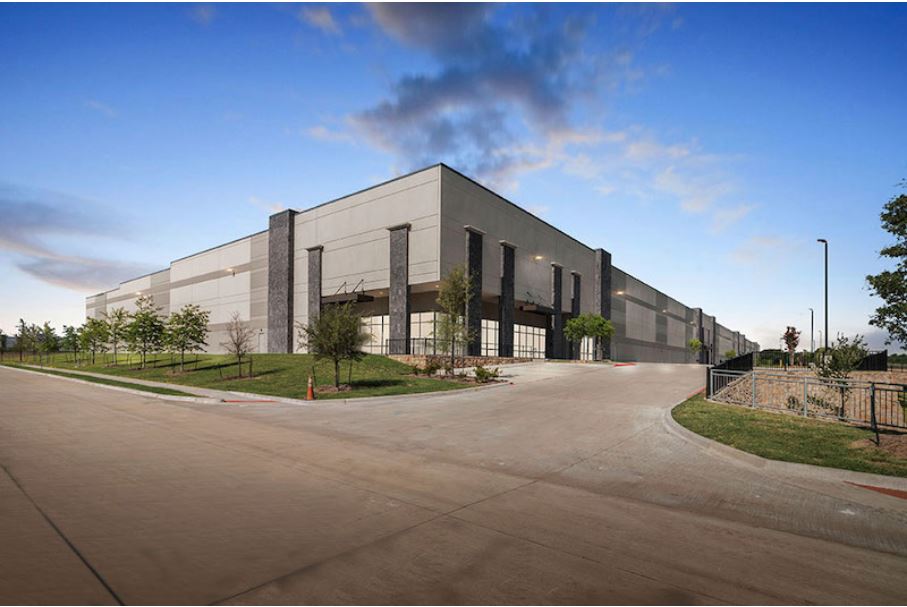
JLL Capital Markets announced today that it has closed the sale of the Logistics Center at McKinney Building B, a Class-A, 301,796-square-foot industrial building in McKinney, Texas.
JLL represented the seller, a joint venture between Thor Equities Group and Morgan Stanley, in the sale to AC Industrial Properties LLC.
Logistics Center at McKinney Building B is a rear-load building featuring 32-foot clear heights, 130-foot truck court, 52 overhead doors, two drive-in doors and 190 parking spaces.
The property is situated on 16.82 acres at 350 Cypress Hill Drive with direct access to Dallas-Fort Worth and Texas’s major commercial hubs via U.S. 75, Highway 380 and State Highway 121. As a result, Logistics Center at McKinney Building B is within 20 miles of 1.46 million residents. Furthermore, the building is located five miles from McKinney National Airport.
Logistics Center at McKinney Building B benefits from its position in the Northeast Dallas Industrial submarket, which accounts for approximately 20% of the submarket’s total inventory. Vacancy within the submarket is now below the market average. Most new development is occurring in the outlying areas of the submarket, such as McKinney and Frisco. Last-mile tenants are relocating to these fast-growing suburbs following the population growth that has occurred over the past two decades.
The JLL Capital Markets Industrial team representing the seller was led by Senior Managing Directors Dustin Volz and Stephen Bailey, Directors Dom Espinosa and Zach Riebe and Analyst Pauli Kerr.