Creative Revitalization

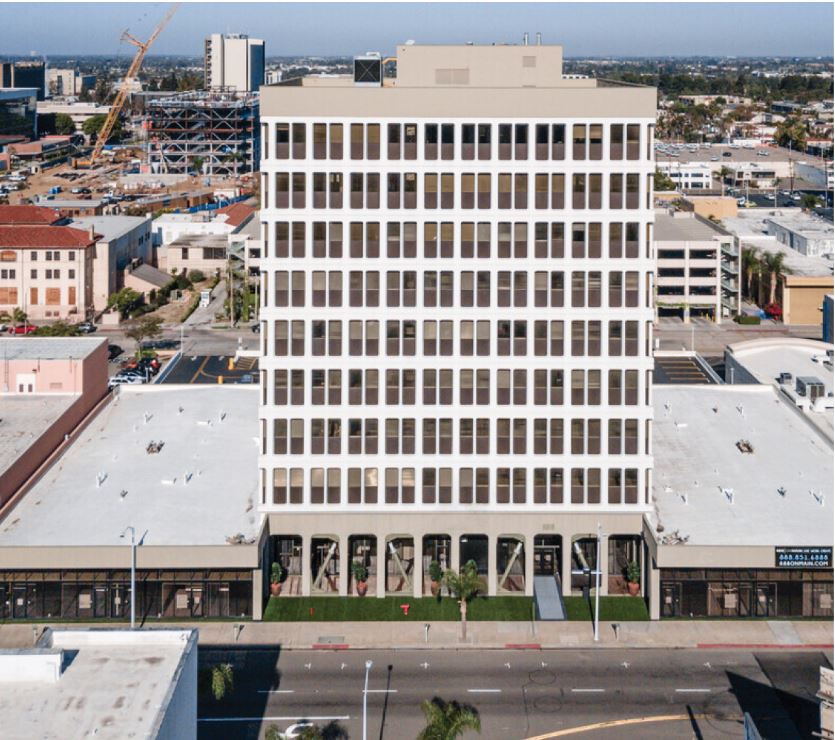
An office-to-multifamily project shows how adaptive reuse can offer new life to properties once thought past their prime.

Adaptive reuse projects are all the buzz in the commercial real estate sector these days. Repurposing underutilized property is an excellent strategy for many CRE owners to maximize value. States like California and cities like Los Angeles are working to implement adaptive reuse ordinances that allow for by-right adaptive reuse conversions with more flexible building codes for existing properties. Municipalities increasingly see adaptive reuse as a method to convert underutilized commercial buildings into housing so that they can more efficiently meet housing needs outside of ground-up development. According to Yardi Matrix, developers nationwide converted 151 commercial buildings into residential apartments that totaled 20,100 rooms.

“So far, through adaptive reuse alone, this new decade has already created nearly 32,000 apartments, 41 percent of which are in former office buildings,” according to a recent Yardi Matrix report.

However, the process and costs of adaptively reusing commercial buildings into housing can be ripe with challenges. It is critical for CRE owners who are considering adaptive reuse to perform the appropriate up-front due diligence — including land use, design, engineering, construction, rent studies, and financial analysis — to determine the feasibility and risks of these projects. Developers must also understand the jurisdictional landscape to determine the best path for any entitlements needed to support a use change. Click to read more at www.ccim.com.

A Nationwide Surge in Workplace Searches is a Good Sign, but What are the Driving Forces Behind Them?

COVID-19 transformed CRE. Though it will never be the same as it was prior to, many sectors have bounced back with a vengeance, finding new and improved ways to serve clients. Even those that have been a bit slower to recover are doing so with regard to post-pandemic demands.

A surge in workspace searches nationwide has demonstrated that businesses and employees alike are more seriously considering a return, but at a cost to landlords. While companies’ interest in renting space has increased, so has the range of preferences landlords have to meet as occupiers demand more bang for their buck.

CommercialCafe’s 2022 Office Survey identifies the driving motivators behind employees’ current office space searches — and the results are surprising.

Respondents Aim for Single-Tenant Leases in Smaller Office Buildings
Respondents’ answers regarding the reason for their search were evenly spread, but a need to downsize their workplace footprint pulled ahead just slightly at 24%.

Twenty-three percent of respondents were motivated by cost, wanting a better price per square foot, twenty-three percent were looking to be the sole occupier of a building, sixteen percent were considering a larger office space, and surprisingly, just fourteen percent were browsing for an upgrade in quality.

Core Demands Remain Unchanged, But Tenants Yearn for Luminous Offices, Outdoor Spaces & Safety Measures
Pandemic isolation has made many employees eager still to avoid the confines of an artificially lit workplace, 12% of participants highlighting the need for more natural light and outdoor areas as one of the main preferences they had developed following COVID-19.

Interestingly, an overwhelming majority of people (53%) admitted that their workplace preferences haven’t changed much or at all compared to January of 2020.

COVID-19 safety measures ranked high with 19% of participants and 7% would like a subletting option to be included in the lease to allow for maximum flexibility in the event of changes to their workforce or the company’s preferred work schedule in the future.

Forty-Three Percent of Respondents Aiming for a Full Return to Office
Most searchers were aiming for either a full return to office (43%) or a hybrid system that requires employees to spend most of their time in the office (31%). But no less than 27% claim to be looking for a space that can accommodate staff that will be working mostly from home.

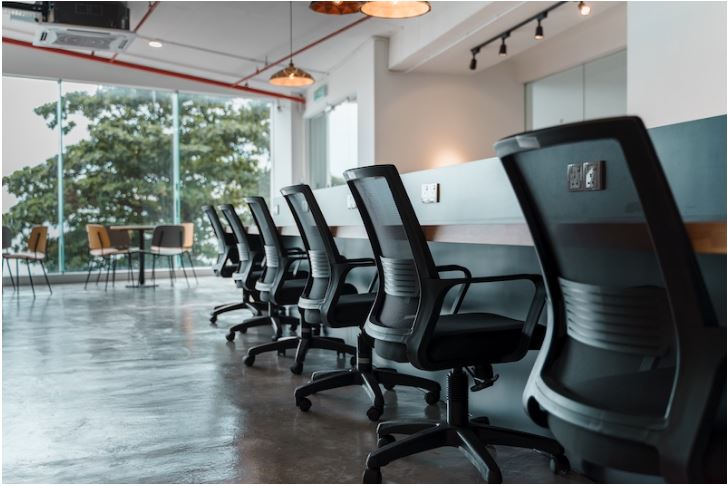
Co-working spaces have reemerged as an alternative for both businesses not yet ready to commit to a long-term lease and “work-from-home” employees wanting a change of scenery.

Americans’ Love Affair with Stuff: Investor Interest in Self-storage Space Still on the Rise

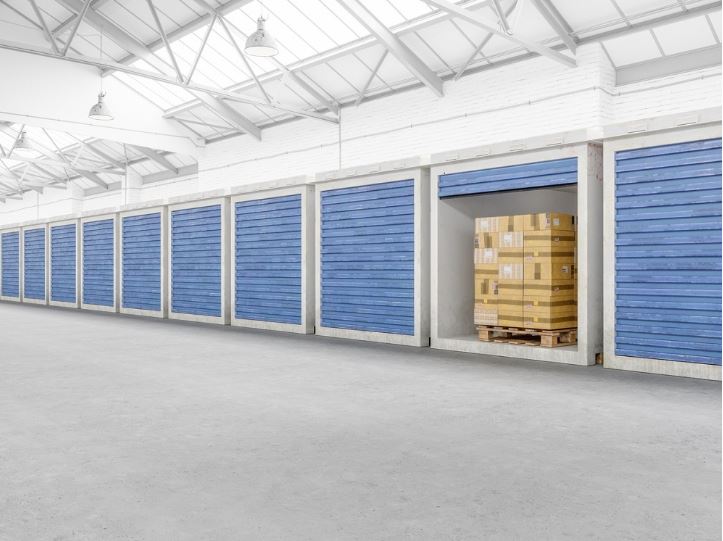
How much extra stuff do Americans bring into their homes each year? StorageCafe says that one in three Americans have so much that they need to rent self-storage units to hold it.

This isn’t a new trend, either. StorageCafe also reports that as of 2022 the amount of self-storage space in the United States had risen to more than 1.6 billion square feet.

Developers aren’t shy about adding new space to the market, either. During the last five years, they’ve built 258.9 million square feet of storage space, equal to 16.1% of the country’s total inventory, according to StorageCafe.

Last year, nearly 45.2 million rentable square feet of self-storage space was brought to the market in the United States. As StorageCafe says, this amount of space could cover all of New York City’s Central Park.

And this demand is showing no signs of lessening, despite rising interest rates and high inflation, said Frank Forcier, director of business development at Store Space, a self-storage owner with Midwest locations in Michigan, Illinois, Indiana, Missouri, Ohio and Wisconsin.

“We’ve had a very good case study with COVID the past few years,” Forcier said. “And it’s proven what we’ve long said: Self-storage is a good investment in good times and self-storage is a good investment in bad times.”

What’s interesting about this is that self-storage is not a need for people. If they are struggling with bills, they’ll pay their monthly apartment rent and not their monthly self-storage fee. Paying for a storage unit is more of a want than a need.

So why, then, is the demand that U.S. consumers have for self-storage space seemingly on a never-ending rise? Why isn’t demand for storage space falling as inflation makes groceries, gas, housing and furniture more expensive?

Forcier says that the reason is simple.

“Americans continue to love to acquire stuff,” he said. “Sometimes people look at the four Ds to explain self-storage: death, divorce, dislocation and downsizing. But there is so much more in people’s lives that spurs the need for self-storage. Those events continue to happen in good times and bad.”

For instance, homeowners might move to a smaller house. Instead of donating or throwing away their extra stuff, they might choose to store some of their items in a self-storage unit. Others might be moving to a larger space as their families grow. As they are trying to sell their home, they’ll turn to self-storage to store much of their personal belongings to remove the clutter from their current residence while it’s on the market.

Businesses, too, often turn to self-storage. Many businesses have downsized to smaller office space during the COVID-19 pandemic. They, too, might rent a self-storage space until they determine what to do with their extra furniture and equipment.

During the pandemic, many homeowners turned extra space into home offices, classrooms and workout facilities. To make room for these new uses, they placed plenty of furniture in self-storage facilities.

Even sports leagues turn to self-storage as a place to store their nets, balls, cones and other equipment, Forcier said.

“We rent self-storage space on a monthly basis,” Forcier said. “We are easy to get into and out of, unlike a lot of facilities where you are forced to take out longer leases. We laugh at all the stuff Americans have. But people are acquiring more and more stuff. We love our stuff. I don’t see that changing in the future.”

That doesn’t mean that professionals working in the self-storage space don’t have concerns. Forcier said that one of the hot topics in the self-storage industry today is whether certain markets are overbuilt when it comes to storage units.

The self-storage space, though, operates a bit differently than do other commercial sectors. As Forcier says, self-storage operates on a hyper-local basis. Most self-storage facilities only draw customers from within five miles of their locations. This means that it doesn’t matter if a rival self-storage facility sits 20 miles away. That facility is not considered a direct competitor.

Rising construction and operating costs – thanks largely to rising material and labor costs – are a concern for self-storage owners and investors, too, Forcier said.

It’s true that it costs less to build a self-storage facility than it does to build a hotel or apartment building. That doesn’t mean, though, that rising costs don’t still impact self-storage owners.

“Rising prices come into play regardless of whether we are less expensive than a hotel,” Forcier said. “Land prices are rising. All the soft costs regarding permitting and regulation are rising, too. Labor and materials cost more today. This is creating headwinds for all of us.”

But still, the owners of self-storage spaces are still realizing good returns on their investments, Forcier said.

“We are figuring out a way to work around the higher costs, just like anyone would,” Forcier said. “The pipeline of new self-storage facilities continues to get bigger and bigger. There is so much interest from developers and from new investors in this segment. With all the new players, it will be interesting to see how competitive this industry gets. A lot of people are entering this sector because the word has gotten out that this is a great asset to be in.”

One important benefit to owners is that self-storage facilities require little staffing. They also last for a long time, with Forcier saying that it’s not unusual to have a 1980s-built facility that is still relevant to today’s customers.

This sets self-storage facilities apart from other asset classes such as hotels, apartments and offices, where owners have to frequently replace carpets or furniture or make other updates on a more frequent basis.

At the same time, self-storage facilities cost little to operate while generating high returns.

Forcier said that there is about 50,000 self-storage facilities in the United States. Only about 30% are owned by REITs and large groups, he said. The rest are owned by independents. That 30% figure, though, is growing larger, Forcier said.

“There is a growing interest from larger investors who want to get into this sector,” Forcier said. “They are buying up the independent facilities.”

As with all CRE sectors, higher interest rates have had an impact on investor demand. Forcier said that these higher rates will slow the pace of self-storage acquisitions, but not by a lot. He said he has seen self-storage deals that have been put on pause, and others that have fallen apart.

But for the most part, investors will continue to seek self-storage assets because their benefits outweigh the higher costs brought on by rising rates, Forcier said.

“A lot of these large investor groups have big buckets of money that they need to spend,” Forcier said. “They will continue to spend.”

Stratus Properties Inc. Announces $50 Million Return of Capital to Shareholders

AUSTIN, Texas–(BUSINESS WIRE)–Stratus Properties Inc. (NASDAQ: STRS) (“Stratus” or the “Company”) today announced that its Board of Directors (“Board”) has decided that Stratus will return $50 million to Stratus’ shareholders in the form of a special cash dividend totaling approximately $40 million and a new $10 million share repurchase program.

On September 1, 2022, the Board declared a special cash dividend of $4.67 per share on Stratus’ common stock payable on September 29, 2022 to shareholders of record as of September 19, 2022. Stratus’ Board also approved a new share repurchase program, which authorizes repurchases of up to $10 million of Stratus’ common stock. The share repurchase program authorizes Stratus, in management’s discretion, to repurchase shares from time to time, subject to market conditions and other factors.

William H. Armstrong III, Chairman of the Board and Chief Executive Officer of Stratus, stated, “Our Board’s decision to return $50 million to shareholders reflects its confidence in our business strategy and in our continued ability to raise third-party equity capital and debt financing to support our development pipeline. Our Board carefully considered alternatives, listened to our shareholders and determined that the special cash dividend and repurchase program are the best approaches at this time for our Company and shareholders. Click to read more at www.businesswire.com.

Houston Approves Midtown Affordable Housing Project Despite Concerns About Developer

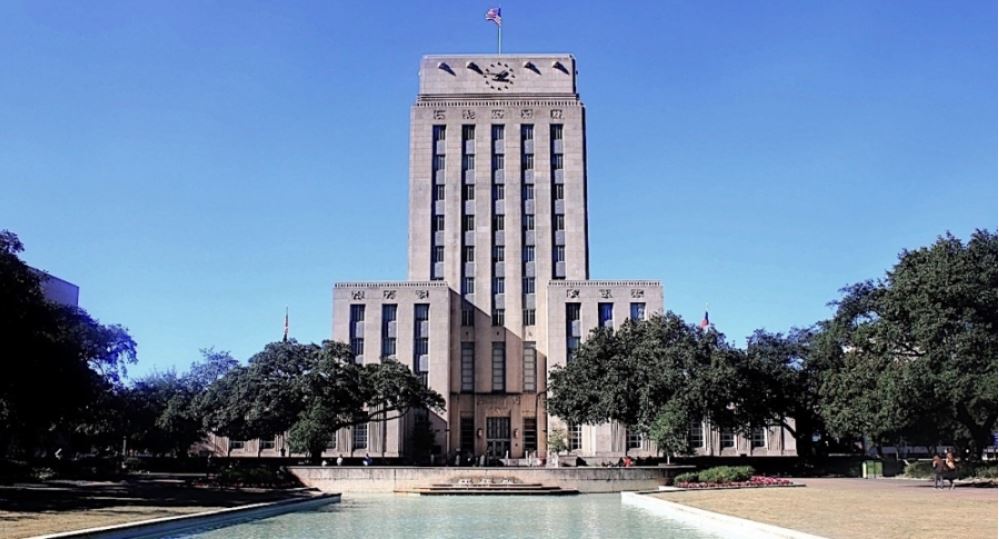
A new affordable housing project for homeless individuals is moving forward in Midtown after the Houston City Council approved a $18.7 million loan agreement at its Aug. 24 meeting.

A new affordable housing project for homeless individuals is moving forward in Midtown after the Houston City Council approved a $18.7 million loan agreement at its Aug. 24 meeting.

However, some council members said they are concerned about the project’s developer, which has come under scrutiny following a string of resident complaints at another area community.

The loan funds were made possible through Hurricane Harvey Community Development Block Grants designed to help cities recover affordable housing projects that were lost during the 2017 floods. The project at 3300 Caroline St. will feature 149 apartments and shared space for supportive programs and office space. It will be built through a partnership between the nonprofit Magnificat Houses and the NHP Foundation, a New York City-based company that works to preserve affordable housing. Click to read more at www.communityimpact.com.

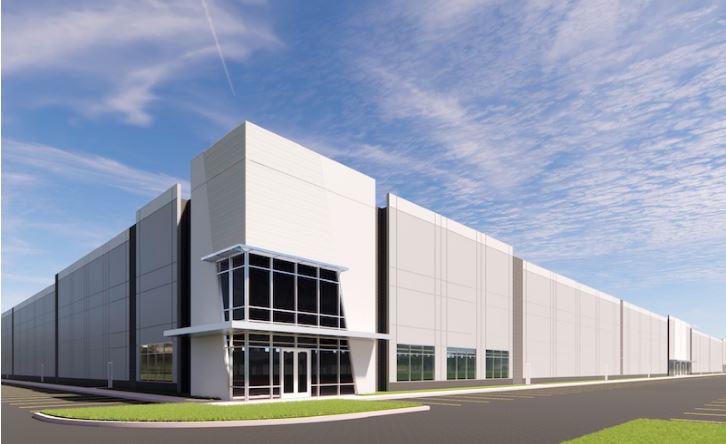
Centris Industrial Breaks Ground on Generation Park Industrial Site in Houston

Centris Industrial, Inc. (Centris), an externally managed private real estate investment trust (REIT), today announced the groundbreaking of its Generation Park development in Houston. The development will consist of two buildings, totaling 255,871 square feet and 1,026,000 square feet, which are anticipated to be completed in the Q2 and Q3 of 2023, respectively.

“The groundbreaking of the Generation Park development is a milestone for Centris, having been one of our first transactions completed alongside the formation of the REIT,” said Centris CEO Michael Podboy. “Houston has seen significant demand for industrial real estate in the last several years that continues to outpace supply. We anticipate the Houston Ship Channel expansion project to drive continued demand for Houston-based industrial and logistics real estate, and more specifically our Generation Park development, as it provides prime access to one of the nation’s busiest ports,” added Centris COO and Southwest Market Officer Joe Trinkle.

Situated just 10 minutes from the George Bush Intercontinental Airport and 15 minutes from the Port of Houston, Centris’s two-building development at Generation Park is located within one of Houston’s fastest growing zip codes. The site provides ideal highway access to five Beltway 8 interchanges and is nearby the I-45 and I-10 interchanges, offering customers premier access to the area’s major transportation network. The larger facility will feature 40-foot clear heights, cross-dock loading with 185 truck courts and more than 300 trailer parking spaces, while the smaller building will feature 32-foot clear heights and 185-foot truck courts for efficient circulation, loading and trailer parking.

Centris operates alongside CA Industrial, the dedicated industrial and logistics arm of CA Ventures. Since inception, CA Industrial has closed transactions totaling approximately $1.2 billion of project costs and has more than 10.3 million square feet of industrial space currently under development in key US markets including in Phoenix, Houston, Richmond, Dallas, Orlando, Atlanta, Savannah, Columbus, Indianapolis and Las Vegas.