The Biggest Hurdle to Financing Commercial Deals Today? It’s the Uncertainty

Multifamily properties continue to see high demand. Financing new apartment construction or acquisitions, though, has become challenging with rising interest rates.

The uncertainty is the problem. That’s what makes financing commercial real estate acquisitions and construction loans so difficult today. Just ask Fritz Waldvogel, senior vice president in the Minneapolis office of Colliers Mortgage. He says that there is still plenty of interest among investors and developers in commercial real estate. The challenge is making the numbers work, with the uncertainty over rising interest rates scuttling many potential deals.

We recently spoke with Waldvogel about the state of the commercial financing industry. This industry veteran said that financing deals is no easy task today. But the future? He’s optimistic that the second half of 2023 will see an influx of new financing requests.

Here’s some of what Waldvogel had to say:

Has the volume of commercial financing requests slowed because of rising interest rates?
Fritz Waldvogel: Even with the volatility of the last 12 months, there has been a lot of quoting activity. But deals aren’t coming together as quickly as they once were. The deals that are happening are mostly loan assumptions. We aren’t seeing as many new placements. The 10-year Treasury has been all over the board, up and down. It’s challenging to feel good about financing until you have a deal that is rate-locked.

How difficult has the uncertainty over rates been for the financing industry?
Waldvogel: It’s hard to feel good about the debt markets. The agencies, Fannie and Freddie, are still open for business. But there is a big gap between where current pricing is based on sellers’ expectations and what buyers can afford to pay. We are not seeing as many transactions closing on the sales side.

What kind of financing deals are you still seeing today?
Waldvogel: We work on a lot of multifamily transactions. There are new deals in this space, but a higher percentage of them are loan assumptions. The debt is already outstanding. A new buyer can come in and assume an existing note. In those cases, the buyers don’t have to worry about the volatility of the debt markets. If you are looking at a 10-year term loan that was closed two years ago, there are still eight years remaining. The interest rate on that might be in the threes. That’s a very attractive rate today.

There is definitely some sticker shock today when we are quoting rates to people. When we started quoting deals in the 6% to 7% range, people’s jaws almost dropped to the floor.

I guess that begs the question, have we been spoiled a bit by how low interest rates have been?
Waldvogel: We have had a good run of super low interest rates. That meant a lot of transaction activity. But now, you don’t have as many deals that can be refinanced. We did a lot of refinances in 2020 and 2021. There just aren’t as many deals today that make sense for a refinance.

What about next year? Do you think we’ll see a bit more stability in 2023?
Waldvogel: I think there will continue to be volatility in the market next year. But at some point, people will start transacting again if the interest rates have settled down in some way. We need a tighter band of interest rate fluctuations so that people feel better closing deals. As you get into next year, more debt sources should come back. The life insurance companies and bridge lenders that are currently not in the market should be coming back next year. When we have more alternatives to the agencies, developers and investors will have more options.

How have interest rates impacted the demand for construction loans?
Waldvogel: I spoke with a developer last week who said that developers were facing a two-headed monster. They have higher interest rates that impact getting deals financed but also construction costs that are still fairly high. The combination of those two has put a lot of deals on the sidelines. If interest rates come down a little next year and construction costs come down, we’ll start to see more of those deals. But there has been quite a bit of supply that was planned for the next six to 12 months that is not moving forward.

We are seeing the same thing on the multifamily side. Rent growth has been really strong over the last six or seven years. What we need now is to get rents down. To do that, we need more supply. But because of higher interest rates and construction costs, we are not seeing that new supply.

Do you still see great demand from renters for multifamily space?
Waldvogel: The fundamentals of the multifamily market are still strong. You are seeing solid occupancy in the Midwest and solid rent growth. The volatility that is making life challenging is more because of capital markets issues than any fundamentals in the apartment market.

Why has demand for multifamily remained so high for so long?
Waldvogel: I’ve been in the business about 10 years on the lending side. Rents just continue to go up. We need more housing in this country. And with rates going up, that has made single-family housing less affordable. That pushes people to rent longer. The single-family rental space has become a hot asset class. That space should continue to perform well during the next five years. Millennials and members of Generation Z want a house and a yard. But they can’t afford to buy a house. Renting a single-family home is a good solution. You feel more settled down than you do when you are living in an apartment. You have a yard and more space, but you still are renting. Over the last two or three years, we’ve been seeing more capital flowing into that space. The higher interest rates have only pushed that demand higher. The demographics were already there. The higher rates just make that market even more appealing.

What do you look at when determining if a financing request is a solid one?
Waldvogel: We focus heavily on the property’s financial performance and take into account the borrowers’ overall experience. We look at both. You have to make sure that the financial performance is strong, but you also need an understanding of who your borrower is. The borrowers’ experience level plays a role, too.

A lot of buyers have moved into the multifamily space during the last seven or 10 years. They came from other asset classes as demand for multifamily just kept rising.

You mentioned earlier that the country is still seeing a shortage of housing. Is that changing at all?
Waldvogel: On a macro level, the country is severely under-housed. That’s especially true with affordable housing or even market-rate housing. It is very challenging to keep up with the demand that is out there for housing. To get more, we need local governments and the private sector to work together to make deals happen. We need new housing desperately.

Looking into the future, what do you see in the financing market for next year?
Waldvogel: I am still bullish that 2023 will see activity pick up, especially in the second or third quarter. I think 2023 will be better than 2022 in terms of the number of requests that ultimately get done.
Has Industrial Hit its Peak? Not Quite Yet

During the past two years, investors have flocked to industrial real estate. Urgent demand, high rent growth and low vacancy proved to be a recipe for success for the commercial real estate asset, recording historical growth and sales numbers. Now, as the world moves into a post-COVID-19 era, the sector still looks to be top dog, but will that change?

As markets across the country ramped up development, consumer trends started to change. E-commerce dominance slowed, pre-leasing stalled and big-box tenants abandoned expansion plans. What does this all mean for industrial real estate, and what should investors look out for?

The king of CRE

Industrial real estate throughout the U.S. performed strongly in 2021 and continued that success in 2022. Year-over-year rent growth is 11.6% and vacancy 4% as of September 2022. Demand for properties is still healthy and developers are keeping pace with demand in most major markets.

The concerns of some investors sprout from a shift of consumers pulling back from e-commerce and returning to brick-and-mortar retail. Online retailers dominated the retail space in 2020 and 2021, but shoppers are excited to be back in person, craving a more personal experience after long periods of seclusion. This consumer shift caused a decline in the expansion of warehouse and fulfillment facilities.

Another reason investors are wary is the threat of a hard-landing recession as inflation continues and the stock market witnesses volatility. Lastly, purchasing power is down, making it more difficult to buy and lease since sale and rent prices are at record levels for industrial properties.

High-level leasing

Lease rates are more expensive than ever. As of late August 2022, new industrial leases were $1.45 more per square foot than leases already in place. The gap between the average lease, market rate, and leases signed within the last 12 months is also higher than ever. The current average lease rate for the past 12 months is $8.05 per square foot, whereas the average was $6 in July 2022.

The markets seeing the most leasing activity and year-over-year rent growth are port cities, as they offer proximity to major coastal shipping terminals. The top five metros are the Inland Empire with 8.7%, Boston with 8%, New Jersey with 7.8%, Los Angeles with 7%, and Orange County with 6.8%.

Building for the future

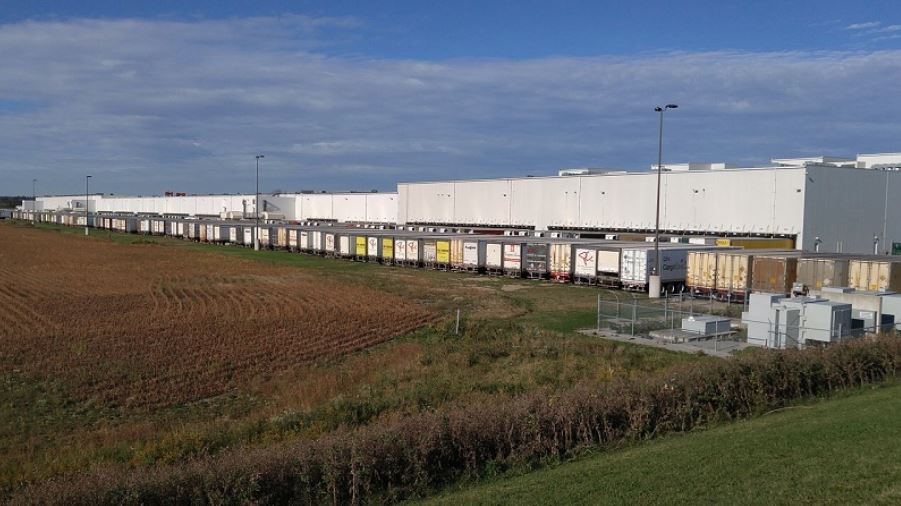
Because of deeply constricted supply, industrial projects couldn’t be built fast enough throughout 2021, leading to a robust pipeline in 2022 and the following years. There are currently 844 million square feet underway across the United States, 70% higher than development numbers before the pandemic.

Although demand for industrial has sustained and even strengthened in specific markets, some real estate experts predict that up to 90 million square feet built will not be leased within a year of completion. As of late 2022, 62% of properties under construction have not been leased. But as others raise concerns about overbuilding, others say that it is almost impossible to overbuild industrial assets because the market is so tight for supply, and the need is not going away.

Construction is only getting more expensive and complex, meaning it would be difficult to continue the level of development long-term. The industrial pipeline needs to stay stocked in a time of great demand and limited options.

What’s next for industrial?

There may be some skepticism surrounding the overwhelming construction of industrial facilities and climbing rent rates, but all in all, industrial is here to stay. Investors will continue to pour capital into the sector in hopes of continuing low vacancies and strong profits. Absorption rates are expected to moderate; however, vacancies will remain stable, securing industrial as a top investment.

Matt Kovesdy is associate vice president for industrial with the Cleveland office of Matthews Real Estate Investment Services. Jonah Yulish is senior associate for shopping centers with Matthews’ Cleveland office.

StreetLights Residential Opens The Louise in Arlington

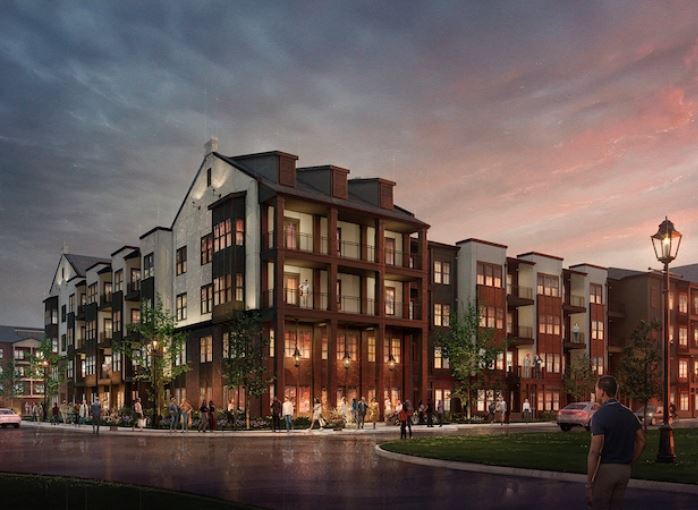
StreetLights Residential, a Dallas-based national design-driven developer of multifamily and mixed-use communities, has completed The Louise, the second phase of the luxury multifamily community within Viridian. Located conveniently between Dallas and Fort Worth, the master-planned community spans 2,000 acres complete with access to five major lakes, trails and local shopping and event venues. StreetLights completed the project’s first phase, The Jackson, in 2021, becoming the first multifamily community within Viridian.

The Louise has 343 luxury apartment homes with studio to three-bedroom floor plans, ranging from 588 to 1,674 square feet. Interior finish out includes granite countertops, tile backsplashes, deep drawers for pots and pans, custom flooring, dine-in island seating, urban mudrooms, custom cabinetry including a pull-out trash drawer, spa-inspired bathrooms, oversized walk-in closets, energy efficient washer and dryer, conduction stovetop, and built in Sonos speakers. Select units also offer smart home features, all hard surface flooring options, oversized outdoor living spaces and screened porches.

The Louise also has 32 townhomes averaging 1,902 square feet. Townhome features include, two-story layouts with a two-car garage, powder bathroom on the first floor, walk-in pantry en suite primary bathroom with double vanity, stone countertops, custom cabinetry and stainless steel appliances and wood-style flooring.

The community’s interior common area spaces were designed to foster an inviting, comfortable environment for residents to gather, while offering a variety of interior and exterior amenities including a lounge with co-working spaces, a private resident library, a conference room, an art studio for art classes and personal projects, a full fitness center featuring high-end cardio and strength equipment, a flex room with spin bikes, fitness echelon mirror and ballet bar, outdoor lawn for yoga and exercise, golf simulator, pet park and pet spa, bike storage, a clubroom with a TV and kitchen to host gatherings and private dining spaces for intimate dinner parties. The Louise also features an expansive pool and outdoor courtyard with lounge and entertaining spaces.

Residents have access to all that Viridian has to offer, including over 500 acres of lakes, rivers, streams, and wetlands, as well as extensive jogging and hiking trails to explore, as well as proximity to DFW airport. The Louise is also located just minutes from dining and entertainment options including Texas Live!, Globe Life Park and AT&T Stadium, offering easy access for residents who want to enjoy local amenities.

StreetLights Creative Studio served as the architect of record and handled all interior design. SLR Construction, LLC, served as the general contractor.

West Fort Worth Retail Center Trades to Mazaheri Properties

JLL Capital Markets has closed the sale of The Shops at Chisholm Trail Ranch, a 213,416-square-foot retail center in Fort Worth, Texas.

JLL marketed the property on behalf of the seller, Street Level Investments, and Mazaheri Properties acquired the asset. Phillip Mazaheri with Price Edwards & Company represented the buyer.

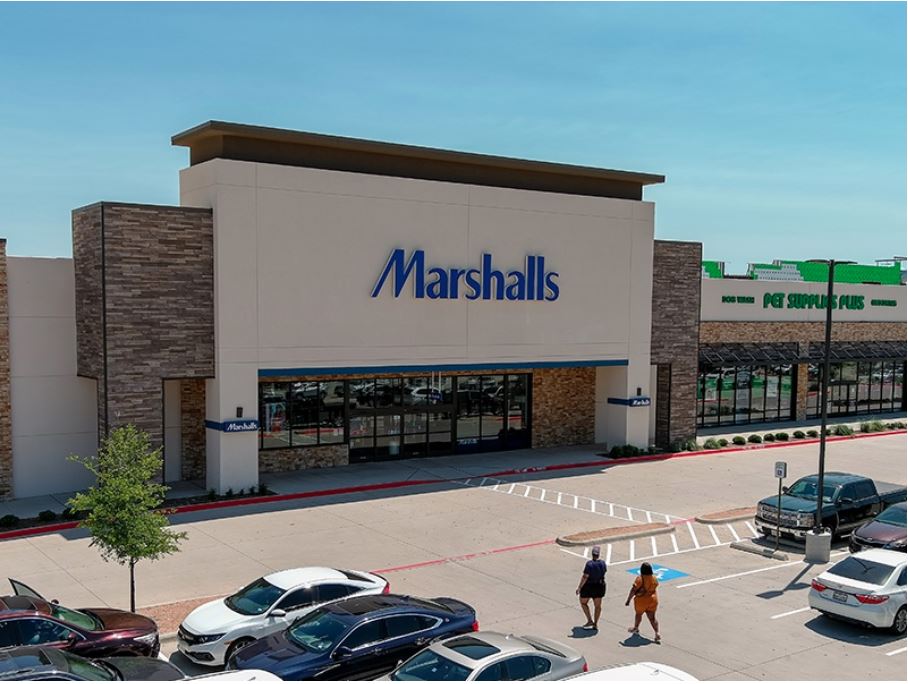
The Shops at Chisholm Trail Ranch is a 97.5% occupied, newly constructed center currently leased to a wide range of tenants, including Studio Movie Grill, Ulta, Old Navy, Ross, Marshalls, Tuesday Morning, Five Below, Famous Footwear, Pet Supplies Plus, James Avery and Crumbl. The center benefits from 1.7 million visits annually with customers visiting an average of six times per year.

Situated at SEC Chisholm Trail Parkway and McPherson Boulevard, the property is part of Chisholm Trail Ranch, a 600-acre master-planned community located in Southwest Fort Worth. The center is 13 miles from Downtown Fort Worth, 9.4 miles from Texas Christian University and 3.1 miles from Tarleton State University. Additionally, almost 500,000 residents are within a five-mile radius of the center and earn an average income of almost $90,000. The immediate trade area has grown substantially with the opening of the Chisholm Trail Parkway toll road, and buying power is expected to increase 19% over the next five years.

The JLL Retail Capital Markets Investment Sales and Advisory team that represented the seller was led by Senior Managing Directors Chris Gerard and Barry Brown and Analyst Matthew Barge.

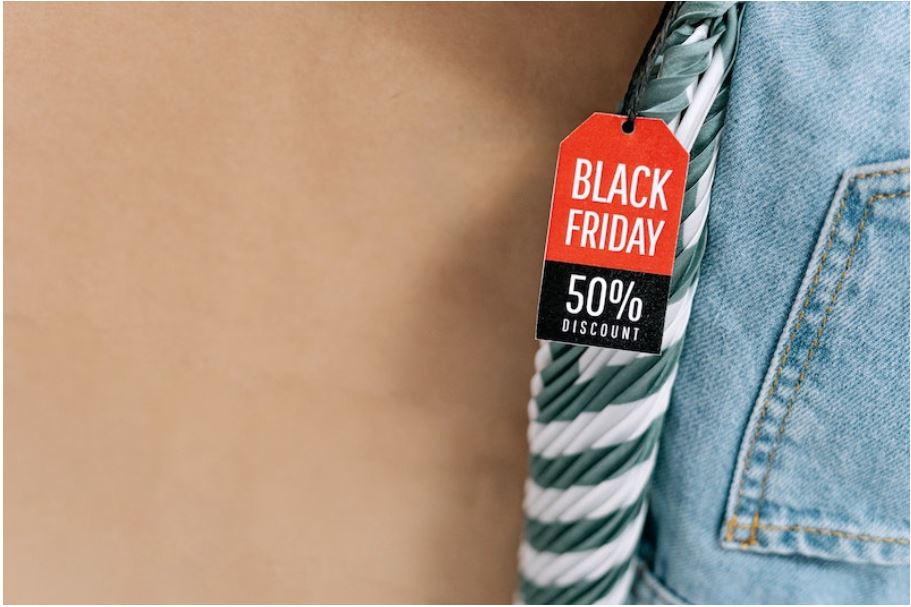
Flocking Back to the Stores: Black Friday Weekend Sees Record Number of Shoppers

This holiday season is shaping up to be a happy one for retailers, with the number of shoppers hitting stores from Thanksgiving Day to Cyber Monday setting a new record.

The National Retail Federation said that 196.7 million people shopped in-person at retailers from Thanksgiving Day to Cyber Monday, Nov. 28. That’s the highest this figure has ever been.

Online sales boomed, too. Adobe Analytics reported that online shoppers spent a record $9.12 billion on Black Friday, the day after Thanksgiving. That figure is up from $8.92 billion in 2021 and $9.03 billion in 2020.

These record-setting numbers come despite the threat of rising interest rates and persistent inflation. Why the big numbers? That’s difficult to say, but consumers have continued to spend even as the prices of everything from groceries and gas to electronics, clothing and furniture continue to rise.

Big Day for Online Sales

The Black Friday online sales were particularly impressive. Adobe Analytics said that the online sales of electronics rose 221% on Black Friday when compared to an average day in October of this year. Two of the biggest sellers were Apple MacBooks and Apple watches, according to Adobe. Consumers also spent big on the Xbox Series X gaming console and video games such as FIFA 23 and Pokemon Scarlet.

Adobe predicted that online shoppers would spend an additional $4.52 billion on Saturday and $4.99 billion on Sunday of the holiday weekend. Adobe also predicted that online sales would soar to $11.2 billion on Cyber Monday.

In-person Shopping Strong, Too

The National Retail Federation did not track the amount of money that record-setting number of in-person shoppers spent over the Black Friday weekend. The trade association did say that it expects holiday sales to rise by 6% to 8% from last year. If this happens, consumers will have spent from $942.6 billion to $960.4 billion this holiday season.

Of course, some of the increase in spending must be attributed to high inflation: Consumers are paying more when they are buying holiday items this year.

“The Thanksgiving holiday shopping weekend is a tradition treasured by many American families,” said National Retail Federation president and chief executive officer Matthew Shay, in a written statement. “As inflationary pressures persist, consumers have responded by stretching their dollars in any way possible. Retailers have responded accordingly, offering shoppers a season of buying convenience, matching sales and promotions across online and in-store channels to accommodate their customers at each interaction.”

According to the National Retail Federation, the holiday shopping season runs from Nov. 1 through Dec. 32. The federation said that consumers spent an average of about $325 on holiday purchases from Thanksgiving Day through Cyber Monday. Last year, shoppers spent an average of $301.

A Miracle on Michigan Avenue

Black Friday/Cyber Monday Sales Shatter Records

Another Black Friday in the books. Gone are the days, it seems, of waking up at 5 a.m. to get a jump on the day’s deals, but that doesn’t equal less activity. In fact, 2022 saw the highest numbers in a while.

The National Retail Federation estimated that 166 million people shopped from Thanksgiving through Monday, the highest estimate since 2017, but reports concerning consumers’ weekend spending vary.

The Sun Times reported that shoppers carried on as they usually would, without regard to inflation or a looming recession, many even increasing spending. Residents in Chicagoland have estimated they’ll spend around $719, compared to $580 in 2021.

And the holiday hype checks out—no pun intended.

The last few years have been strange, to say the least, but as we continue to regain a sense of normalcy this season, shoppers have taken advantage by starting early. The Sun Times and Accenture found that of 1,500 Americans, 45% admitted to starting to shop in August.

But the forward-thinking mentality isn’t limited to consumers. Proactive retailers also seized the opportunity to kick start their in-store deals weeks—even months—in advance, especially those in areas that have struggled to regain foot traffic post-pandemic, and the strategy has proven successful thus far.

Shoppers swarmed Chicagoland from Michigan Avenue to Old Orchard in Skokie to Woodfield Mall in Schaumburg, and many people reported it was the largest in-person turnout they’d seen in a while. More than 122.7 million people across the U.S. visited brick-and-mortar stores over the weekend, up 17% from 2021, according to the National Retail Federation.

Welcome news for businesses of all sizes. Mainstream chains like J. Crew, Neiman Marcus, and J.C. Penney were not spared from pandemic suffering, after all.

“It is important to note that while some may claim that retail sales gains are the result of higher prices, they must acknowledge the historic growth in consumers who are shopping in-store and online during the holiday weekend and into Cyber Monday,” said NRF President and CEO Matthew Shay. “It is consumer demand that is driving growth.”

The group predicted the rise of holiday sales by 5% YOY and retailers will pocket 6% to 8% more than in 2021. Nationwide spending in November and December will near $960 billion, according to the Sun Times.