“Workers Crave Flexibility”: New CBRE Report Looks at Great Resignation Impacts on Office

It’s the one-two punch no one in commercial real estate is celebrating – and for good reason. The COVID-19 pandemic and shutdowns combined with the so-called “Great Resignation” that followed have generated a number of challenges for almost all CRE sectors.

“More U.S. workers are leaving their jobs than ever before, and job openings exceed willing workers,” CBRE points out in its recent report entitled The Great Resignation’s Impact on Office Users.

REDnews talked to Jessica Morin, one of the report’s authors and CBRE’s Head of U.S. Office Research, about her team’s findings.

REDnews: In putting the report together, did you learn anything that surprised you?

Morin: While overall levels of quits increased since the pandemic, the share of office-using positions slightly decreased from 24% on average in 2018-2019 to 21% of quits at the time of the report (January 2022).

REDnews: What was the biggest takeaway for you?

Morin: The great resignation was much more impactful on the retail and hospitality sectors. Still, office-using employers, particularly those with entry-level back-office and shared service positions, also felt the impact. Those office-using sectors also saw the highest wage growth over the last three years. Quits were less prevalent in higher-paying positions, like technology and financial services jobs, which are more likely to support remote working. Click to read more at www.rednews.com.
CBRE Sells 202-Unit Multifamily Property in Texas

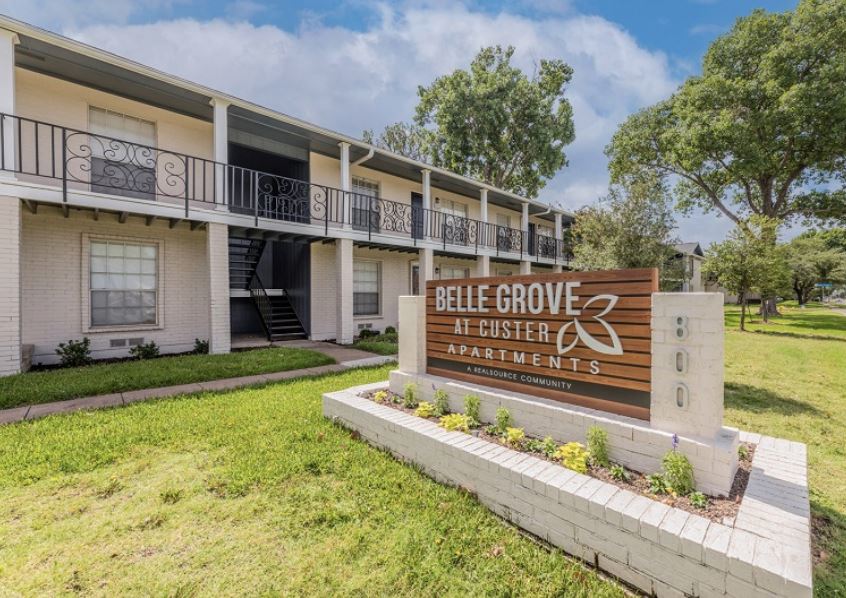
CBRE negotiated the sale of Belle Grove at Custer, a 202-unit value-add multifamily community at 800 Custer Road in Richardson, Texas. ClearWorth Capital purchased the asset from RealSource for an undisclosed price.

Chris Deuillet, William Hubbard and Jaxx Davis with CBRE Capital Markets’ Investment Properties in Dallas represented the seller.

Belle Grove at Custer is located within minutes of Richardson’s Telecom Corridor, which consists of over 25 million square feet of office space and more than 130,000 jobs. Prior ownership had been in place since 2005 and implemented upgrades to approximately 127 units as well as the property’s two resort-style pools, two outdoor kitchens and workout facility. The new owners will continue to make renovations to all units, which already have features including in-unit laundry connections.

The transaction was completed in part to the buyer’s familiarity with the DFW multifamily market.

The property was 94% occupied at the time of sale.

JLL Capital Markets Sells 568,632 SF Industrial Building in Texas

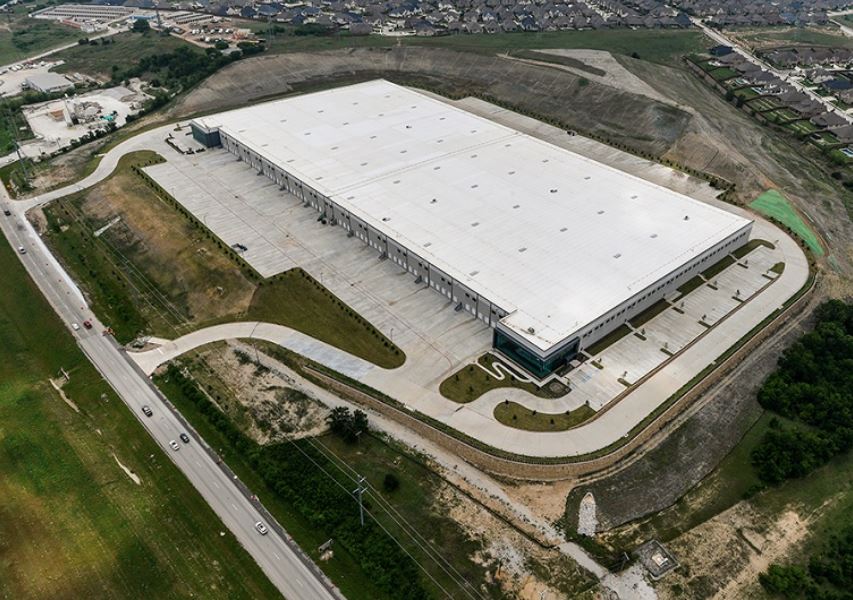
JLL Capital Markets has closed the sale of HWY 114 Distribution Center, a newly completed Class-A industrial building totaling 568,632 square feet in Roanoke, Texas.

JLL represented the seller, Provident Realty Advisors, in the sale to Cohen Asset Management.

Delivered in 2021, the cross-dock building features 119 dock doors, 36’ clear heights and 229 parking spaces. HWY 114 is 100% leased to UNIS, a third-party logistics provider based out of Buena Park, Calif. with over 12 million square feet and 45 locations across 16 major U.S. markets.

Positioned on 68.6 acres at 1230 W Highway 114, the property is strategically located two miles east of the intersection of Interstate 35 and State Highway 114 in the North Fort Worth (Alliance) Industrial submarket. The area benefits from its accessibility to major highways, including Interstates 35 and 820 and State Highways 81 and 114.

As a result, tenants can reach the 25 million residents of the Texas Triangle, the area between Dallas-Fort Worth, Austin, San Antonio and Houston, within five hours. Furthermore, HWY 114 Distribution Center is 14 minutes from Dallas-Fort Worth International Airport and 10 minutes from Fort Worth Alliance Airport.

Led by John Bunten and his team, the Provident Industrial Portfolio currently consists of twelve projects totaling 1,535 acres for speculative and build-to-suit warehouse developments across the southern United States. PRA has an interest in an additional 347 acres in South Carolina, Tennessee and Texas.

The JLL Capital Markets Industrial team representing the seller was led by Senior Managing Directors Dustin Volz and Stephen Bailey, Directors Dom Espinosa and Zach Riebe and Analyst Matthew Barge.

How To Invest In Real Estate When The Bubble Deflates

Amid mounting evidence that the rapid rise in home prices is over, investors in rental property will have more options over the next few years as sellers outnumber buyers and prices deflate – slowly in most markets but very rapidly in others.

As has ALWAYS happened in the past, home prices and rents will eventually re-align with local income. This readjustment may take years but investors don’t need to wait that long to spot good opportunities.

In all real estate markets, some local areas do better than others, on the downside as well as in boom times. Investors can spot the differences using solid local data.

Local data can tell you if there will be strong or weak demand for housing, in what rent range you find the heart of the rental market, and what type of investment will fare best in the local housing mix. Then investors can decide if an available property is a good fit for the local conditions. Click to read more at www.forbes.com.

Here Come the Renters: U.S. Households Living in Rental Units Hits 55-Year High in 2021

How strong is the country’s multifamily market? A new study by RentCafe found that 43.7 million U.S. households lived in rentals in 2021. That’s the highest this figure has been in the last 55 years.

And one-third of the people renting multifamily units this decade say that they are renting by choice, not necessity, accoding to RentCafe.

This trend doesn’t look ready to slow, either. RentCafe reported that as many as 101 zip codes in the country switched from owner-majority to renter-majority during the last decade. Today, there are more renters than homeowners in 41% of the zip codes in the United States’ 50 largest cities.

The 43240 zip code in Columbus, Ohio, saw the fastest increase in the number of renters, RentCafe said. In 2011, this zip code saw 1,192 renters. In 2020, that number had risen to 3,067, an increase of 157.3%. About 68% of the people living in this zip code are renters.

The 60606 zip code in Chicago ranked second on this list. In 2011, this zip code had 807 renters. In 2020, that figure had jumped 151.2% to 2,027. Here, renters account for 63% of the zip code’s population.

According to RentCafe’s research, the number of renters in the United States rose by 12% from 2011 to 2020. That is three times faster than the increase of 4% in homeowners during this same time.

Many of the zip codes with the fastest-growing renter populations are in city cores, RentCafe said. Eight of the 20 neighborhoods that grew their renter populations by more than 80% in the past decade are in or near downtowns.

A good example of this trend in the Midwest is zip code 55415 in central Minneapolis. According to RentCafe, this zip code saw a jump of 162% in its number of renters. This Twin Cities downtown zip code is now twice as renter-friendly as it was in 2011.

And in Nashville’s zip code of 37228, 100% of the area’s 1,289 residents are renters.

A Post-pandemic High: More Workers Back to the Office Than You Might Think

More workers are back in the office today, at least on a part-time basis, than you might think. According to the third quarter U.S. Office Outlook from JLL, 47% of workers were back in the office in some capacity in the third quarter. That’s a post-pandemic high.

It’s also an improvement. JLL reported that at this time last year, only 35% of workers were back in the office. JLL predicts that by the first quarter of 2023, 65% of workers will be back to the office, at least in a hybrid mode.

Other news in JLL’s report, though, wasn’ as positive. According to JLL, only 45.5 million square feet of office leases closed in the third quarter of this year. That’s down 3.6% from the second quarter. JLL pointed to a slowdown in the amount of tech leases for this drop-off.

Companies are still uncertain about the future, too, which has led to shorter office leases. JLL reported that the average lease term was 6.2 years in the third quarter. The average office lease term had grown to 9.1 years during the past 12 months before this drop.

Overall office vacancy rates continue to rise, increasing by 20 basis points in the third quarter to 19.1% nationally.

When tenants are moving into new space, more of them are looking for higher-quality space. This flight-to-quality has created 1.7 million square feet of positive net absorption in trophy-quality office space.