Eastham Capital closes disposition of two apartment communities in Houston

Eastham Capital closed the disposition of Kensington Crossings, a 254-unit apartment community, and Morgan Bay, a 268-unit apartment community, both in Houston, Texas.

Kensington Crossings was acquired in 2018 and Morgan Bay in 2019, for the portfolio of Eastham Capital Fund V, LP, as a joint venture between Mosaic Residential and Eastham Capital. The sale prices were not disclosed.

Kensington Crossing Apartments includes a mix of one-, two-, and three-bedroom units ranging from 759 to 1317 square feet.  Morgan Bay Apartments includes a mix of one and two-bedroom units ranging from 561 to 1042 square feet.

The team implemented a comprehensive repositioning strategy that significantly enhanced the asset’s profitability.  At the time of disposition, Kensington Crossing was approximately 96.5% occupied, with in-place rents having increased from $1,000 at the time of acquisition to $1,344.   Morgan Bay was approximately 94.8% occupied, with in-place rents having increased from $632 at the time of acquisition to $922.

JT Magen completes office space for BRR Architecture in Austin

 JT Magen completed new office space for BRR Architecture at 3218 Manor Road in Austin, Texas.

JT Magen served as construction manager for the 4,117-square-foot buildout, overseeing all aspects from budgeting and scheduling, procurement of materials, managing subcontractors and conducting the final handover. JT Magen collaborated with the rest of the project team –  architect / interior designer BRR Architecture and MEP engineer Salas O’Brien – to deliver a functional, collaborative space that met BRR Architecture’s needs.

BRR Architecture is a national architectural design firm with more than 60 years of experience designing spaces that elevate the everyday experience. The company collaborates with clients across multiple sectors, including retail, hospitality, industrial, mixed-use, multifamily, and office environments. BRR opened their Austin office in 2016. After almost a decade, the firm was ready to expand into a larger space to accommodate its growing team.

The open plan office space spans one floor of the building and features a mix of workstations and private offices, a flex room, a plot room for large-scale drawings, meeting and conference rooms, and a breakroom. A custom hand-painted mural that blends community and office culture and a full kitchen breakroom make the space inviting and unique.   

Inside the Dallas Real Estate Market

BY JOE SANTAULARIA, EXECUTIVE VICE PRESIDENT, BRADFORD COMMERCIAL REAL ESTATE SERVICES/CORFAC INTERNATIONAL

Making a real estate investment in a volatile economic environment requires the right timing, pricing, and willingness to act when they align. When it comes to real estate in the Dallas metro, it also requires taking a hyperlocal lens. National, and even regional, dynamics don’t apply neatly to our market. Within each subsector, you can find reasons for optimism and causes for concern. Let’s take a closer look.

Industrial
Industrial has been the darling of real estate investors with the growth of warehouse and distribution and data centers as traditional retail and office declined. However, we’re seeing some softening in larger industrialproduct. Early in the year, it was affecting properties over 200,000SF, now it is 100,000SF and above and leaking into 50,000-100,000. While it remains white-hot for properties under 50,000SF we’re seeing vacancy rates approaching 10% for larger product and repricing for older projects.When spec industrial is priced to sell, it usually means leasing demand is slowing. Developers are taking hits to projected profits, but not real losses asof yet. Breakeven is the name of the game.

Office
Office was the golden asset up to 2016 and started dipping as it was over-invested by investors from outside the real estate industry that had capital to place. Then the COVID pandemic dealt the office another blow in 2020. Las Colinas and downtown Dallas were particularly hard hit.

Now, office is where industrial was in 2011. Investors can find plenty of great B-class assets that can be purchased and revamped to take advantage of some positive shifts in the office class. By working with proven operators, investors can take advantage of opportunities at a lower risk.

Dallas is the number one office relocation market in the U.S., and certain neighborhoods have especially favorable trends. Y’All Street, which is the financial hub that includes Downtown, Victory Park and Uptown, points to the growing influence of Dallas in the financial sector. Goldman Sachs is currently constructing a campus to house their largest workforce outside ofNew York City, which will serve 5,000 employees.

Uptown is garnering the highest rents in DFW at $56/SF for Class AA office.Knox Henderson as $1.0B in new office development; while Victory Park boasts a $3 billion master-planned development with 4,000 new residences.

Residential
Housing is seeing some uneven outcomes from the building boom. In NorthDFW, large development tracts for sale are stalled. Investors’ expectations far exceed what developers can spend. We see an excess inventory of spec houses north of Dallas Metro and out east, leading to new housing developments being repriced. This problem is most keenly affecting the far north of DFW, such as Celina, north of Prosper, east of Lake Ray Hubbard, Rowlett Rockwall, and Fate.

As you come south into the fully developed satellite cities, McKinney, Prosper, Frisco, Mckinney, the inventory wanes due to lack of land sites, and less supply equals steadier values. The unlimited escalation in existing values have ceased. Housing prices in the burbs are stable. South of LBJ is a different story with the exception of housing north of $5.0MM, where pricing reductions are evident.

Conclusion
So, what does this all tell us? You can’t make assumptions about Dallas based on general trends. You have to dig into the subsector and the location and look for evidence of what’s changing and where the opportunities lie. It’s more critical than ever to work with a local brokerage that understands your risk tolerance and timing and can see all the little details that make upthe big picture.

Avison Young to market 211 N. Ervay in downtown Dallas

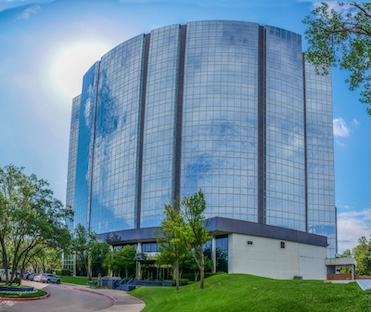
Avison Young has been retained by Thistle Creek Capital as advisor and broker for the sale of 211 North Ervay, a repositioning and adaptive reuse opportunity in Downtown Dallas.

Avison Young Principal Mike B. Kennedy, Principal and Head of U.S. Investment Sales James Nelson, Principal U.S. Investment Sales Erik Edeen and Senior Vice President Sullivan Johnston are leading marketing efforts for the offering.

With strategic proximity to transit, arts and entertainment venues, and direct access to major downtown employment centers, the 184,793-square-foot, 18-story tower at 211 N. Ervay Street offers a rare opportunity to acquire a structure with significant redevelopment flexibility and existing entitlements. Originally constructed in 1958 as an office building and comprehensively renovated in 2014, the property is zoned CA-1, allowing for a wide range of uses including multifamily, hotel, hybrid hotel-apartments, and next generation office concepts. A portion of the ground level is long-term leased to 7-Eleven,

The offering is enhanced by the potential for substantial development incentives, including Historic Tax Credits and Low-Income Housing Tax Credits (LIHTC). These incentives could provide a powerful capital-stack advantage for investors pursuing adaptive reuse strategies (combined potential tax credits in excess of $30 million).

Michael Christensen, Partner at Thistle Creek Capital, commented, “211 North Ervay represents exactly the kind of urban asset we believe in—great bones, irreplaceable location, and multiple paths to long-term value creation. With the Convention Center expansion and continued downtown revitalization, we believe the property is in position for transformative redevelopment.”

211 N Ervay is just blocks from the Kay Bailey Hutchison Convention Center, which is undergoing a $3.7 billion expansion project, further strengthening demand for residential, hospitality, and mixed-use investment in the urban core. Downtown Dallas continues to attract significant public and private infrastructure investment.

Colliers brokers industrial sale in Humble

Colliers closed the sale of an industrial property at 134 Wilson Road in Humble, Texas.

The seller, Humble Machine Works Inc. and related entities, was represented by Tom Condon, Jr. of Colliers; and Ross James and David Claros of Newmark represented the buyer in the transaction. Closing was coordinated by Jessica Grealish and her team at Alamo Title Company – Houston. 

The asset comprises ±51,951 square feet of office and warehouse space sitting on a ±4.56-acre lot. The site includes multiple buildings constructed between 1960 and 2009 that together offer a variety of configurations and clear-height ranges.  

This property delivers heavy power infrastructure, multiple overhead grade-level doors, extensive yard space, and secure fencing, which are features that support a wide range of uses. 

Take Care When Using the 200% Identification Rule in a 1031 Exchange

When using the 200% identification rule in a 1031 exchange, you can identify any number of properties only if their aggregate fair market value does not exceed 200% of the value of the real property you sold. As a simple example, if your relinquished property sold for $1 million, you could identify multiple properties totaling up to $2 million in value.

The 200% rule is helpful when you cannot use the 3-property rule. For example, if you utilize a Delaware Statutory Trust (DST) that is comprised of more than three properties, you negate the use of the 3-property rule. In a 1031 exchange utilizing the 200% rule, precision is not optional, it is required. From identification deadlines to matching property values, the IRS expects the numbers to line up. But what happens if your replacement property ends up higher than the amount you identified? Does this overage jeopardize your 1031 exchange?

1031 Identification Rules and Why They Matter

When you identify replacement property in a 1031 exchange, you are essentially telling the IRS, “This is what I plan to buy with my exchange proceeds.”

Under the 200% rule, you can identify properties totaling up to twice the value of the property you sold. But if you identified a very specific dollar amount for your DST, for example, that exact figure is what the IRS recognizes as “like-kind” property. Anything beyond that amount may not qualify as like-kind property.

  • Consider this scenario: An investor identified a DST at $1,000,000, but when it came time to invest, the actual amount was $2,000,000, which ismore than what was identified. The real question is: Does this overage put the exchange at risk?

The amount above the identified amount could technically be treated as boot. That amount is not eligible for like-kind treatment if it was not identified on your Replacement Property Identification Form. Your identified amount sets the boundaries and exceeding it, even slightly, technically creates boot.

Boot is the IRS term for cash or non–like-kind property received in an exchange. If your exchange also results in a gain, you may need to recognize that gain up to the value of the boot. In other words, this overage could create a partially taxable exchange.

Advisor’s Perspective

From a tax advisor’s point of view, the concern is not the overage itself, but the precedent. What you identify sets the ceiling for like-kind property. If the numbers do not match, the IRS could take issue, especially in an audit.

That is why keeping your CPA informed, even about small discrepancies, is a smart move. Better to report it correctly than to risk questions later.

Final Thoughts

When using the 200% rule in a 1031 exchange, even the smallest numbers need to add up. Precision in identification is not just paperwork; it is your best protection against unintended tax consequences.

A small difference on a seven-figure transaction is unlikely to sink a 1031 exchange, but technically, it can open the door to some “boot” and a partially taxable exchange. The safest approach is to keep your financial advisor and CPA in the loop and make sure you properly identified on your Replacement Property Identification Form.

Jeff Peterson is a Minnesota attorney and former adjunct professor of tax law. He serves as President of Commercial Partners Exchange Company, LLC, where he facilitates forward, reverse, and build-to-suit 1031 exchanges nationwide. Jeff regularly collaborates with attorneys, accountants, and real estate professionals on exchange strategies. Reach him at 612-643-1031 JeffP@CPEC1031.com or on the web at www.cpec1031.com.