JLL Capital Markets closes sale, financing of 95,032-square-foot retail center in Sugar Land submarket

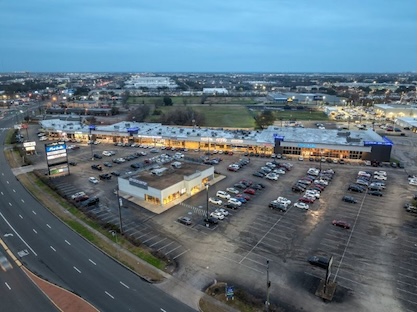
 JLL Capital Markets arranged the sale and financing of Sugar Park Plaza, a 95,032-square-foot, neighborhood retail center proximate to the Sugar Land, Texas, submarket.

JLL represented the seller, and procured the buyer, Dhanani Private Equity Group, in an off-market transaction. JLL also arranged the five-year, acquisition financing on behalf of Dhanani Private Equity Group.

Sugar Park Plaza is strategically positioned at 11824-11930 Wilcrest Drive, occupying a prime 8.65-acre site at a high-traffic intersection between the thriving Stafford and Sugar Land communities of Houston. The property benefits from its proximity to the Southwest Freeway and Highway 99, while being surrounded by established master-planned residential developments. This top-performing retail center serves the dynamic Sugar Land/Stafford submarket, which has experienced remarkable growth over the past decade and currently supports a population exceeding 429,000 residents within a five-mile radius of the property.

Renovated in 2016, Sugar Park Plaza is one of Houston’s top performing neighborhood centers with more than two million annual visitors. The property features one in-line retail building and three pad sites and is fully leased to 16 tenants with a weighted average tenure of 24 years. The curated tenant mix is anchored by Marshalls and also features Aga’s Restaurant and Catering, Sketchers, Chase Bank, ExxonMobil, and Magnum Staffing. Aga’s restaurant has been at the center since 2001 and has built a strong following. Placer.ai, who tracks foot traffic, ranks Aga’s in the top 10 in Texas by annual visits.

JLL’s Capital Markets Investment Sales and Advisory team representing the seller was led by Senior Director John Indelli and Senior Managing Director Ryan West.

JLL’s Debt Advisory team representing the borrower was led by Director Michael King and Managing Director Michael Johnson.

Consumers tightening shopping budgets but aren’t ready to give up on the holiday cheer, JLL finds

Consumers across the United States are heading into the 2025 holiday season with a clear message: They’re still celebrating, but they’re spending smarter.

According to JLL’s latest Holiday Shopping Survey Report, Americans are focusing on value, strategy, and purpose as they balance festive spirit with tighter financial realities.

JLL’s survey of 1,001 consumers found that shoppers are planning smaller budgets, shorter shopping trips, and more intentional purchases. The result? A holiday season that remains joyful, but also one where every dollar counts.

A 10% drop in holiday budgets

The research shows that the average American plans to spend $1,133 this holiday season, a 10.2% drop from last year’s $1,261, according to JLL. That decline signals a notable shift from holiday excess toward more deliberate spending.

But the national averages mask deep divisions. Shoppers earning more than $150,000 a year plan to spend 26% more—nearly $1,963—while lower-income households making under $50,000 are cutting back by 24%, to just $699. That widening gap paints a picture of a holiday season split between restraint and indulgence.

The power of time and experience

JLL’s data also highlight how longer store visits translate into higher spending. Shoppers who linger in stores for 90 minutes or more spend an average of $1,416, 79% more than those who stay under half an hour.

That finding underscores the importance of experience-driven retail. Retailers that create comfortable, engaging spaces will see the biggest rewards. The reason? When people spend more time in a store, they spend more money.

Prioritizing giving over self

Even as budgets tighten, the spirit of giving endures. About 25% of consumers say they’ll skip buying for themselves this year, up from 17% in 2024. Spending on gifts for others remains steady at about $580 per person, but self-gifting, especially on electronics, has dropped sharply, from 47.5% of consumers last year to just 32% this year.

Physical retail still matters

Despite the ongoing dominance of e-commerce, more than 83% of consumers will visit brick-and-mortar stores this holiday season. Only 16% plan to shop entirely online. Nearly three-quarters will mix physical and digital channels, reflecting a hybrid approach that blends convenience with in-person experiences.

Shoppers are especially drawn to value-oriented destinations. Mass merchandisers such as Walmart and Target are regaining their footing, attracting 62% of holiday shoppers, up from last year. Credit competitive prices and one-stop convenience. Department stores remain strong, appealing to about half of consumers, but they’re losing ground to the mass-market resurgence.

A culture of constant deals

The hunt for bargains is no longer a trend. It’s a mindset. About 71% of shoppers say low prices and sales are their top priorities, while 60% say they’ll chase more discounts than usual. Nearly half (46%) plan to take advantage of deal days like Black Friday and Cyber Monday, but an equal share of consumers say they’ll be searching for discounts all season long.

As JLL reports, the holiday shopping calendar has extended, with consumers looking for savings from November through to the New Year.

Food, social media and focused shopping

Shopping trips are increasingly doubling as dining experiences. More than 84% of consumers plan to eat or drink while shopping, whether grabbing coffee, a snack or a sit-down meal.

The connection between food and retail spending is clear: Shoppers who take breaks to dine or snack tend to stay longer in a store and spend more.

Social media also continue to shape how consumers discover and decide what to buy. About 79% of shoppers use platforms like TikTok, Instagram or Facebook for holiday inspiration. Gen Z leans heavily on TikTok, Millennials spread their attention across multiple platforms, and Baby Boomers stick mostly to Facebook and Instagram.

Meanwhile, efficiency is the new retail strategy. Nearly two-thirds of consumers plan to complete their holiday shopping in five stores or fewer, signaling a move toward concentrated, goal-oriented trips rather than the marathon shopping sprees of years past.

A season of selective celebration

JLL’s findings paint a portrait of a holiday season defined by both restraint and resilience. Shoppers are cutting back but not cutting out the holiday spirit. They’re combining digital inspiration with physical experiences, chasing deals while prioritizing meaning, and proving that celebration, even on a budget, remains a priority.

NAI Robert Lynn negotiates 16,000-square-foot lease for law firm in Richardson

Fielding Law, a personal injury law firm, expanded its headquarter and relocated from Mesquite to Richardson’s Tower at Lakeside in Richardson, Texas.

Fielding Law will occupy nearly 16,000 square feet of the top floor. NAI Robert Lynn’s Kent Smith, principal and executive vice president of the office division, and Stephen Cooper, principal and executive vice president, represented Fielding.  

Located at 2221 Lakeside Boulevard, Tower at Lakeside stands as Richardson’s tallest office building and represents a trophy asset in one of North Texas’s most desirable submarkets. The Class A office building features extensive amenities including a full-service café, tenant lounge, state-of-the-art fitness center, and country club-style locker rooms and showers, making it one of the most amenitized office buildings in Richardson.

Tower at Lakeside is situated in Richardson’s business corridor, offering immediate access to major highways as well as the extensive CityLine mixed-use development featuring restaurants, retail, and hotels.

Fielding Law will move into their finished space in February of 2026. 

Westcore acquires 12-building industrial portfolio in Dallas market

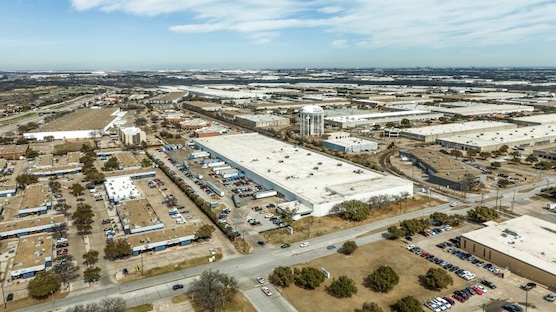
Westcore acquired a 1,082,057-square-foot, 12-building portfolio of Class B, infill industrial properties in the Dallas submarkets of Great Southwest and Garland for an undisclosed price.

The portfolio is 97% occupied. Westcore will lease the two remaining vacancies and leverage its proven, proactive approach to tenant retention.

Clear heights in the GSW/Garland portfolio warehouses range from 18 to 24 feet. The portfolio includes five properties in Grand Prairie, three in Arlington and four in Dallas.

The GSW/Garland portfolio brings Westcore’s Dallas-area industrial property holdings to 3.9 million square feet. Previous acquisitions include Railhead Business Station, Rockwall Distribution Center and North Quarter 35.

Josh McArtor, Caitlin Clinton and Katie Bostic from Eastdil Secured represented the undisclosed seller, while Westcore represented itself.

Unlocking Hidden Value: Transforming Industrial Properties into High-Performing Assets

Industrial real estate is often called the backbone of the economy, but not every building is performing at its full potential. At Clear Height Properties, we focus on finding those “diamonds in the rough” and transforming them into strong, reliable assets.

The opportunity lies in seeing potential where others see problems, breathing new life into overlooked or underutilized properties with the right improvements, smart execution, and a vision for what they can become.

Our approach is simple: stick to real estate fundamentals, make targeted upgrades, and reposition buildings to meet tenant demand. The result is more than strong returns. It is spaces that work better for tenants and add value to communities.

The “Diamond in the Rough” Approach

We look for buildings with good bones: clear height that works for modern users, efficient layouts, solid slabs, and flexible configurations. With these basics in place, we can avoid heavy structural costs and focus our investment on improvements that directly increase value.

Often, the buildings we buy have years of deferred maintenance. Parking lots are worn, landscaping is tired, or systems are past their useful life. Rather than seeing this as a drawback, we see it as an opportunity. By tackling these issues head on, we immediately reposition the property in the market.

Sometimes that means resolving compliance gaps, upgrading fire alarms, making ADA improvements, or rethinking inefficient office space. In many cases, reducing or reconfiguring office areas creates more warehouse space and better suits today’s tenants. Where others see headaches, we see potential.

Modern Systems and Tenant Friendly Features

Bringing properties up to current standards is a big part of what we do. One of the simplest but most impactful changes is upgrading to LED lighting. It reduces energy use, meets new code requirements, and creates brighter, safer work environments. We also integrate sustainable finishes like low flow plumbing, low VOC paints, and ceiling tiles, choices that lower operating costs while aligning with ESG goals.

Tenant expectations are also evolving. Features like EV charging stations, once considered extras, are quickly becoming the norm. We install them in strategic locations that support tenants without disrupting traffic flow or parking.

The balance between office and warehouse space is another area where we create value. Many tenants today need less office and more flexible layouts, so we design spaces that can easily adapt. We have also leaned into adaptive reuse, turning a brewery into pickleball courts and a former distribution center into a baseball training facility. Creative solutions like these meet real market demand, often faster and more cost effectively than new construction.

Execution: Vision into Value

The key to success is execution. Our capital programs are not just about fixing problems; they are about preparing properties for the long term. Roofs, paving, HVAC, and tuckpointing are all handled with trusted vendors who deliver quality and speed, while also helping us secure savings and priority scheduling.

Timing matters too. Immediately upon closing, we start prepping vacant spaces, so they are ready to lease. This includes simple but impactful upgrades like fresh exterior paint or painting interior warehouse walls white, which can dramatically brighten a space and make a big impact on first impressions.

We also think ahead when it comes to functionality: adding drive-in doors, enlarging undersized doors, or upgrading loading docks with seals, levelers, and edge-of-dock equipment are all evaluated during due diligence. Even if these improvements are not immediately necessary, we plan ahead, recognizing that they may be required during our hold period or when a tenant vacates. This forward-thinking approach minimizes downtime and ensures we are ready to move quickly.

Sustainability and Compliance

Sustainability and compliance are not optional anymore, they are expected. At Clear Height, we prioritize upgrades that reduce energy consumption, improve indoor environmental quality, and extend the useful life of assets. Replacing outdated fluorescent or metal halide fixtures with LEDs, using low-VOC paints, and installing water-efficient fixtures are just a few of the ways we integrate sustainability into our repositioning strategy.

Compliance is equally important. We systematically address ADA requirements by modifying layouts, restrooms, ramps, and door hardware. These investments not only protect our tenants and their employees but also minimize landlord liability. By taking a proactive stance on compliance, we create safer, more inclusive, and more marketable properties.

From Challenges to Opportunities

The results speak for themselves. One of our acquisitions with significant deferred maintenance is now fully leased after LED upgrades, parking lot resurfacing, and interior

reconfigurations. Another vacant distribution building is now thriving as a community sports facility.

In each case, the common thread is Clear Height’s ability to look beyond current conditions and envision what the property could become. By executing quickly, leveraging strong vendor partnerships, and focusing on tenant needs, we consistently deliver outcomes that exceed expectations.

A Holistic Commitment to Value Creation

Individually, roof replacements, ADA upgrades, or LED retrofits may not seem transformative. However, when combined into a comprehensive strategy, these investments create a strategy that consistently unlocks value. They differentiate Clear Height Properties from owners who simply maintain the status quo.

Our philosophy is that every building has potential if you know where to look and how to unlock it. By focusing on fundamentals, addressing deferred maintenance, implementing modern systems, and reimagining space to meet evolving tenant needs, we transform underperforming assets into high-performing ones.

At Clear Height, we are not just investing in buildings, we are investing in the future of industrial real estate, one “diamond in the rough” at a time.

Lauren Posey is the architect of operational excellence at Clear Height. She joined the team in 2020 and quickly built the property operations department, creating a vital connection between property management and accounting that strengthens consistency, efficiency, and communication across the company.

Today, she leads property operations, management, and construction management services with a focus on alignment and continuous improvement. Lauren combines financial insight, operational expertise, and a people first mindset that helps Clear Height stay adaptable and accountable.

Stream Realty Partners brokers sale of 283,000-square-foot industrial building in Lockhart

Stream Realty Partners brokered the sale of 1205 Reed Drive, a premier 283,000-square-foot industrial building spanning 25 acres in Lockhart, Texas.

The property was purchased by Sensei Farms, the sustainable farming company backed by Sensei Ag Holdings, Inc., from Austin-based Evergen Equity.

The unique property includes a 5.38-acre greenhouse, a 48,900-square-foot high-tech warehouse that serves as the nucleus of the site, and nine acres of excess land available for future development. Stream Managing Director Ralph Coppola, Senior Associate Will Hall, and Associate Bridger Gunderson represented the seller, Evergen Equity, in the transaction.

Sensei Farms, backed by Oracle Co-Founder Larry Ellison, has executed another high-profile CRE investment in the Greater Austin market, joining the ranks of Elon Musk, Michael Dell, and Tito Beveridge. Founded in 2018 by Ellison and Dr. David Agus, the company is a leader in sustainable agriculture with operations in Hawaii, California, and Canada. The Lockhart acquisition marks a significant step in Sensei’s Texas expansion and underscores Ellison’s long-term vision to transform food production through advanced agricultural practices.