JLL Capital Markets brokers sale of 1.04-million-square-foot office tower in Houston

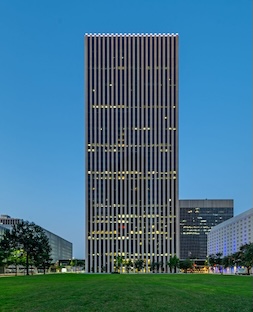
 JLL Capital Markets closed the sale of 601 Jefferson, a 1,047,748-square-foot office tower in Houston’s Central Business District.

JLL represented the seller, Net Lease Office Properties, in the sale of the property to Namdar Realty Group.

Originally built in 1973, 601 Jefferson stands 42 stories tall and offers flexible floorplates and abundant on-site parking in the adjacent 701 Jefferson St. garage, which was also included in the offering. The property is 92% leased and anchored by KBR, which occupies close to 90% of the building.

The office tower and the parking garage comprise 2.94 acres in total in the southern portion of downtown Houston. 601 Jefferson is just a few blocks from Interstate 45, providing north/south freeway access and connections to Interstates 10, 69 and 610. The property is a quick drive from Montrose, Midtown and the Heights, three of Houston’s most popular urban neighborhoods, and is within walking distance of numerous amenities in downtown, including GreenStreet Mall, Discovery Green, Downtown Center at the Met and the Whitehall Hotel.

JLL’s Capital Markets Investment Sales and Advisory team representing the seller was led by Managing Director Kevin McConn and Senior Managing Director Jeff Hollinden.

Colliers report: Some positive signs — but still challenges — for the U.S. office sector

The U.S. office market continued to see improvements in the fourth quarter of 2025, despite continued challenges. And that’s a good sign as the new year begins.

In its fourth quarter 2025 U.S. office market report, Colliers said that the overall national office vacancy rate declined for the second consecutive quarter. At the same time, quarterly net absorption and new supply reached an equilibrium for the first time since the COVID pandemic.

A growing number of office buildings were removed for conversion to another use, too, during the fourth quarter, with Colliers saying that this further lowered the sector’s vacancy rate.

Colliers reported that the U.S. office sector ended 2025 with a vacancy rate of 18.2%. That is a drop of 10 basis points from the third quarter, but is up 20 basis points on a year-over-year basis.

Vacancy rates fluctuate according to market, of course, but they also rise and fall depending on whether you look at CBD or suburban office space. Colliers said that the CBD office vacancy rate for the United States ended 2025 at 19.2%, up 50 basis points from the fourth quarter in 2024. The suburban office vacancy rate ended the year at 17.6%, down 20 basis points from the third quarter. This rate was unchanged from the end of 2024.

U.S. office asking rents did increase, though, rising to $37.69 a square foot, up 1.2% from the third quarter and up 2.3% from the fourth quarter of 2024.

The sector also saw 7.1 million square feet of positive absorption in the fourth quarter. This marks six consecutive quarters of positive absorption in the U.S. office sector. For 2025 in total, the U.S. office sector recorded 18.6 million square feet of positive absorption.

In a reflection, though, on the uncertainty in this sector, Colliers reported that only 25.8 million square feet of new office projects were under construction as of the end of 2025, with 10 markets accounting for 62% of the total development pipeline. Colliers said that only 12 U.S. markets had new office projects added to their pipelines.

New deliveries were low, too, with Colliers reporting 5.6 million square feet of new office space added across the United States in the fourth quarter. For the year in total, developers only added 18.8 million square feet of new office deliveries to the nation’s inventory.

SRS Real Estate Partners closes sale of 11,049-square-foot retail center in Austin

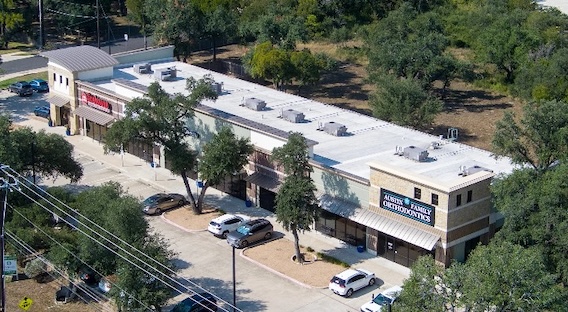
SRS Real Estate Partners completed the sale of Woodland Place, a fully occupied, 11,049-square-foot multi-tenant retail center at 13616 N Highway 183 (Research Boulevard) in Austin, Texas.

Built in 2016 and situated on 1.86 acres in the Northwest submarket, the property is occupied by three tenants: Austin Family Orthodontics, Austin Children’s Dentistry and Firehouse Animal Health Center.

SRS Capital Markets Managing Principal Cathy Nabours, Vice President Kyle Shaffer, and Senior Associate Sam Nichols represented the seller, an Austin-based developer and owner. The buyer was a Los Angeles-based private investor.

Is the U.S. multifamily sector in a holding pattern?

National rents are treading water as the U.S. apartment market moves through what many analysts describe as a holding pattern, waiting for clearer economic signals and the arrival of the all-important spring leasing season.

According to Zumper’s National Rent Index released Jan. 27, median U.S. one-bedroom rents slipped 0.1% month over month in January to $1,503. Two-bedroom rents edged slightly higher, rising 0.2% to a median of $1,879.

On a year-over-year basis, rents remain in negative territory, down 2% for one-bedroom units and 1.5% for two-bedrooms. The data underscores the continued softness in national pricing after several years of dramatic swings.

Elevated interest rates, even after recent easing, have kept many potential homebuyers on the sidelines, sustaining rental demand but not at levels strong enough to drive meaningful rent growth. At the same time, broader economic uncertainty and a cooling labor market have slowed household formation and mobility, limiting the number of renters entering the market or trading up to more expensive units.

Layered on top of these demand-side pressures is the sizable wave of new apartment supply delivered over the past two years. Many large metros are still working to absorb that inventory, extending lease-up timelines and forcing owners to rely more heavily on concessions to maintain occupancy. That dynamic has curtailed landlords’ pricing power, particularly during the winter months, which are traditionally the slowest period for leasing activity.

“The U.S. rental market is largely frozen right now, caught between elevated economic uncertainty and the normal seasonal slowdown we see in the winter months,” said Anthemos Georgiades, CEO of Zumper, in a statement. “While new supply deliveries are set to ease in 2026, any rebound in rents is unlikely to be uniform. Markets that have already worked through excess inventory may see a faster snapback than what national averages suggest. The spring leasing season will offer a clearer signal of where the market is headed.”

For many Midwest markets, the story mirrors national trends, though often with less volatility. Cities that avoided the most aggressive construction booms of the Sun Belt have generally seen steadier occupancy and less dramatic rent corrections. Still, even these markets are feeling the effects of slower job growth and cautious consumer sentiment, which have tempered rent increases that once seemed all but inevitable.

The broader economic backdrop remains a key variable. As inflation continued to cool and the labor market softened more than expected, the Federal Reserve shifted its focus toward supporting economic growth, delivering three quarter-point interest rate cuts in 2025. While those cuts have provided some relief, borrowing costs remain high enough to influence both renter and developer behavior.

For now, apartment owners are playing defense, prioritizing retention and occupancy over aggressive rent hikes. Renters, meanwhile, are benefiting from increased negotiating leverage, especially in markets with elevated vacancy and abundant new supply. Whether that balance shifts later this year will depend largely on how quickly excess inventory is absorbed and whether economic confidence improves.

As Georgiades noted, the spring leasing season should provide the next meaningful indicator. Until then, the national rental market appears content to wait, frozen in place but poised for movement once conditions thaw.

Stream Realty Partners adds SVP in San Antonio

Stream Realty Partners hired Karen Bryant as Senior Vice President of Healthcare based in Stream’s San Antonio, Texas, office.

In her new role, Bryant will focus on healthcare tenant representation and identifying acquisition, development, and growth opportunities across Texas while also supporting clients and initiatives nationwide.

Bryant brings over 22 years of executive leadership experience in healthcare, including the last decade dedicated to healthcare strategy and business development. Her extensive background positions her to guide healthcare systems and providers as they navigate complex real estate solutions that directly impact patient care, operational efficiency, and long-term growth. 

Prior to joining Stream, Bryant served as Group Vice President of Strategy and Business Development for CHRISTUS Health, where she partnered with health system leadership to develop and execute growth strategies across South Texas. Her experience includes leading key acquisitions of medical group practices and hospitals, as well as the development of specialty and primary care clinics, freestanding emergency centers, and other healthcare facilities.

Earlier in her career, Bryant spent 12 years as a hospital administrator with HCA/St. David’s, University Health System, and CHRISTUS Health, overseeing hospital operations.  

Lisa Ann Murphy hired at Wilson Cribbs + Goren

Wilson Cribbs + Goren has welcomed Lisa Ann Murphy as Senior Counsel. Murphy brings nearly 20 years of experience in commercial real estate, with a focus on retail leasing and shopping-center development. She advises landlords, developers, and national tenants on complex transactions nationwide and supports the firm’s transactions team across multiple asset classes.

Murphy earned her J.D. from The John Marshall Law School and a master’s from Middlebury College.