Your Marketing Source For Texas Commercial Real Estate Reaching 100,000+ QUALIFIED Commercial Real Estate Brokers, Investors, Developers & Commercial Service Providers
Marcus & Millichap brokered the sale of a three-tenant veterinary medicine office property in Plano, Texas.
William Skoch and Christopher Mitchel, veterinary real estate investment specialists in Marcus & Millichap’s Cleveland office, had the exclusive listing to market the property on behalf of the sellers, a group of sixteen veterinarians who owned the building since 2004. Tim Speck is the Broker of Record in Texas.
Located on 2.8 acres at 10225 Custer Road, the 9,308-square-foot specialty veterinary and emergency facility is open 24/7, 365 days a year. Fully leased to two of the nation’s leading veterinary providers, VCA and Ethos Veterinary Health, the facility includes three tenants: Dallas Veterinary Surgical Center and Emergency Animal Hospital of Collin County, both operating under Ethos, and Animal Diagnostic Clinic, operating under VCA.
BAUER Groupnegotiated two full-building leases totaling 84,320 square feet at NorthStar Industrial Park, a five-building, Class-A industrial project on 79 acres at 100 FM 3083 in Conroe, Texas, totaling approximately 200,000 square feet.
The leases include a 57,120-square-foot lease with Unimacts and a 27,200-square-foot lease with Membrane Platforms.
Avison Young’s Drew Coupe and Dawson Smith who are both out of the firm’s Houston office are exclusively representing BAUER Group with marketing efforts for the site.
The Unimacts lease is at 100 North FM 3083, Building A. The tenant has expanded within NorthStar Industrial Park where it already occupied 64,177 sf in Building B (full building). The space will be used for industrial activities in compliance with all applicable laws, including the storage manufacturing, and distribution of steel tubing for the solar energy industry.
The Membrane Platforms lease is at 100 North FM 3083, Building D. The space will be used for the production and design of gas generation systems. Membrane Platforms was represented on this transaction by Ron Wickes of Walzel Properties.
With these two leases, Building E is the one remaining building available for lease and totals 32,950 sf. The facility features two 50-ton cranes with 40’ hook heights and potential for large heavy stabilization laydown yard (up to 17 acres that can be leased separately).
While institutional investors have historically gravitated toward big-box industrial logistics assets, multi-tenant shallow-bay properties represent an increasingly compelling investment opportunity.
These often-overlooked assets—which range from 25,000 to 150,000 square feet and are in “A” locations—offer unique investment advantages that deserve consideration.
One key advantage inherent in shallow-bay properties is their attractive premium irreplaceable locations. These buildings were typically constructed in the 1970s through the 2000s. When these buildings were originally built, the areas surrounding them were on the fringe of urban areas where land costs were relatively low. Urban spread means these assets now sit in prime infill positions within dense population centers. This advantage cannot be replicated by new development, creating a high barrier to entry.
A diverse, stable tenant base creates consistent tenant demand and steady cash flow
Shallow-bay industrial properties attract companies across a wide range of categories, including construction, logistics and distribution, consumer products, retail, professional and business services, food and beverage, health and more. Importantly, these tenants are local, regional and often even national. This broad appeal generates strategic advantages of owning and operating these assets:
Natural diversification: Multiple tenants in a building or business park provide a range of industries to spread occupancy and cash flow risk.
Local market connection: Tenants want to be near urban population centers and labor pools, and they are prepared to pay rent premiums for these benefits.
Embedded tenant growth: As shallow-bay tenants grow, they look to the current owner of their building or business park first when they require additional space.
Ability to reposition rents as the market changes: Shallow-bay tenants generally want shorter lease terms of three to five years, compared to industrial logistics tenants who sign seven- to 12-year leases, allowing an owner to reposition rents as the market changes every few years.
Operational benefits of shallow-bay industrial assets
Multi-tenant shallow-bay industrial buildings are known to be management-intensive compared to larger single-tenant properties. With the right experienced operator and team at the helm, shallow-bay assets can be efficient to operate. Capital and operating expenses tend to be lower than modern spaces. Further, individual unit turnover costs such as tenant improvements and leasing commissions are significantly less than for office space.
In conclusion, given the short supply of shallow-bay properties—representing only about 20% of the industrial market—vacancy rates are consistently low, with very little volatility. In fact, research shows that demand has remained stable over the past decade or longer.
This is further supported by data demonstrating that shallow-bay properties historically lease faster than the overall industrial sector because these tenants can move into new space quickly, multi-tenant shallow bay industrial assets are in diminishing supply, and demand remains steady. All these factors contribute to an investment strategy of owning and operating these often overlooked assets.
Piloted by an experienced leadership team, Clear Height Properties has built a solid platform for acquiring and operating industrial real estate in the most desirable locations throughout the Midwest and central United States. From its headquarters in Oak Brook, Illinois, the firm has bought and sold more than 200 assets totaling over $900 million during the past 10 years, establishing a record of strong risk-adjusted returns and becoming a leader in the industrial sector. Learn more at Clear Height Properties.
Denholtz Properties has signed a 31,760-square-foot lease with OTC Industrial Technologies at Clovis Crossing, a newly-constructed, two-building, 213,125-square-foot industrial property at 1603 Clovis R Barker Road in San Marcos, Texas.
Acquired by Denholtz Properties in early 2024 as a key piece of its continued national expansion, Clovis Crossing is located on a 13-acre site approximately 30 miles from both Austin and San Antonio. Both of the brand-new Class-A, shallow-bay industrial buildings boast 32’ clear ceiling heights and rear load configurations making them ideally suited for a wide range of tenants.
Headquartered in Columbus, Ohio, OTC Industrial Technologies is a one-stop supplier of comprehensive industrial and manufacturing solutions. With over 60 locations across 40 states, the company offers products from more than 40 leading brands. Its lease at Clovis Crossing will support the expansion of OTC Industrial Technologies’ growing filtration division. As one of the largest filter suppliers in the industry, the company will use the space for warehousing and distribution of its extensive range of HVAC filters, liquid filters, and filter media to customers nationwide.
Denholtz Properties’ acquisition of Clovis Crossing highlights the continued expansion of its national industrial portfolio. Earlier in 2024, the firm also acquired the Lehigh Valley Portfolio, an 18-building, 723,734-square-foot flex/industrial portfolio spread across Allentown and Bethlehem. Over the past several years, Denholtz Properties also entered the Savannah, Ga. market with the acquisition of the three-building, 358,884-square-foot Coleman Industrial Portfolio and acquired two industrial assets to grow its presence in North Carolina – 9201 Forsyth Drive, a 53,811 square-foot industrial property in Charlotte and Interstate Commerce Park, a five-building, 218,570-square-foot industrial portfolio in Greensboro.
Transwestern’s Carter Thurmond, Nash Frisbie and Bailey Sousa represented Denholtz Properties and Colliers’ Shane Woloshan, Nolan Babb, Travis Hicks, Chase Clancy and Michael Modesett represented OTC Industrial Technologies in the transaction.
181,365 square feet of industrial space is currently available at Clovis Crossing.
JLL Capital Markets secured construction financing for Far West Apartments, a 321-unit, Class-A multifamily community in Austin, Texas.
JLL represented the borrower, Central Southwest Texas Development, in arranging the 10-year, floating-rate loan through Poppy Bank.
Far West Apartments, located at 3525 Far West Blvd., will be nestled in the affluent community of Northwest Hills, offering convenient access to major highways Loop-1 and SR-183. This prime location provides residents with the perfect blend of suburban tranquillity and urban connectivity, surrounded by family-oriented neighborhoods, parks and restaurants, with easy access to Downtown Austin and major employers.
Far West Apartments, a substantial 282,609 net-rentable square-foot development, will offer a diverse range of living spaces including studios, one-, two- and three-bedroom units, with an average unit size of 880 square feet. Residents will enjoy a host of community amenities, including a clubroom, fitness center, pet spa, conference room, and a resort-style swimming pool. The project is scheduled to commence full operations in April 2027.
JLL Capital Market’s Debt Advisory team representing the borrower was led by Senior Managing Director Doug Opalka, Senior Director CW Sheehan and Associate Samantha Jay.
This is the second infill Class-A multi-family wrap project within 12-months in Austin for CSW. In light of this milestone, CFO and COO of CSW, Kevin Hunter, reflects on how the project is a testament to the strength of the market in this Austin trade area.
We’ve all heard it: survive until 2025. There is certainly truth to that phrase, as the overall commercial real estate landscape looks to be stabilizing as we get ready to turn the calendar from 2024. But increasingly, signs are showing that many of the headwinds experienced during the past year may be, simply put, our new normal.
For most of us in the CRE finance sector, the last 12 months have been tumultuous. Deal volume was down, and the deals that did happen took more work to get across the finish line. Financing was difficult to secure – and expensive – so many deals simply didn’t pencil out. But here we are, on the brink of 2025. And we DID survive. So, let’s take a look back at some key issues of 2024 and how we can turn those into insights to build on for the new year.
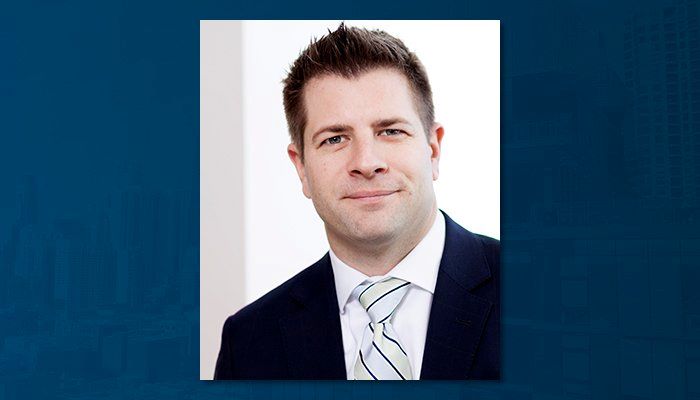
Mark Perkowski, vice president of commercial finance group at Draper & Kramer
A Look Back: The Good, the Bad, and What We Can Learn From It
Money was hard to come by this year. The banks that were in the market imposed much stricter lending standards, including deposit requirements as high as 10% of the loan balance, and loan proceeds from all lenders, including the agencies, life companies, and CMBS market, were debt service constrained by the high benchmark treasury rates. Given these hurdles, the most well-capitalized investors, such as REITs, pension funds, and family offices, did not find the cost of capital in 2024 to be accretive to their deals. Many chose to forgo financing altogether and hold properties all cash (which, if you’re a mortgage banker like me, wasn’t good news).
However, there were some successes in 2024. From those, we can see a more positive path forward into 2025 and beyond. Good quality borrowers and those with strong borrowing relationships have maintained their access to capital. They were able to extend their maturing loans beyond 2024 and close on new construction debt, albeit at lower leverage than they would like. High quality borrowers with a proven repayment history and a willingness to be flexible by, for example, providing a personal guarantee or accepting a 5+ year prepayment penalty, were able to secure financing that was otherwise unavailable.
For example, one of my clients, a hotel investor, has been a repeat borrower from a life insurance company and maintained a flawless payment history – even throughout the pandemic. Because of this, I was able to help him secure an acquisition loan exceeding 70% loan-to-purchase-price, which is a deal that’s almost unheard of in the current climate. This access to this capital positioned the investor to close on a generational opportunity.
The past year also highlighted that accepting a long-term rate can be another path for borrowers to unlock capital. Case in point: another client of mine wanted a to cash-out on a shopping center with near-term lease roll on the grocery store. The ideal solution for the client would have been something shorter term, like a five-year mortgage. But, understanding the demand among lenders for longer-term debt, I was able to cash-out proceeds up to a 1.15x debt service coverage ratio (DSCR) with a 25-year fixed rate self-amortizing loan from a life insurance company. Because my client filled the insurance company’s need for long-term debt, it in turn was willing to lend proceeds that no five-year loan could provide.
And, of course, it never hurts to offer recourse. For example, earlier this year I had a high-net-worth client seeking to refinance a retail property in Brownsville, Texas, in which he’d recently invested capital expenditure funds into renovations. All the local banks in the market were only offering Prime-based loans at eight percent or higher. I was able to secure a five-year loan below six percent through one of our life companies. The sponsor’s willingness to guarantee the loan provided the lender the added protection it needed to lend into a tertiary market it would otherwise seek to avoid.
In short, maintaining a strong payment history, being flexible on terms and putting more of your own “skin in the game” will be three crucial factors in getting deals across the finish line for the foreseeable future.
Looking Ahead
I believe there is an opportunity to not just survive but thrive in 2025. Yes, both borrowers and lenders are adjusting to a new normal, but good borrowers and attractive properties will continue to be able to access quality debt. There is an openness to creative solutions and compromise when borrowers loosen their expectations. And, while lenders are going to maintain historically tight DSCR thresholds because of Federal Reserve’s tighter monetary policy, those of us working to broker deals will need to continue to help both sides to “meet in the middle.”
Mark Perkowski is Vice President of the Commercial Finance Group in the Chicago office of Draper and Kramer, Incorporated.